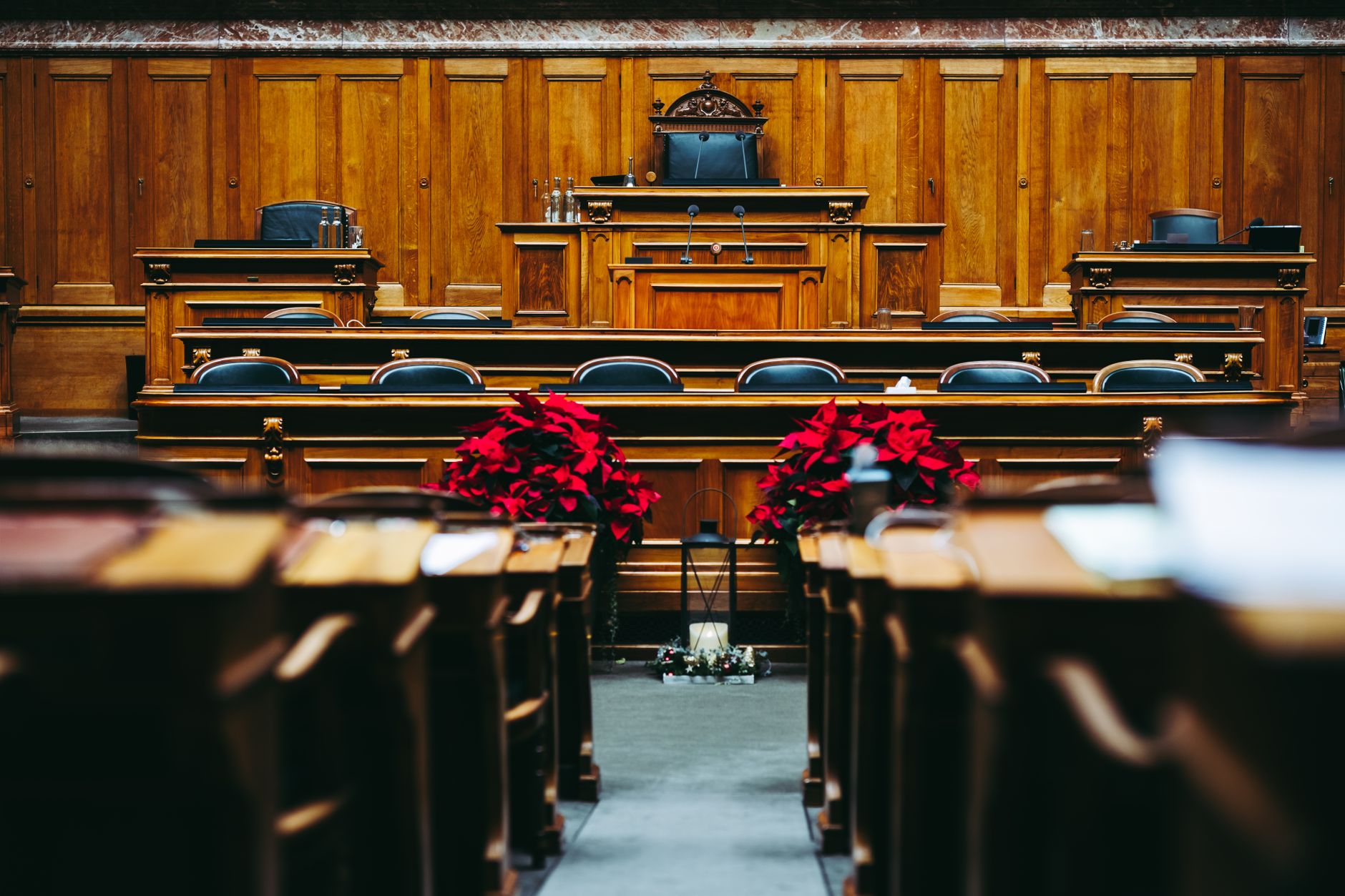
The madlanga commission today witness schedule determines who testifies before Justice Mbuyiseli Madlanga's inquiry into state capture and corruption. Today's witness proceedings shape public accountability, evidence on record, and future prosecutions. This guide covers witness schedules, testimony procedures, in-camera hearings, and how to track daily developments.
What is the Madlanga Commission today witness process?
The Madlanga Commission today witness process is the daily scheduling and hearing of witnesses who give evidence under oath before the judicial commission chaired by Justice Mbuyiseli Madlanga. The commission summons individuals, grants them legal representation, and records their testimony for inclusion in an official evidentiary record. You can learn more about the broader framework by reading our page on what is a commission of inquiry.
The process follows a strict sequence. The commission issues a summons or invitation. The witness appears on a scheduled date. Evidence leaders question the witness. Legal representatives cross-examine. The chairperson rules on disputes. The testimony becomes part of the official record maintained by the Department of Justice and Constitutional Development.
You should understand three core terms:
- Summons: A legal document compelling attendance.
- Evidence leader: An attorney who guides testimony on behalf of the commission.
- In-camera: A closed hearing restricted from public broadcast.
Pro Tip: Check the commission's daily hearing schedule before 8:00 AM. Witnesses are sometimes rescheduled or moved to in-camera sessions at short notice.
How to track today's witness testimony
You track today's witness testimony by monitoring the commission's official live stream, published transcripts, and daily ruling documents. The commission publishes a hearing schedule each morning. Transcripts appear within 48 hours. Rulings on objections or procedural disputes are posted as standalone documents.
Here is how you stay current:
- Visit the official commission portal for the day's schedule.
- Watch the live stream or read the real-time feed.
- Download the transcript once it is published.
- Cross-reference any rulings issued during the session.
You need to watch for these bold terms in the daily record:
- Cross-examination: Questioning by opposing legal teams.
- Objection: A formal challenge to a question or answer.
- Ruling: The chairperson's decision on a dispute.
- Exhibit: A document or item entered into evidence.
The South African Judiciary oversees the procedural integrity of judicial commissions. You can read specific rulings, such as the Madlanga Commission ruling dated 4 June 2026, to understand how the chairperson handles objections.
Pro Tip: Save the ruling documents to a dedicated folder. They build a timeline of legal precedent that shapes future testimony.
How witnesses are scheduled and called
Witnesses are scheduled based on evidentiary relevance, investigative priority, and availability. The commission's investigative team identifies individuals with material knowledge. It then coordinates dates with legal teams. Some witnesses are called voluntarily. Others are compelled by summons.
The scheduling process involves several layers. Investigators compile a witness list. Evidence leaders prioritize witnesses whose testimony links to current lines of inquiry. The chairperson approves the schedule. Witnesses receive formal notice. The South African Human Rights Commission may also refer matters where human rights violations intersect with corruption.
You should understand these scheduling categories:
- Voluntary witness: Appears without compulsion.
- Compelled witness: Appears under summons.
- Protected witness: Testifies with identity protections.
- Expert witness: Provides specialized analysis.
Witness K is an example of a protected witness whose identity remains confidential. You can read about Witness K's profile and testimony scope on our dedicated page. Similarly, Witness I represents a category of insider witnesses whose evidence connects procurement fraud to senior officials.
Pro Tip: Protected witnesses often testify in-camera. If a scheduled witness suddenly disappears from the public stream, check for an in-camera ruling.
What happens during an in-camera hearing
An in-camera hearing is a closed session where the public and media cannot observe testimony. The chairperson orders in-camera hearings to protect witness safety, national security, or the integrity of ongoing investigations. No live stream is broadcast. No public gallery is permitted. Transcripts may be redacted or withheld.
The commission has used in-camera hearings for witnesses facing credible threats. For example, the commission issued a reminder that Witness H would be heard in-camera on Friday, 8 May 2026. This is a standard protective measure.
You should note these key features of in-camera sessions:
- No public broadcast: Media cannot stream or record.
- Redacted transcript: Names and sensitive details may be removed.
- Security escort: Witnesses may receive protection.
- Restricted access: Only commission staff and legal teams attend.
The South African Parliament receives the final commission reports, including classified annexures from in-camera hearings that are not released to the public.
Pro Tip: If you are a journalist, file a formal access request for redacted transcripts. The commission sometimes releases sanitized versions after investigations conclude.
Witness testimony focus areas in 2026
The commission's current focus areas include procurement fraud, drug seizure and theft, and political interference in law enforcement. Each focus area has dedicated evidence teams and witness lists. The commission has stated it will continue focusing on the seizure and theft of drugs, as outlined in its statement on continuing focus on seizure and theft of drugs.
| Focus Area | Witness Type | Evidence Type | Public Access |
|---|---|---|---|
| Procurement fraud | Former officials, auditors | Documents, financial records | Live stream |
| Drug seizure and theft | Police officers, forensic analysts | Case files, chain-of-custody logs | Mixed |
| Political interference | Insider whistleblowers | Testimony, communications | In-camera |
| State capture networks | Linked individuals | Financial flows, contracts | Live stream |
The commission's second interim report dated 29 May 2026 summarizes progress across these focus areas. You should read it alongside the daily record to understand how individual witness testimony fits into the broader investigation.
Corruption Watch has noted that judicial commissions remain one of the most effective tools for surfacing systemic corruption in South Africa.
"Commissions of inquiry are essential mechanisms for uncovering corruption, but their recommendations require political will and prosecutorial follow-through to deliver accountability." - Corruption Watch
Pro Tip: Map each witness to a focus area. This helps you predict what evidence the commission is building toward and which witnesses may be recalled.
How the chairperson manages witness testimony
Justice Mbuyiseli Madlanga manages witness testimony through procedural rulings, objection handling, and direction to evidence leaders. He controls the pace, scope, and admissibility of evidence. His rulings set precedent for how future witnesses are questioned. You can learn more about Justice Mbuyiseli Madlanga's background and judicial approach on our commissioners page.
His management style is direct. He intervenes when questions are vague, repetitive, or irrelevant. He compels witnesses to answer. He rules on privilege claims immediately. He refers perjury risks to law enforcement. The record from Day 110, including the chairperson's ruling, shows how he handles a witness who refused to answer specific questions.
You should track these chairperson actions:
- Admissibility ruling: Decides whether evidence enters the record.
- Compulsion order: Forces a witness to answer.
- Referral: Sends a matter to prosecutors or police.
- Adjournment: Pauses testimony for procedural reasons.
Pro Tip: Read the chairperson's rulings in order. They reveal the commission's legal strategy and which evidence it considers most critical.
Key Takeaways
The Madlanga Commission today witness process is your window into how South Africa's most significant corruption inquiry builds its evidentiary record, one testimony at a time.
| Point | Details |
|---|---|
| Daily schedule | Published each morning, subject to change |
| Live access | Public stream for open sessions, restricted for in-camera |
| Witness types | Voluntary, compelled, protected, and expert |
| Focus areas | Procurement fraud, drug theft, political interference |
| Chairperson role | Justice Madlanga controls pace, admissibility, and referrals |
What I've learned from tracking the Madlanga Commission
I have tracked the Madlanga Commission since its first hearings. The most important lesson is that individual witness testimony matters less than the pattern it creates. One witness describes a single contract. Five witnesses describe a system. The commission's power lies in accumulation.
I have also learned that in-camera hearings are not cover-ups. They are protective measures. Witnesses who testify behind closed doors often provide the most damaging evidence. The redacted transcripts eventually surface. Patience is required.
The chairperson's rulings are the backbone of the inquiry. They are not bureaucratic footnotes. They are legal decisions that shape what the commission can prove. I read every ruling. I cross-reference every witness. I track every focus area. This is how you understand where the commission is heading.
The hardest part is the waiting. Witnesses are rescheduled. Legal teams delay. Documents are withheld. But the record grows. The second interim report proves that the commission is making progress, even when the daily hearings feel slow.
, Kagiso Molefe
Madlanga Commission helps you track today's witness

Madlanga Commission provides a free tracking tool that consolidates daily witness schedules, published rulings, and testimony transcripts into a single dashboard. You use it to see who is testifying today, what they are testifying about, and how their evidence connects to the commission's focus areas. The tool links directly to source documents so you can verify every claim. You do not need to search multiple portals. Everything is in one place. Sign up for daily alerts so you never miss a hearing or a ruling.
FAQ
Who is testifying at the Madlanga Commission today?
Today's witness is determined by the commission's daily schedule, published each morning. The schedule lists the witness name, focus area, and whether the session is public or in-camera. Check the official commission portal or our tracking tool for the current day's lineup.
Can the public attend Madlanga Commission hearings?
Yes, the public can attend open sessions via live stream. In-camera hearings are closed to the public and media. The chairperson orders in-camera sessions to protect witness safety or investigation integrity. Redacted transcripts may be released later.
What happens if a witness lies at the Madlanga Commission?
A witness who lies under oath commits perjury. The chairperson can refer the matter to the National Prosecuting Authority for criminal prosecution. The commission has made such referrals in previous sessions. Perjury carries a potential prison sentence under South African law.
How are witnesses selected for the Madlanga Commission?
Investigators identify witnesses based on their knowledge of matters under inquiry. Evidence leaders prioritize witnesses whose testimony advances current investigative lines. Some witnesses volunteer. Others are compelled by summons. The chairperson approves the final schedule.
Where can I read Madlanga Commission transcripts?
Transcripts are published on the official commission portal within 48 hours of each hearing. Rulings are published as separate documents. Our tracking tool links to all published transcripts and rulings. In-camera transcripts may be redacted or withheld.