PEPUDA explained: find and cite Madlanga Commission records

TL;DR:
- PEPUDA is South Africa’s main civil law against unfair discrimination, hate speech, and harassment outside employment. Researchers can find relevant evidence in the Madlanga Commission’s transcripts, which document discriminatory practices and language used by officials. These records serve as primary sources to support civil PEPUDA claims, with courts most commonly issuing interdicts, damages, or apologies.
PEPUDA, the Promotion of Equality and Prevention of Unfair Discrimination Act 4 of 2000, is South Africa’s primary civil law against unfair discrimination, hate speech, and harassment outside the employment context. The Commission itself operates under a separate judicial mandate, but its hearing transcripts and exhibits are precisely where researchers find the factual record that can underpin a PEPUDA analysis. Start at the Madlanga Commission archive, chaired by Justice Mbuyiseli Madlanga, with records compiled by contributor Meriol Lainchyon. The most relevant recent entries include the last few hearing days in the archive, covering late October 2025.
Table of Contents
- What does PEPUDA actually cover?
- How do PEPUDA issues surface in a public inquiry?
- How to find, download, and cite Commission hearing records
- Which hearing days should you review first?
- The Madlanga Commission archive: where to go next
- FAQ
- Key takeaways
What does PEPUDA actually cover?
The Act came into operation on 1 September 2000, giving effect to section 9 of the Constitution. Its scope is broad: it prohibits unfair discrimination by government bodies and by private individuals and organisations alike, and it separately prohibits hate speech and harassment.
Prohibited grounds listed in the Act include:
- Race, ethnic or social origin, colour, and birth
- Gender, sex, pregnancy, marital status, and family responsibility
- Sexual orientation, age, and disability
- Religion, conscience, belief, culture, and language
- HIV/AIDS status
Courts may also recognise additional grounds beyond this list if the characteristic meets the statutory criteria. One firm boundary: employment discrimination is excluded entirely, governed instead by the Employment Equity Act, 1998.
Equality Courts and where they sit
Equality Courts are not separate buildings. They are divisions of the High Court and designated Magistrates’ Courts that hear PEPUDA complaints. A complainant files at the court nearest to where the discrimination occurred, and the presiding officer applies the Act’s reversed burden of proof: once a complainant establishes a prima facie case, the respondent must justify the conduct.
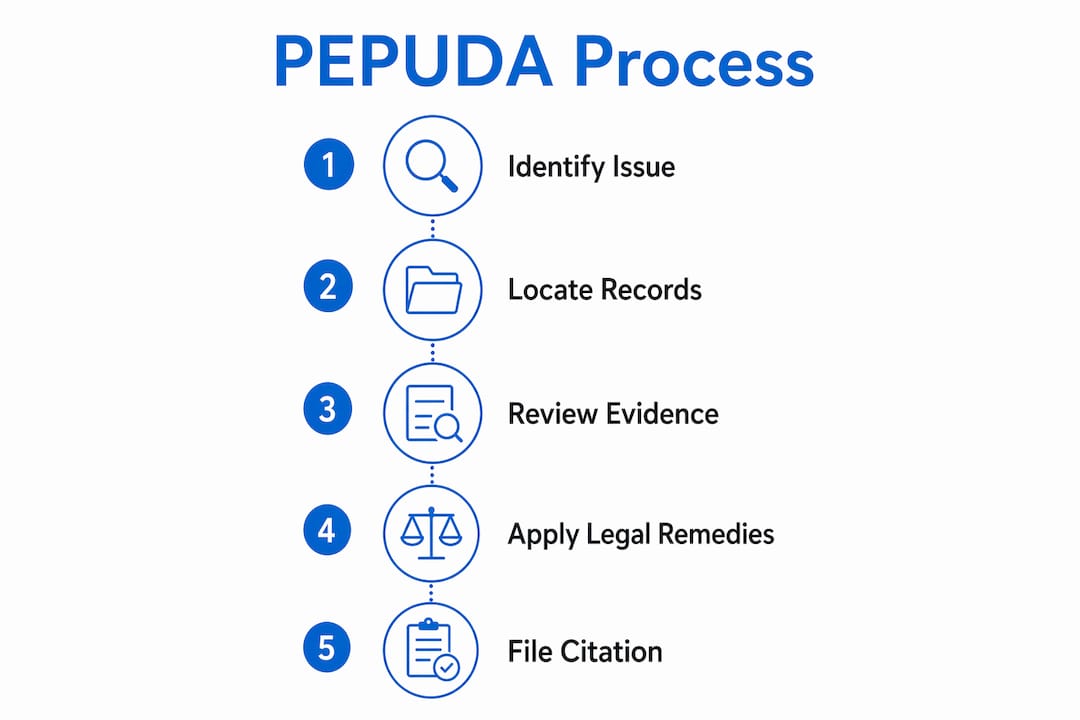
Remedies under section 21
Section 21 lists a wide range of corrective and restorative options. In practice, Equality Courts most commonly award three: interdicts, damages, and unconditional apologies. Many of the other statutory remedies remain underused.
| Remedy type | Statutory basis | Frequency in practice |
|---|---|---|
| Interdict | Section 21(2)(a) | Common |
| Damages | Section 21(2)© | Common |
| Unconditional apology | Section 21(2)(d) | Common |
| Diversity training order | Section 21(2)(g) | Rare |
| Systemic investigation referral | Section 21(2)(j) | Rare |
Pro Tip: When reviewing a Commission transcript for PEPUDA relevance, flag language that fits the Act’s definitions of “hate speech” (words that could reasonably be construed to demonstrate a clear intention to be hurtful, harmful, or incite harm) or “harassment” (unwanted conduct that impairs dignity). Those are the two triggers most likely to support a civil Equality Court complaint.
How do PEPUDA issues surface in a public inquiry?
The Madlanga Commission is a judicial inquiry into criminal infiltration, political interference, and corruption in South Africa’s police, prosecution, and intelligence sectors. It does not adjudicate PEPUDA claims. That distinction matters: the Commission gathers and records evidence; an Equality Court applies the law to that evidence.
Where the two intersect is in the factual record. Testimony about discriminatory operational practices, racially charged language used by officials, or harassment of whistleblowers can all appear in a Commission transcript. That testimony does not become a PEPUDA ruling, but it can form the evidentiary foundation for a separate civil complaint.
“The Equality Act frames equality as a transition to a democratic society; its remedial design mixes backward-looking remedies and forward-looking preventative measures. The courts were intended to use a broad range of corrective and restorative remedies, but case law shows reliance on a narrow set.” — Academic analysis, Wits University / South African Government
Practically, researchers should treat Commission transcripts as primary source material for a PEPUDA case, not as a substitute for Equality Court proceedings. A witness statement describing racially motivated targeting within SAPS, for example, is evidence. Whether it constitutes actionable unfair discrimination under PEPUDA is a question for an Equality Court. For context on specific witnesses and their institutional roles, the key figures profiles on the Commission site are a useful starting point.
How to find, download, and cite Commission hearing records
The archive is organised by hearing day, each with a landing page providing access to the transcript, exhibit bundles, and audio or video where available.
Step-by-step workflow:
- Go to
madlangacommission.co.za/hearingsand browse by date or use the site search to filter by hearing day number. - Open the target day’s landing page (e.g., Day 17) and download the transcript PDF first.
- Check the exhibit bundle links on the same page. Exhibits are labelled with alphanumeric codes; note the code before downloading so you can match it to transcript references.
- For open exhibits, download directly. Closed exhibits are noted as restricted; contact the Commission for access.
- Confirm the record version: the Methodology, Sourcing & Corrections page documents how Meriol Lainchyon and the archive team handle errata and updates.
What to check for provenance:
- Compiler credit on each hearing page (Meriol Lainchyon is the named archive contributor)
- Version date on the transcript PDF header
- Any errata notices linked from the hearing page
Citation formats for South African practice:
For a legal citation in a court document or opinion: Madlanga Commission of Inquiry, Transcript, Day 17, 22 October 2025, p [X].
For an academic footnote: Madlanga Commission of Inquiry, Hearing Transcript: Day 17 (22 October 2025), available at madlangacommission.co.za/hearings/day-17.
Pro Tip: Before closing a downloaded PDF, check the document properties for the creation date and version string. If the archive has issued a correction, the updated file will carry a later creation date than the original. Keep both versions if you are citing for litigation.
Which hearing days should you review first?
Recent hearing days in the archive covering October 2025 serve as a natural starting point for current research.
| Hearing day | Date | Key focus | Exhibits available |
|---|---|---|---|
| Day 17 | 22 October 2025 | Testimony and evidence on institutional conduct | Transcript PDF, exhibit bundle |
| — | 22 October 2025 | Continuation of witness examination | Transcript PDF, exhibit bundle |
| — | 22 October 2025 | Further witness evidence and documentary exhibits | Transcript PDF, exhibit bundle |
To map a hearing day to a formal exhibit number, open the transcript and search for “Exhibit” followed by the alphanumeric code. The evidence leaders pages identify which advocate led evidence on each day, which tells you whose questions shaped the record. For witness-specific context, profiles such as Zelda Maphosho (IPID) and Advocate Mahlape Sello SC link directly to relevant testimony.
The Madlanga Commission archive: where to go next
The Commission archive is a free, searchable public record. Every transcript, exhibit bundle, and witness profile is accessible without registration.
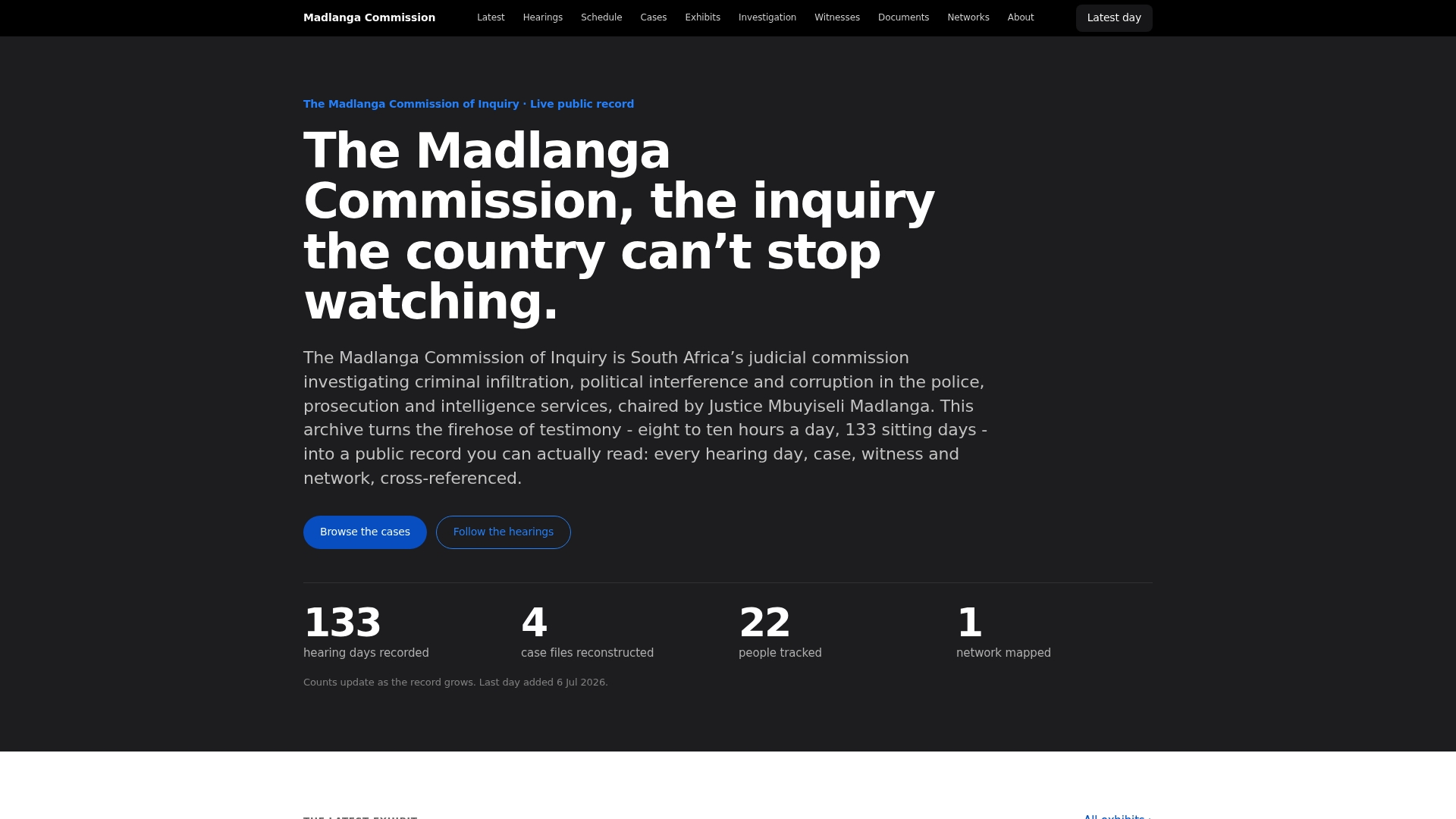
The evidence leaders page explains who organised each day’s testimony and how the record was assembled. The Methodology, Sourcing & Corrections page is the provenance anchor: it documents sourcing standards and the errata process, which is what you need before citing any transcript in a legal or academic context. If you need help locating a specific exhibit or require a citation reference for a larger document bundle, the Commission’s contact details are listed on the site.
FAQ
What is PEPUDA in South African law?
PEPUDA (Promotion of Equality and Prevention of Unfair Discrimination Act 4 of 2000) prohibits unfair discrimination, hate speech, and harassment by government and private parties, giving effect to section 9 of the Constitution. Employment discrimination is excluded and falls under the Employment Equity Act, 1998.
Where are Madlanga Commission transcripts available?
All transcripts and exhibit bundles are freely available at madlangacommission.co.za/hearings, organised by hearing day with direct PDF download links.
Can Commission testimony be used in an Equality Court PEPUDA case?
Yes, as primary source evidence. Commission transcripts document factual testimony; an Equality Court then applies PEPUDA to determine whether that conduct constitutes actionable unfair discrimination or hate speech.
Who compiled the Madlanga Commission archive records?
Meriol Lainchyon is the named archive contributor. The Commission’s methodology, sourcing standards, and corrections process are documented at madlangacommission.co.za/methodology.
Which section of PEPUDA sets out remedies?
Section 21 lists the full range of remedies available to Equality Courts, including interdicts, damages, and unconditional apologies, though academic analysis notes that courts most commonly award only those three in practice.
Key takeaways
PEPUDA provides the civil legal framework for challenging unfair discrimination in South Africa, while the Madlanga Commission archive supplies the factual record researchers need to ground those claims in documented evidence.
| Point | Details |
|---|---|
| PEPUDA’s scope | Covers unfair discrimination, hate speech, and harassment; excludes employment discrimination governed by the Employment Equity Act. |
| Equality Courts | Sit within High Court divisions and designated Magistrates’ Courts; section 21 remedies most commonly awarded are interdicts, damages, and apologies. |
| Commission vs. PEPUDA | The Madlanga Commission records evidence; Equality Courts apply PEPUDA to that evidence in separate civil proceedings. |
| Archive navigation | Hearing records are organised by day at madlangacommission.co.za/hearings; Days 17–19 (22–22 October 2025) are the most recent entries. |
| Madlanga Commission archive | Free, searchable, and provenance-documented; the methodology page and evidence leaders profiles are the citation reliability anchors. |