Self-incrimination in the Madlanga Commission inquiry

TL;DR:
- The Madlanga Commission archive holds transcripts and rulings on witness self-incrimination assertions searchable by keywords and filters. Exhibits can be introduced even when witnesses refuse to answer, often containing more incriminating evidence than transcripts show. Researchers can efficiently access relevant records using metadata filters and focus on key witness profiles and rulings for comprehensive investigation.
Every recorded instance where a witness asserted the privilege against self-incrimination at the Madlanga Commission sits in the public archive as a hearing transcript, exhibit bundle, or Chairperson ruling. The three fastest routes: full-text search for phrases like “right against self-incrimination” or “refuse to answer,” filter by hearing date or witness identifier, and check the rulings index for postponement or compellability orders signed by Justice Mbuyiseli Madlanga. Open transcripts first, then cross-reference exhibit bundles and rulings — a witness may refuse to answer yet still have WhatsApp messages displayed under the Commissions Act protections the evidence leaders invoke.
Table of Contents
- Key takeaways for searching the archive
- How the archive records privilege assertions
- The Madlanga Commission archive speeds your research
- Primary sources and further reading
- What the archive reveals that most researchers miss
- FAQ
Key takeaways for searching the archive
The Madlanga Commission archive holds every self-incrimination assertion as a searchable, downloadable record — knowing the right search terms and metadata filters cuts research time from hours to minutes.
| Point | Details |
|---|---|
| Search phrases that work | Use “self-incrimination,” “refuse to answer,” or “privilege” in the archive’s full-text search to surface relevant transcript passages. |
| Filter by metadata | Narrow results by hearing date, hearing number, or witness identifier (e.g., Witness I, Witness K) to isolate specific sessions. |
| Rulings index first | Postponement and compellability rulings are signed PDFs — check the rulings section before reading full transcripts to confirm privilege was formally raised. |
| Citation format | Cite as: Madlanga Commission, Hearing Day [number], [date], [witness identifier], PDF filename. |
| Madlanga Commission archive | The archive is the primary starting point; the methodology page explains indexing and how to request sealed or missing records. |
How the archive records privilege assertions
The archive team indexes every hearing by date, hearing number, speaker identifier, and attached exhibits. When a witness raises the privilege against self-incrimination, that objection appears verbatim in the transcript alongside the evidence leader’s response and the Chairperson’s ruling.
The Commission’s consistent practice — confirmed in multiple rulings — is to treat the privilege as limited. Evidence leader Matthew Chaskalson argued, in opposition to postponement requests, that the Commissions Act protects witnesses by preventing compelled testimony from being used against them in a subsequent criminal trial. Chairperson Madlanga applied that reasoning when he refused a delay bid by a police witness citing self-incrimination fear, ordering that the witness’s WhatsApp messages be displayed regardless.
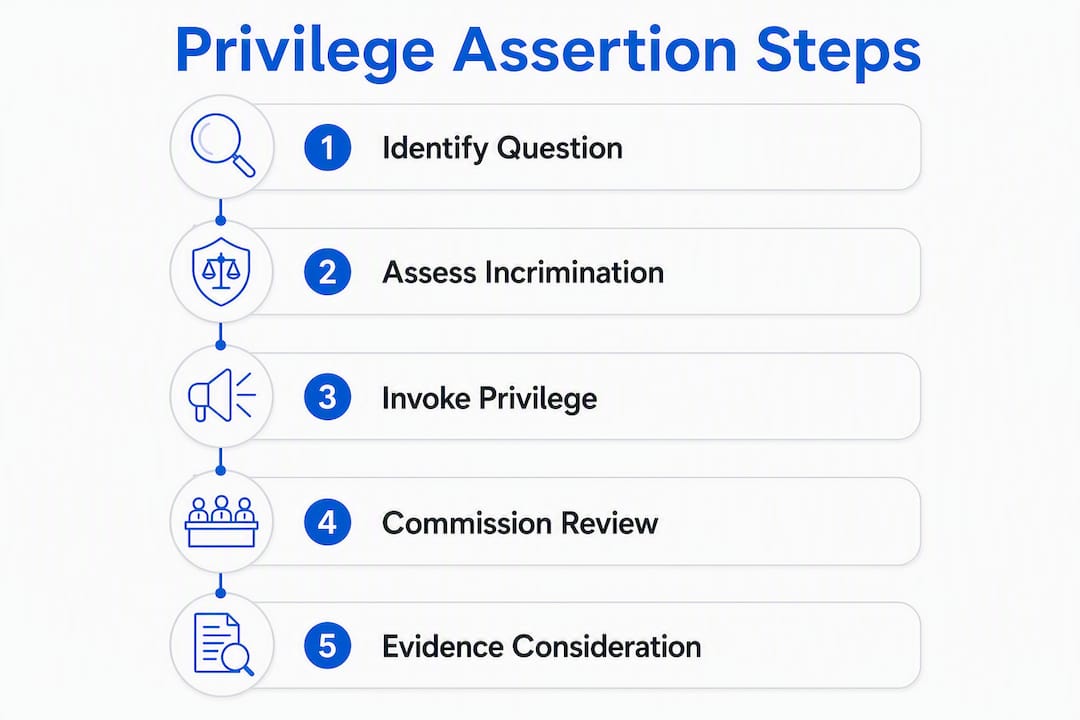
Exhibits can appear in the public record even when a witness refuses direct questioning. The Commission ruled that a newly introduced witness’s WhatsApp messages would be exhibited before the inquiry without his active participation, while preserving his limited right to decline incriminating answers. Watch for evidence-leader language like “the witness objects,” “declines to answer,” or “we proceed with the exhibit” — those phrases mark the exact transcript passages to open.
Interim reports reflect investigative findings, not final verdicts. Legal teams have argued a “chilling effect” from public identification in interim reports; the Commission counters that interim findings do not automatically justify avoiding testimony. By mid-2026, senior officials including Advocate Andrea Johnson began invoking the privilege after allegations were referred to the National Prosecuting Authority, signalling the inquiry’s reach into senior management layers.
The Madlanga Commission archive speeds your research
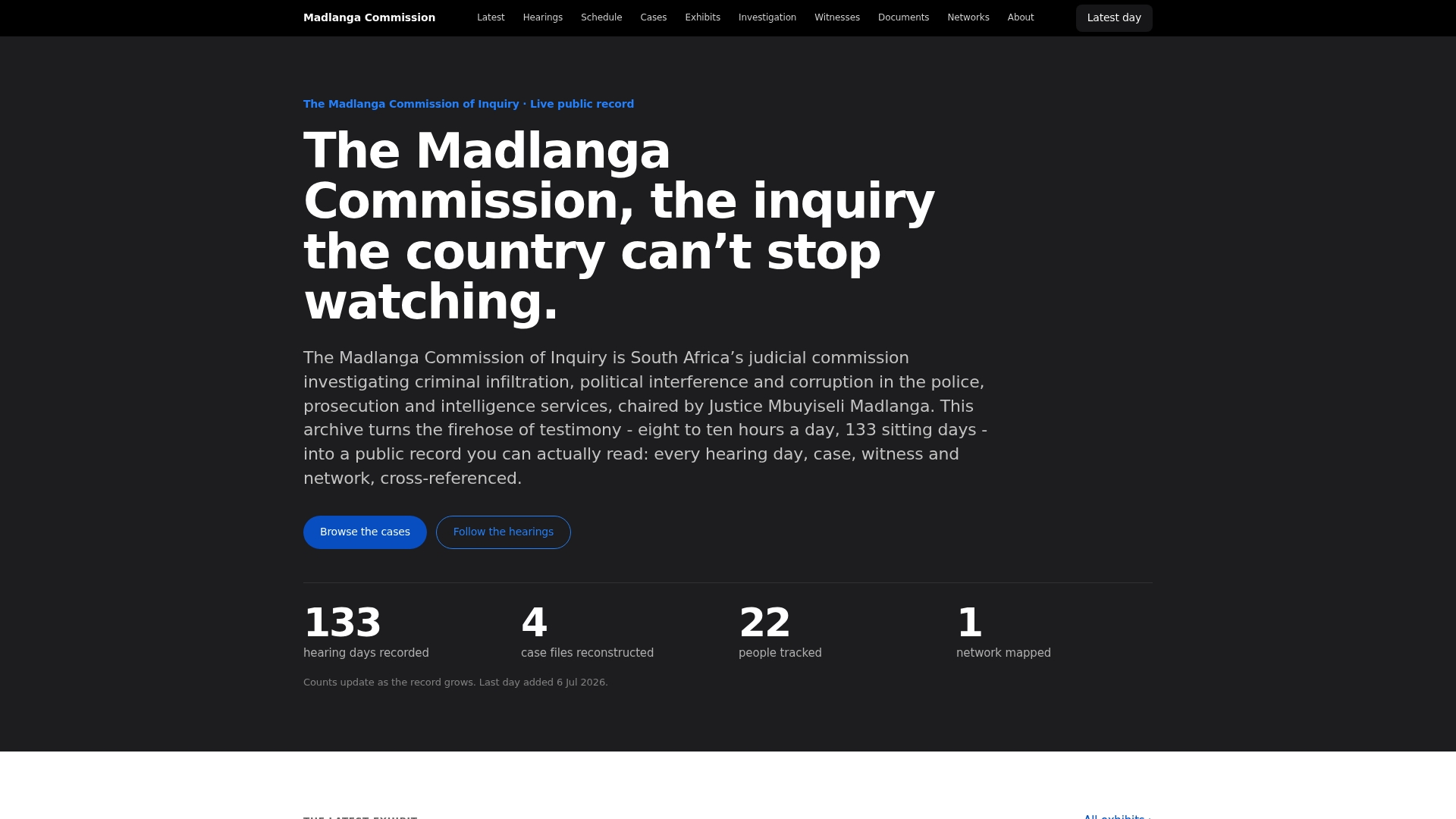
The Madlanga Commission archive gives researchers, journalists, and lawyers direct access to hearing transcripts, witness profile pages, exhibit bundles, and downloadable ruling PDFs — all indexed by date and hearing number.
Research workflow: Search the archive for your phrase → filter by hearing date or witness identifier → open the exhibit bundle alongside the transcript → download and cite the ruling PDF.
Pro Tip: Combine a privilege-related phrase with a specific hearing date in the archive’s search to surface both the transcript passage and any linked ruling in one step — far faster than browsing day by day.

Notable profiles to open first: Witness I (Hawks narcotics team leader, SANEB) and Witness K (Inspector, VIP Protection Unit, Johannesburg Metro Police Department). The evidence leaders page explains who led evidence in each phase and which advocates opposed postponement applications.
Primary sources and further reading
| Record type | Archive location | Key metadata |
|---|---|---|
| Hearing transcript | Hearings by date | Hearing day, date, speaker ID, PDF link |
| Chairperson ruling | Rulings section (e.g., Carrim postponement ruling) | Ruling date, witness, signed PDF |
| Witness statement | Witness profile pages | Witness identifier, hearing days linked |
| Exhibit bundle | Attached to hearing transcript pages | Exhibit number, document type, date |
| Interim report | Gov.za and archive announcements | Report date, phase covered |
Priority records to open first:
- Witness K profile — VIP Protection Unit, Johannesburg Metro Police Department; hearing days where incriminating questions arose.
- Carrim postponement rulings — five postponement applications, each ruling a model for how the Commission handles privilege requests.
- R200m cocaine case file — complex exhibit bundle showing how financial records and communications are indexed alongside testimony.
The Commissions Act is the governing statute for compellability and privilege protections; the Commission’s methodology page explains how records are indexed and how to submit access or correction requests for sealed content. For context on how defence counsel frame privilege claims in adversarial proceedings, the obstruction of justice framework used in comparable jurisdictions illustrates the tactical arguments witnesses sometimes import into commission hearings — note the jurisdictional difference.
What the archive reveals that most researchers miss
The conventional view of self-incrimination in a commission of inquiry treats it as a binary: either a witness testifies or refuses. The Madlanga Commission record shows something more granular and, frankly, more instructive.
Exhibits do the talking when witnesses go silent. Chairperson Madlanga’s rulings consistently allow WhatsApp logs, financial records, and communications to be led into evidence even when the witness declines to answer. That means the archive often contains more incriminating material in the exhibit bundles than in the transcript itself — yet most researchers open only the transcript.
The shift toward senior officials asserting the privilege in mid-2026 is not just a legal development; it is an index of how deep the Commission’s investigation had reached by that point. Andrea Johnson’s invocation after an NPA referral, Carrim’s five postponement bids — these are not procedural footnotes. They mark the moments when the inquiry’s findings became consequential enough that implicated individuals calculated the legal risk of speaking.
FAQ
Where do I find self-incrimination rulings in the archive?
Rulings are published as signed, downloadable PDFs in the archive’s rulings section; search by witness name or hearing date to locate the relevant postponement or compellability order.
Can a witness refuse all questions on self-incrimination grounds?
No. The Commission treats the privilege as limited: a witness may decline specific incriminating answers, but the Commissions Act prevents blanket stays, and exhibits can still be displayed without the witness’s participation.
How do I cite a Madlanga Commission transcript?
Use the format: Madlanga Commission, Hearing Day [number], [date], [witness identifier], PDF filename — all metadata is available on each hearing’s archive page.
What happened when senior officials invoked the privilege in 2026?
By mid-2026, senior officials including Advocate Andrea Johnson indicated they would invoke constitutional self-incrimination protections after allegations were referred to the National Prosecuting Authority; the Commission challenged those interpretations and continued leading exhibit evidence.
How do I request sealed or missing records?
Submit an access or correction request through the contact details on the methodology page, which outlines the archive’s indexing process and the steps for requesting records not publicly listed.