South Africa’s Truth and Reconciliation Commission Explained
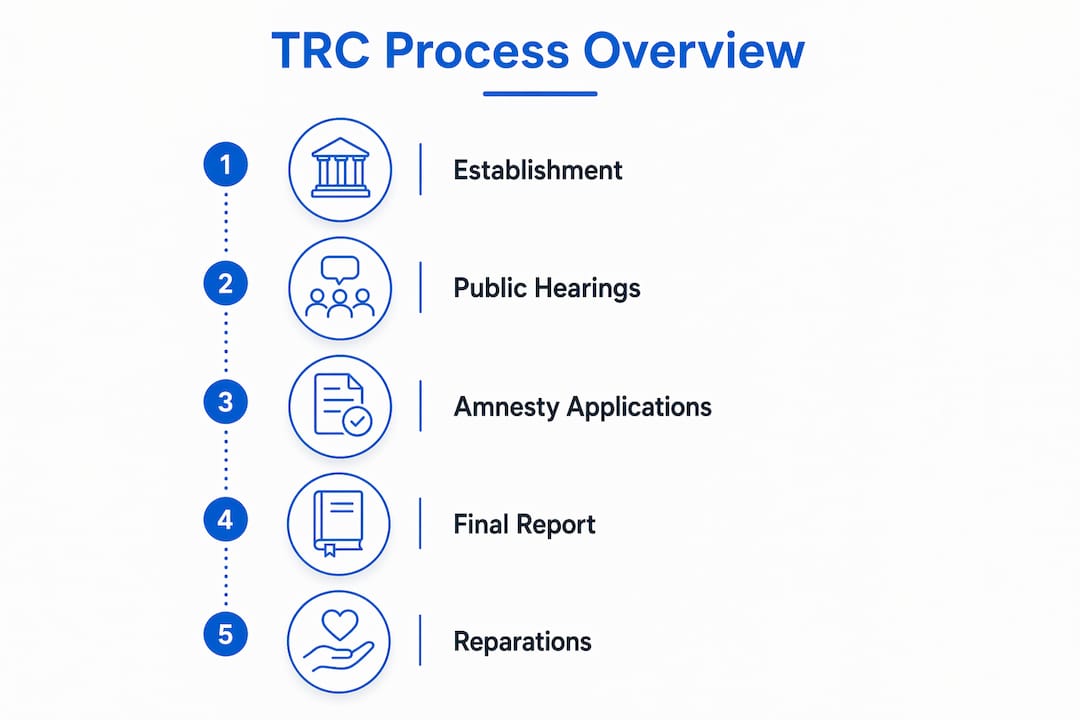
South Africa’s truth and reconciliation commission is defined as a restorative justice body established by the Promotion of National Unity and Reconciliation Act of 1995 to investigate human rights abuses committed between march 1960 and may 1994. Chaired by Archbishop Desmond Tutu and operating under the moral authority of President Nelson Mandela’s post-apartheid government, the TRC chose truth and amnesty over mass prosecution. Its first public hearings began in 1996, making 2026 the 30-year anniversary) of that landmark moment. The commission remains one of the most studied transitional justice experiments in history, and its legacy is far more complicated than most textbooks admit.
What was the truth and reconciliation commission in South Africa?
The TRC was not a court. It was a restorative justice body designed to document the truth about apartheid-era atrocities and offer a path forward without the chaos of mass criminal trials. The Promotion of National Unity and Reconciliation Act gave it legal standing and a clear mandate: investigate gross human rights violations committed by state and non-state actors across a 34-year period. That scope was deliberately broad, covering everything from political assassinations to systematic torture.
The commission operated on a foundational premise that South Africa could not build a constitutional democracy on a foundation of silence. Victims needed to be heard. Perpetrators needed to account for their actions. The TRC created a formal structure for both to happen simultaneously, which was unprecedented at the time.
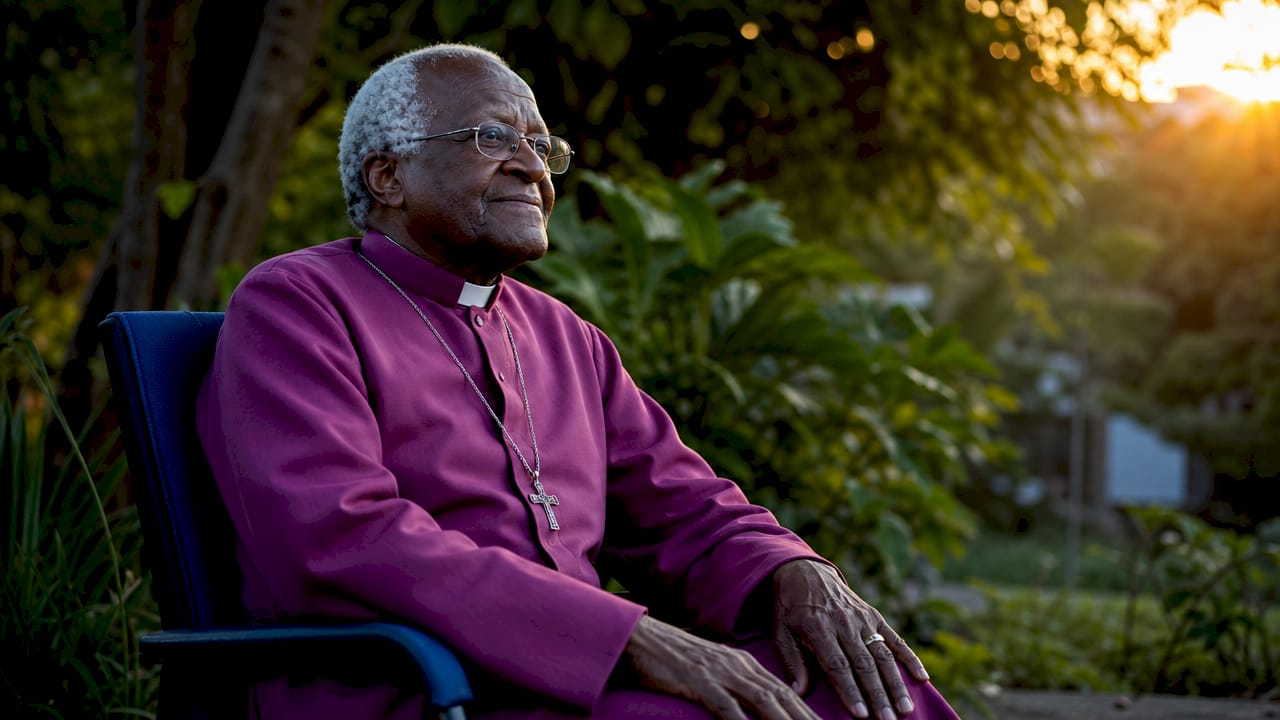
Archbishop Tutu described the process as giving South Africa a chance to look its past in the eye. That framing mattered. It set the tone for public hearings that were broadcast nationally, turning private suffering into shared national memory.
How did the TRC’s structure and committees work?
The commission assembled 17 commissioners) drawn from diverse backgrounds, including law, religion, medicine, and civil society. They operated through three specialized committees, each with a distinct function:
- Human Rights Violations Committee: Gathered testimony from victims and witnesses about abuses suffered under apartheid.
- Amnesty Committee: Reviewed applications from perpetrators seeking legal immunity in exchange for full disclosure.
- Reparation and Rehabilitation Committee: Recommended financial and symbolic reparations for victims and their families.
The amnesty process had strict criteria. A perpetrator had to prove the act was politically motivated, proportionate to the political objective, and fully disclosed without omission. Acts motivated by personal gain did not qualify. This framework separated the TRC from a blanket pardon and gave it moral credibility.
Pro Tip: If you want to understand how South Africa’s commission model compares to other public inquiries, the structure of the three committees is the clearest entry point. Each committee represents a different theory of justice: truth-telling, accountability, and repair.
Public hearings took place across the country, in community halls, churches, and civic centers. That geographic spread was intentional. The TRC brought the process to communities rather than centralizing it in Pretoria or Cape Town. The TRC’s public hearings) became an enduring public record that still informs South Africa’s dialogue on accountability today.
What are the TRC’s most significant achievements?
The TRC’s greatest contribution was preventing a bloodbath. South Africa in 1994 faced a genuine risk of civil war or mass retributive violence. The commission gave both sides of the apartheid conflict a structured exit from that cycle.
- The TRC laid the constitutional groundwork for human rights norms that now anchor South Africa’s Bill of Rights.
- It created a documented record of apartheid atrocities that could not be officially denied or erased.
- It promoted restorative justice as a credible alternative to criminal prosecution in post-conflict societies.
- It influenced the design of truth commissions in Rwanda, Sierra Leone, Liberia, and beyond.
- It strengthened national awareness of what apartheid actually did to real people, in granular, named detail.
The TRC’s influence on subsequent commissions helped embed constitutional values and set legal precedents for investigating human rights violations in governance. That export of the model is one of its most underappreciated legacies. Countries emerging from conflict now routinely study the South African process as a reference point.
Analysts at the Institute for Justice and Reconciliation note there is no single TRC legacy but competing ones: a positive foundation for constitutional principles alongside persistent failures to address structural inequality. That dual reading is the honest one.
What criticisms and failures has the TRC faced?
The TRC’s shortcomings are serious and well-documented. They fall into three broad categories: scope, reparations, and political interference.
-
Narrow scope on economic justice. The commission focused on individual gross human rights violations. It did not address economic apartheid, meaning the systematic dispossession of land, exclusion from skilled labor markets, and denial of education that shaped Black South Africans’ material lives for generations. The TRC’s limited economic scope) left millions of victims without any form of economic justice.
-
Reparations failure. The President’s Fund holds R2 billion earmarked for victim compensation. That money has moved slowly. The gap between official commemoration and victims’ lived realities is wide and politically embarrassing.
-
Political interference and impunity. Several perpetrators denied amnesty were never prosecuted. Political decisions blocked accountability in case after case, creating a culture of impunity that critics argue weakened the rule of law rather than strengthening it.
“The TRC’s moral success in avoiding widespread bloodshed contrasts sharply with the reality that its amnesty concessions compromised justice for economic victims and left structural inequality entirely intact.”
The social effects of TRC broadcasts were also more complicated than intended. Research shows that TRC broadcasts increased cohesion within Black communities but simultaneously deepened racial divisions between communities. Shared truth did not automatically produce shared identity.
| Criticism | Core Problem | Current Status |
|---|---|---|
| Economic apartheid ignored | TRC focused on physical violations, not systemic dispossession | Unresolved; structural inequality persists |
| Reparations underfunded | R2 billion in President’s Fund disbursed slowly | Ongoing; new housing programs launched in 2026 |
| Prosecutions blocked | Denied amnesty cases rarely reached court | Impunity culture remains a governance challenge |
| Racial divisions deepened | Broadcasts increased cohesion in some groups, division in others | Civil society continues reconciliation work |
How are reparations and reconciliation evolving today?
Reconciliation is a decades-long collective process, not a one-time event managed by a single commission. South Africa’s government has acknowledged this, though its actions have been inconsistent.
President Cyril Ramaphosa stated publicly that reparations recommendations were on point and that ongoing government programs build directly on the TRC’s original framework. In 2026, a housing assistance program launched in Ndwedwe represents one of the more concrete reparation efforts in recent years. It is a start, but it does not address the scale of what was promised.
Pro Tip: Track reparations progress through civil society organizations like the Institute for Justice and Reconciliation, which publishes annual assessments of South Africa’s reconciliation indicators. Government statements and ground-level reality often diverge significantly.
The barriers to full reconciliation are structural, not ceremonial. Socioeconomic inequality in South Africa remains among the highest in the world. Land ownership, educational access, and income distribution still reflect apartheid-era patterns in measurable ways. No commission can fix that alone.
Civil society organizations, faith communities, and local government bodies now carry much of the reconciliation work. They operate outside formal state structures and often reach communities that government programs miss. Their role is not supplementary. It is central.
How has the TRC shaped South Africa’s legal and governance systems?
The TRC’s influence on South African law and governance is concrete and lasting. It did not just produce a report. It changed how the country thinks about accountability.
- The commission established legal precedents for documenting and adjudicating human rights abuses outside the criminal court system.
- It normalized the commission of inquiry as a legitimate tool for public accountability in South Africa.
- It inspired truth commissions across Africa and in post-conflict societies globally, from Ghana’s National Reconciliation Commission to Liberia’s Truth and Reconciliation Commission.
- It created an archival record that courts, researchers, and civil society organizations still draw on to build accountability cases.
- It demonstrated that transitional justice requires both formal legal mechanisms and sustained civic engagement to produce durable results.
The challenge the TRC exposed is that legal frameworks alone cannot deliver reconciliation. South Africa’s subsequent commissions of inquiry, including those addressing state capture and corruption, reflect the same tension: formal processes create records, but political will determines whether those records produce consequences.
Key Takeaways
The TRC built South Africa’s constitutional foundation for human rights but left structural inequality and reparations largely unresolved, requiring sustained civic and government commitment to complete its work.
| Point | Details |
|---|---|
| Restorative justice model | The TRC chose truth and amnesty over prosecution, creating a model studied worldwide. |
| Dual legacy | The commission succeeded morally but failed to address economic apartheid or deliver full reparations. |
| Reparations gap | The President’s Fund holds R2 billion, yet victim compensation has moved slowly for three decades. |
| Governance influence | The TRC normalized commissions of inquiry and set legal precedents still used in South African accountability processes. |
| Reconciliation is ongoing | Civil society, government programs, and constitutional rights frameworks must all work together to finish what the TRC started. |
The TRC’s unfinished business, from where I stand
The TRC did something genuinely remarkable. It gave South Africa a way out of a potential civil war without firing a shot. That is not a small thing. Countries with far less fractured histories have failed to manage transitions that peaceful.
But I think the commission’s moral success has been used, consciously or not, as a reason to avoid harder conversations about money, land, and economic power. Reconciliation became a story South Africa told about itself, and that story was easier to tell than to live. The gap between the TRC’s symbolic achievement and the material reality of most Black South Africans is not a footnote. It is the central unresolved question of the post-apartheid era.
What strikes me most, looking at the 30-year mark, is how the commission’s architecture was sound but its follow-through was not. The three committees, the amnesty criteria, the public hearings format: all of it was thoughtfully designed. The failure came after the final report was handed over, when political will ran out and the President’s Fund sat largely untouched.
The lesson for emerging transitional justice processes globally is this: a commission can document the truth, but it cannot enforce the response. That requires sustained political accountability, civic pressure, and a government willing to be held to its own commitments. South Africa is still working that out, and so is every other country that has borrowed the TRC model.
— Nkosi
South Africa’s commissions of inquiry, then and now
The TRC set the standard for public accountability in South Africa, but it was not the last word. Contemporary commissions of inquiry continue that tradition, investigating corruption, criminal infiltration, and institutional failure with the same tools: public hearings, sworn testimony, and documented evidence.
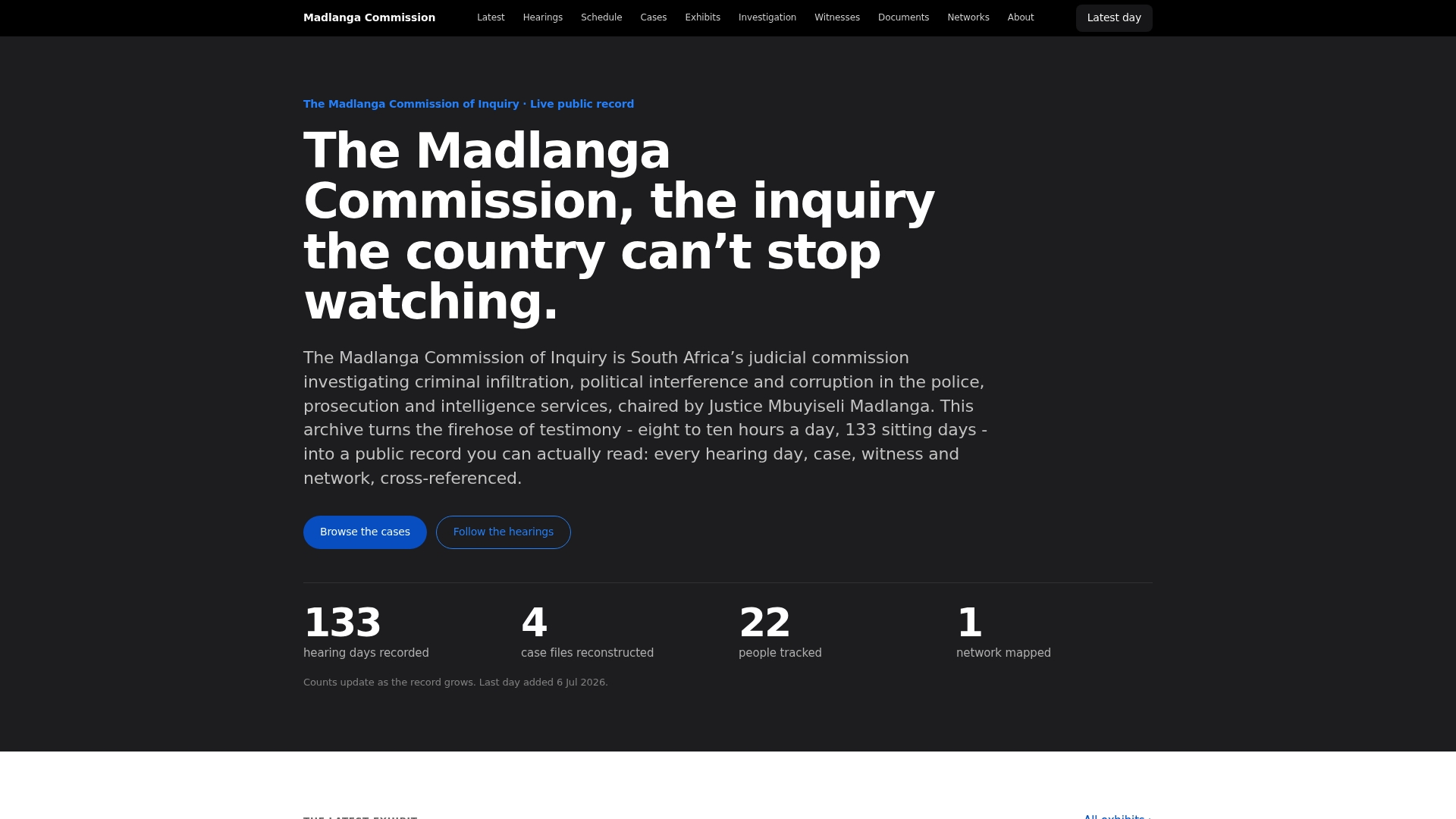
Madlangacommission tracks the Madlanga Commission of Inquiry, a current judicial investigation into criminal infiltration, political interference, and corruption within South Africa’s police, prosecution, and intelligence sectors. The archive gives you access to hearing records and case files without requiring you to follow live proceedings. If you want to understand how South Africa’s accountability mechanisms work today, the full public record is the place to start. The TRC created the template. Madlangacommission makes the current chapter readable.
FAQ
What was the TRC in South Africa?
The TRC, or Truth and Reconciliation Commission, was a restorative justice body established in 1995 to investigate human rights abuses committed between march 1960 and may 1994. It offered amnesty to perpetrators who made full disclosure in exchange for avoiding criminal prosecution.
What was the purpose of the TRC?
The TRC’s purpose was to document apartheid-era atrocities, give victims a public platform, and promote national reconciliation without triggering mass retributive violence. It prioritized truth-telling and healing over criminal punishment.
How many commissioners did the TRC have?
The TRC had 17 commissioners, drawn from law, religion, medicine, and civil society, who operated through three committees covering human rights violations, amnesty, and reparations.
Did the TRC succeed in achieving reconciliation in South Africa?
The TRC succeeded in preventing widespread violence and building constitutional foundations, but analysts identify a dual legacy: it failed to address economic apartheid and left the President’s Fund’s R2 billion largely undisbursed to victims.
How does the TRC relate to current South African commissions of inquiry?
The TRC normalized the commission of inquiry as a public accountability tool in South Africa. Current bodies like the Madlanga Commission of Inquiry follow the same model of public hearings, sworn testimony, and documented evidence to investigate institutional failures.