What Is a Victim Impact Statement? Your Clear Guide

TL;DR:
- A victim impact statement allows crime victims to describe the profound effects of a crime to the court. Courts use these voluntary statements during sentencing to understand the full human cost beyond legal facts. Well-structured, specific, and honest statements can humanize cases and help victims find closure.
A victim impact statement is a written or oral document that allows crime victims to describe the physical, emotional, financial, and psychological consequences of a crime directly to the court. Courts use these statements during sentencing or parole hearings to understand the full human cost of an offense. The U.S. Department of Justice recognizes victim impact statements as a formal part of the sentencing process. Submitting one is entirely voluntary, and you control what you share and how you share it.
What is a victim impact statement and what does it include?
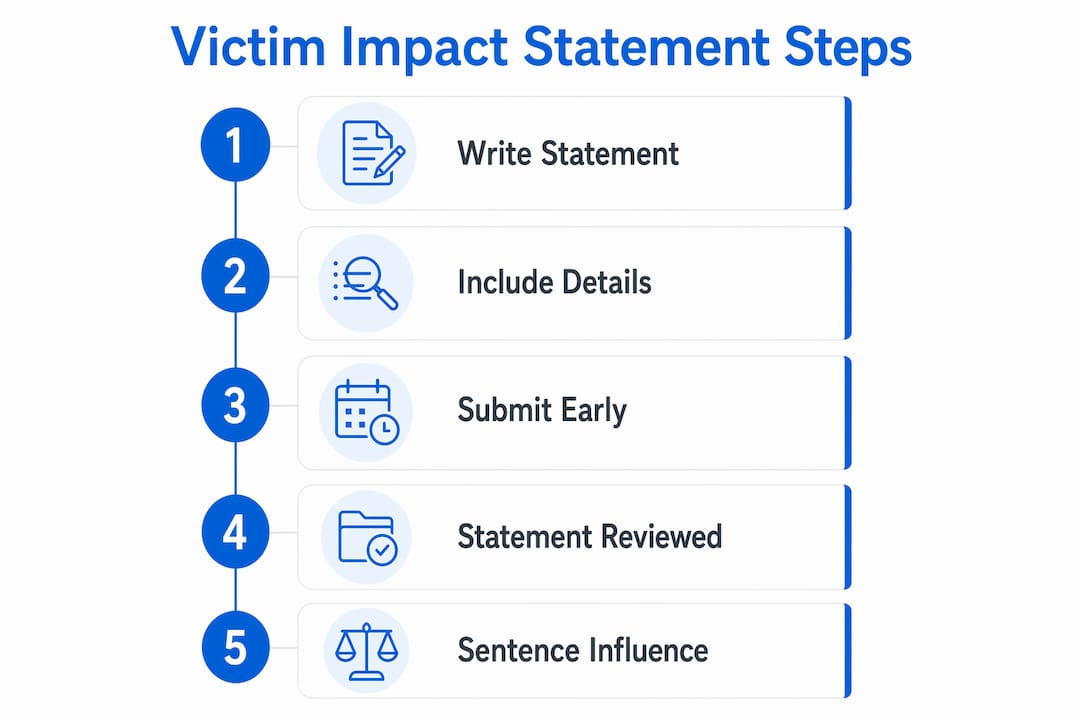
A victim impact statement is defined as a formal account, written or spoken, in which a crime victim explains how the offense has changed their life. The statement goes beyond the legal facts of the crime. It gives the court a personal, human perspective that police reports and legal arguments cannot provide.
Victims typically include several categories of impact:
- Emotional and psychological effects: Anxiety, depression, post-traumatic stress, nightmares, or changes in daily behavior. For example, a victim might describe no longer feeling safe in their own home.
- Physical injuries: Ongoing pain, disability, surgeries, or medical treatments resulting from the crime.
- Financial losses: Medical bills, lost wages, property damage, and out-of-pocket costs tied directly to the offense.
- Social and relational impacts: Strain on family relationships, withdrawal from community activities, or inability to work or parent as before.
- Supporting documents: Medical records, financial statements, or therapist letters can accompany the statement to substantiate your claims.
The voluntary nature of participation means no one can force you to submit a statement. In many jurisdictions, no one else can submit one on your behalf if you object. This protection keeps the statement authentically yours.
Pro Tip: Include specific behavioral changes rather than general feelings. A detail like “I now sleep with the lights on every night” tells the court far more than “I feel scared.”

How does the legal system use victim impact statements?
Courts receive victim impact statements after a guilty verdict or a guilty plea, not during the trial itself. The timing matters. At the sentencing phase, the judge is no longer deciding guilt. The judge is deciding consequences, and your statement directly informs that decision.
Victim impact statements are included in the Presentence Investigation Report, a document judges review alongside legal guidelines and other evidence before imposing a sentence. This report gives the judge a complete picture of the offense and its aftermath. Your statement sits inside that picture as the human element.
Experts emphasize that statements humanize the crime for the court, elevating victims from passive witnesses to individuals whose losses carry legal weight. A judge who reads only police reports sees facts. A judge who reads your statement sees a person.
“The statement helps the judge understand the full impact of the offense beyond legal facts, providing a humanized perspective on harm suffered that no other document in the case can replicate.”
The legal system does place one firm limit on what you can include:
- You may describe every consequence of the crime in detail.
- You may express your feelings about the offense and the offender.
- You may not request a specific sentence or make legal arguments. Sentencing decisions belong exclusively to the judge.
This boundary exists to keep the process fair and to protect the legal weight of your statement. A statement that crosses into sentencing advocacy can be dismissed or edited by the court.
How do you write an effective victim impact statement?
Writing an effective statement requires structure, honesty, and restraint. The most effective statements follow a clear, thematic structure that groups impacts into categories: emotional, physical, financial, and relational. This organization helps the court process your account efficiently and makes sure nothing significant gets overlooked.
Step-by-step approach
- Start with who you are. Briefly identify yourself and your relationship to the crime. One or two sentences is enough.
- Describe emotional and psychological effects. Be specific. Name the feelings and describe how they show up in your daily life.
- Document physical consequences. List injuries, treatments, and any lasting health effects. Attach medical records if you have them.
- Quantify financial losses. Include medical costs, lost income, and any other out-of-pocket expenses. Attach financial records where possible.
- Address relational and social impacts. Describe changes in your relationships, your ability to work, or your participation in community life.
- Close with a forward-looking statement. Describe what recovery looks like for you, or what you still face.
Effective statements avoid dramatic or flowery language. The court responds to facts and behavioral evidence. A sentence like “I now check the locks on my front door three times every night before going to sleep” is far more powerful than “I live in constant fear.” Concrete details carry weight. Abstract emotions do not.
Pro Tip: Write in your own voice. Legal language distances the court from your experience. Plain, honest sentences connect.
Common pitfalls vs. effective approaches
| Common Pitfall | Effective Approach |
|---|---|
| Vague emotional language (“I feel terrible”) | Specific behavioral change (“I cannot sleep more than three hours”) |
| Requesting a specific prison sentence | Describing the ongoing harm without naming a punishment |
| Disorganized, stream-of-consciousness writing | Thematic structure: emotional, physical, financial, relational |
| Overly formal or legal tone | Personal, conversational voice in plain language |
| Submitting at the last minute | Submitting well before sentencing so both sides can review it |
Submitting your statement early matters. Both the defense and prosecution review it before sentencing. Early submission gives you time to correct any factual errors and strengthens the statement’s credibility in court.
How can a victim impact statement support recovery and rehabilitation?
A victim impact statement does more than inform a judge. It gives you a voice in a process that can otherwise feel entirely out of your control. Delivering an impact statement is a means for victims to regain control and achieve emotional closure. That sense of agency is real and documented.
The psychological benefits for victims include:
- Processing trauma: Putting the experience into words, on your own terms, is a recognized step in trauma recovery.
- Achieving closure: Many victims report that speaking their truth in court marks a turning point in their healing.
- Feeling heard: The formal legal setting gives your account official weight. The court is required to consider what you say.
- Confronting the offender: For some victims, knowing the offender must hear or read their words is itself a form of resolution.
The statement also provides victims a sense of agency that can aid in offender rehabilitation by confronting the crime’s consequences directly. When an offender hears the specific, human cost of their actions, it can contribute to genuine accountability. Restorative justice research supports this connection between victim testimony and offender awareness.
Writing in a personal, genuine voice rather than formal legal language improves how effectively the statement conveys the human impact, both for the court and for the victim’s own sense of completion. The act of writing is part of the healing, not just the outcome.
Key Takeaways
A victim impact statement is the most direct tool a crime victim has to shape how the court understands the full human cost of an offense.
| Point | Details |
|---|---|
| Legal definition | A voluntary written or oral statement describing physical, emotional, financial, and psychological harm from a crime. |
| Timing in court | Submitted after a guilty verdict or plea, included in the Presentence Investigation Report for the judge. |
| Structure matters | Organize by category: emotional, physical, financial, and relational impacts for maximum clarity. |
| Key writing rule | Use specific behavioral details, not abstract feelings, to show the court the real scope of harm. |
| Limits on content | Never request a specific sentence. Sentencing decisions belong solely to the judge. |
Why I think victim impact statements are underused and misunderstood
By Meriol Lainchyon
After years of following criminal proceedings and judicial inquiries, the pattern I see most often is this: victims either skip the statement entirely because they do not know they have the right, or they submit one that is so vague the court cannot act on it meaningfully.
The legal system does a poor job of explaining what a victim impact statement actually is. Victims are handed a form or a pamphlet and left to figure it out. The result is statements full of abstract pain and no concrete detail. Judges are not unsympathetic. They are overworked. A statement that gives them specific, organized facts does more work than a page of raw emotion.
The other mistake I see is victims treating the statement as a sentencing argument. They write what they want the judge to do. That is not the statement’s purpose, and it can undermine the document’s credibility. Your job is to show the court what happened to your life. The judge’s job is to decide what happens next.
What I find genuinely moving, and legally effective, is the statement that reads like a person talking. Not a lawyer, not a victim advocate, just a person describing Tuesday morning before the crime and Tuesday morning after. That contrast is what changes a judge’s understanding. That contrast is what the statement is for.
— Meriol Lainchyon
Legal testimony and public records at the Madlanga Commission
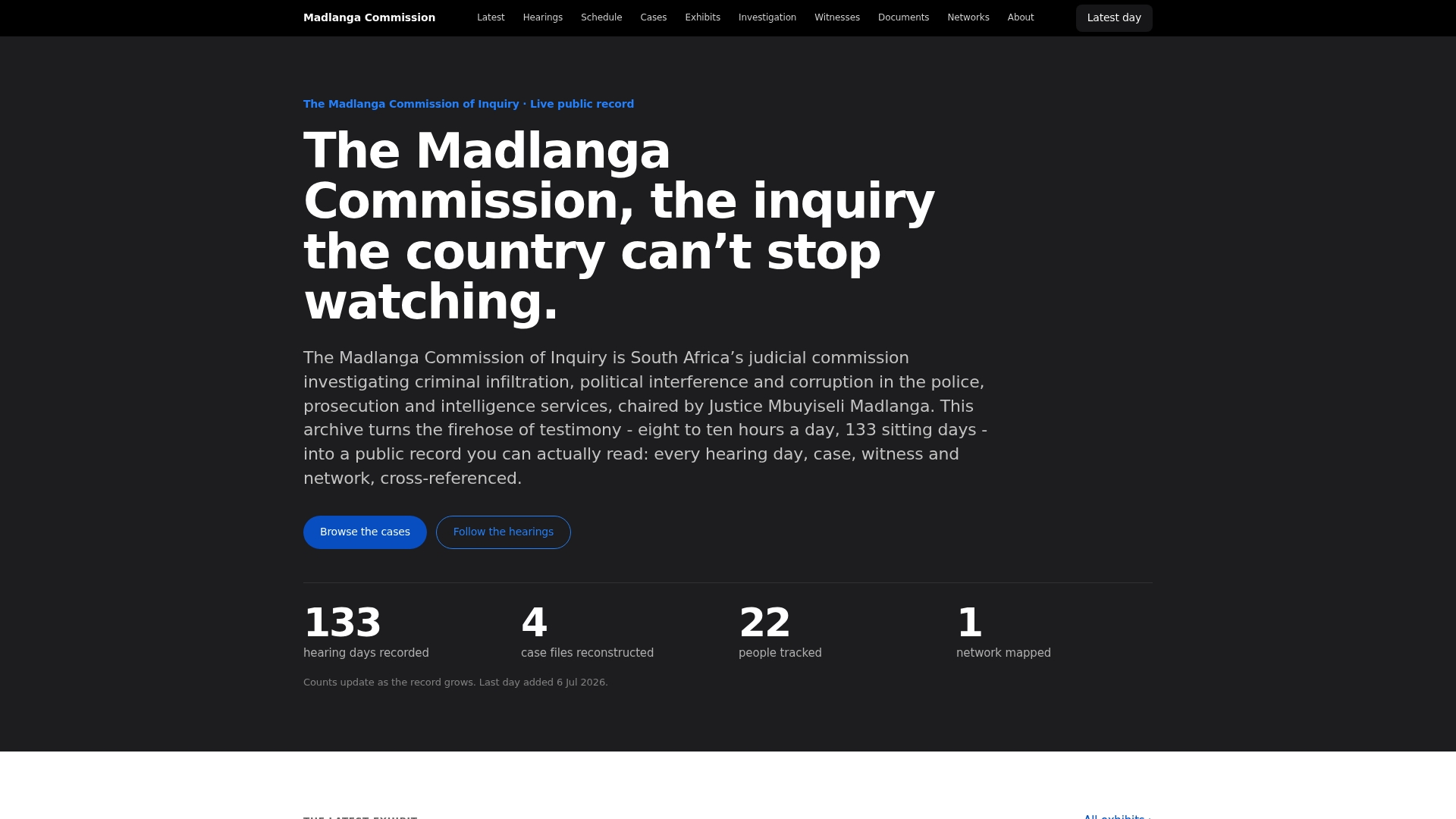
Understanding how victim testimony and witness statements function within formal legal proceedings takes on new meaning when you can see real examples in action. The Madlanga Commission of Inquiry, chaired by Justice Mbuyiseli Madlanga, maintains a full public archive of hearings, witness testimonies, and case files from its investigation into criminal infiltration and corruption within South Africa’s police, prosecution, and intelligence sectors.
The Commission’s archive is one of the most detailed public records of formal testimony available in South Africa. Families and individuals seeking to understand how legal statements shape judicial outcomes can review the Commission’s complete case files and hearing transcripts. The archive is free to access and updated as proceedings continue.
FAQ
What is the legal definition of a victim impact statement?
A victim impact statement is a voluntary written or oral document in which a crime victim describes the physical, emotional, financial, and psychological consequences of a crime to the court. The U.S. Department of Justice recognizes it as a formal part of the sentencing process.
Who can write a victim impact statement?
The direct victim of a crime writes the statement. In cases involving death or incapacitation, a family member or legal representative may submit one on the victim’s behalf. No one can submit a statement over the victim’s objection in most jurisdictions.
When is a victim impact statement read in court?
The statement is presented after a defendant is found guilty or enters a guilty plea, during the sentencing phase. It is included in the Presentence Investigation Report that the judge reviews before deciding on a sentence.
Can a victim impact statement influence the sentence?
Yes. Judges consider victim impact statements alongside legal guidelines and the Presentence Investigation Report when determining a sentence. The statement cannot request a specific outcome, but it directly informs the court’s understanding of the harm caused.
How long should a victim impact statement be?
No fixed length requirement exists. The statement should be long enough to cover all significant impacts clearly, organized by category: emotional, physical, financial, and relational. Clarity and specificity matter more than length.
Recommended
- Witness I - Hawks narcotics team leader (SANEB), Madlanga Commission
- Witness K - Inspector, VIP Protection Unit, Johannesburg Metro Police Department (JMPD), Madlanga Commission
- Michael van Wyk - Chief Executive, Medicare24 Holdings, Madlanga Commission
- Vusimuzi ‘Cat’ Matlala - Businessman; alleged ‘Big Five’ cartel figure, Madlanga Commission