Find Inquiry or Court Records Same Day in South Africa via Madlanga
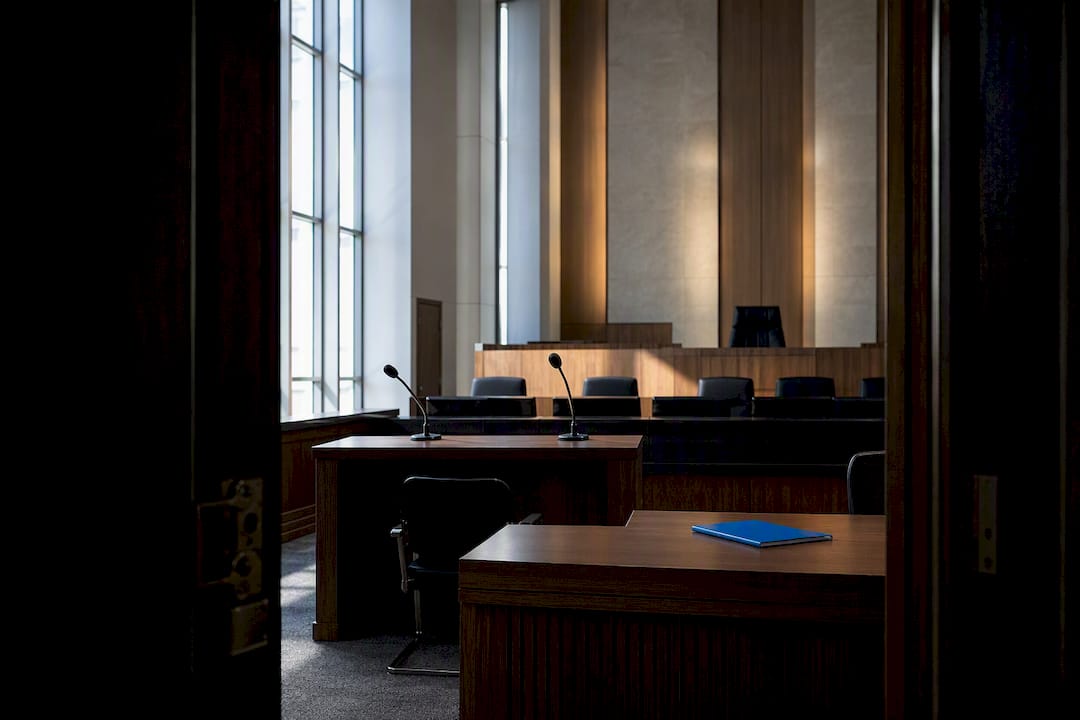
Court records are enforceable judicial documents produced through adversarial trial procedure and are public by default. Inquiry records come from investigative commissions, carry no binding legal force, and stay under the chairperson’s control until formally released. Courts are custodied by registrars and published widely on repositories like SAFLII; commissions are custodied by a secretariat and often need a formal request. Skip to the comparison table below if you need the fast answer, or the how-to section if you’re trying to actually get a document in hand.
TL;DR:
- Court records are public by default and typically available within the same week through sources like SAFLII, while inquiry records are restricted and often require formal requests.
- Court judgments are enforceable and suitable for legal use, whereas commission reports are advisory; commission records include broader evidence like hearsay and informal accounts.
- Accessing court files may involve searching online first, then contacting the court registry, with formal PAIA requests as a last resort, especially for older or unreported cases.
- Inquiry records are controlled by the chairperson and secretariat, with transcripts and exhibits often withheld until officially released, sometimes transferred to government archives after proceedings conclude.
- Using commission transcripts as evidence in legal disputes is risky because they contain material courts would exclude, so corroboration is essential for their reliability.
Table of Contents
- Court vs inquiry records: an at-a-glance comparison
- How court records are made and how you can get one
- How inquiry records are created, controlled, and restricted
- Why the rules of evidence change what ends up in the record
- Step by step: getting a copy of either record type
- The Madlanga Commission as a working model of public access
- Which record should you actually rely on?
- Why the conventional advice on this misses the point
- Sources
- FAQ
Court vs inquiry records: an at-a-glance comparison
The two systems answer different questions, and that shapes everything about how their paperwork works. A court exists to decide who is right under the law and to issue an order someone can enforce. A commission exists to find out what happened and recommend what should change, without the power to punish anyone directly.
| Dimension | Court records | Inquiry (commission) records |
|---|---|---|
| Purpose | Resolve a legal dispute between parties | Investigate a matter of public concern and recommend action |
| Legal effect | Binding, enforceable judgment or order | Advisory findings and recommendations; not enforceable |
| Procedural model | Adversarial: parties present their own cases | Inquisitorial: the chairperson actively leads questioning |
| Rules of evidence | Formal admissibility rules apply | Chairperson decides what to admit; broader material allowed |
| Who controls the record | Court registrar, as part of the official case file | Chairperson and secretariat, under the terms of reference |
| Default public access | Public by default, under the open justice principle | Restricted by default; often needs written permission or a request |
A few contrasts matter more than the rest of the table suggests. Court judgments can be cited in future cases and enforced by the sheriff; a commission’s report cannot compel anyone to do anything on its own, even when it names names. Commissions can also consider evidence a court would throw out, including hearsay and informal witness accounts, which makes their records richer for context but weaker as standalone proof.
Access timing differs sharply too. A court record is typically searchable the same week a judgment is handed down. A commission’s underlying exhibits and transcripts often stay sealed until the chairperson approves release or the inquiry concludes and the material transfers to another custodian.
- Court orders are enforceable the day they’re granted; commission recommendations depend entirely on whoever receives them acting on the findings.
- Commissions can legally consider evidence that would never survive a court’s admissibility test, which is a feature for fact-finding and a limitation for legal certainty.
- Start any search for a court judgment with a legal database like SAFLII; start a commission search on the inquiry’s own website before filing a formal request.
- Both records can eventually end up in the National Archives, but a commission’s records usually pass through several hands first.
How court records are made and how you can get one
A court record builds up in layers as a case moves through the system: pleadings and filings, evidence bundles, transcripts of oral testimony, exhibits, and finally the judgment or order itself. The registrar’s office holds the master case file, and it’s the registrar, not the judge, who is the practical custodian you’ll deal with if you want a copy.
Published judgments are the easiest layer to access, because South African courts operate under the open justice principle: court records are public by default, and any restriction has to be exceptional and justified by a strong overriding interest, as the Supreme Court of Appeal has affirmed. That default matters practically. It means the burden sits on whoever wants secrecy, not on the person asking to read the file.
Pro Tip: Before you contact a court registry at all, search the judgment on SAFLII first. Most reported judgments from the last two decades are already indexed there, free, and you’ll save yourself a trip.
Here’s the practical sequence for tracking down a specific court record:
- Search SAFLII by party name, case number, or citation. This covers reported judgments from most South African courts and is the fastest free route.
- If the judgment isn’t there, or you need the full case file rather than just the judgment, contact the registry of the specific court where the matter was heard.
- Ask the registrar for the case number and confirm whether you need to view the file in person, request copies, or apply formally.
- If access is refused or restricted, consider a formal request under the Promotion of Access to Information Act (PAIA), or, in rarer cases, a court application to compel disclosure.
Not every case file is fully digitized, which is easy to forget when SAFLII makes recent judgments feel instantly searchable. Older matters, provincial division records, and unreported rulings often exist only on paper at the courthouse, so budget time for a physical visit if the case predates widespread e filing.
How inquiry records are created, controlled, and restricted
A commission’s paper trail starts somewhere very different from a court’s: not with a summons, but with a proclamation and a set of terms of reference. Those terms define what the commission can investigate, what powers its chairperson holds, and, critically, what happens to the material it gathers. Commissions of inquiry are established under the Commissions Act and cannot prosecute or convict anyone; their job is fact-finding and recommendation only.
The chairperson’s authority over the record is much more direct than a judge’s authority over a court file. Regulations for judicial commissions typically state that mechanical or electronic recordings may only be transcribed on the chairperson’s order, and that transcription only becomes part of the official record once approved. Staff working on the inquiry usually swear a secrecy oath, and documents submitted to the commission often cannot be published or disseminated without the chairperson’s written permission, according to UCT News’s overview of commissions versus courts.
That control structure explains a lot about why commission records feel harder to reach than court judgments:
- The chairperson, not a registrar, decides what gets transcribed and when it becomes official.
- Secrecy oaths bind secretariat staff, so leaks or informal disclosure are actively discouraged.
- Submitted documents generally can’t be published without written permission from the chair.
- Once the inquiry concludes, records are often transferred to a government department or the National Archives, adding another layer of custodianship before a member of the public can request them.
Pro Tip: If a commission is still sitting, check its own website before filing anything formal. Well-run inquiries publish daily hearing pages, exhibits, and rulings as they happen, which is far faster than waiting for a post-inquiry archive transfer.
The upside of this closed-door structure is that a chairperson can protect witnesses, ongoing investigations, or national security concerns while the inquiry runs. The downside is that the researcher, journalist, or curious citizen has to wait, or file a PAIA request once the terms of reference allow it.
Why the rules of evidence change what ends up in the record
Courts and commissions gather information under fundamentally different rulebooks, and that shapes the reliability of what lands in each file. A court is adversarial: two sides present competing evidence, and a judge referees according to strict admissibility rules. Hearsay is generally excluded. Unsigned statements rarely make it into the judgment. What survives to become the official record has already passed a filtering test.
A commission works the opposite way. The chairperson runs an inquisitorial process, actively directing questions and deciding, often quite broadly, what counts as useful evidence. Commissions can consider material that a court would exclude, including informal witness accounts and investigative leads that never get tested through cross-examination in the adversarial sense.
That trade off cuts both ways for anyone using the record later:
- Commission material can surface systemic patterns and context a narrower court case would never capture.
- The same breadth means commission findings sometimes don’t survive judicial review. The Seriti Commission’s findings were overturned by a court on review, a reminder that inquiry conclusions aren’t the final word.
- Relying on a commission transcript as proof in a separate legal matter is risky without corroboration, since much of what’s in it wouldn’t meet a court’s own bar for admission.
- Sealed exhibits, in particular, sit in an odd position: they exist in the record but aren’t automatically usable by anyone outside the process until released.
Step by step: getting a copy of either record type
Start with the free, public option before you touch a formal request. For a court judgment, that’s SAFLII or the specific court’s own website. For an active commission, that’s the inquiry’s own hearing pages, which increasingly publish daily transcripts, rulings, and exhibits as proceedings unfold rather than months later.
- Identify which system holds the record, court or commission, since the custodian and process differ completely.
- Search the relevant public repository: SAFLII for judgments, the commission’s website for hearing material, or the government gazette for proclamations and terms of reference.
- If the record isn’t public yet, identify the custodian directly, either the court registrar or the commission secretariat, and ask what’s needed to view or copy it.
- Prepare a formal PAIA request if informal access is refused. Include the specific record description, your reason for requesting it, and your contact details; vague requests get delayed or rejected far more often than specific ones.
- Expect delays around ongoing prosecutions, witness protection, or national security material. These are the most common grounds for exemption on both sides of the system.
- If a request is refused without adequate justification, that’s the point to consult a lawyer about compelling disclosure, particularly for court records, where the open justice principle puts the burden on whoever wants secrecy.
Pro Tip: Keep a written paper trail of every request you send, including dates and the name of whoever you spoke to. If you end up needing to escalate a PAIA refusal, that log becomes your evidence that you followed the correct process.
The Madlanga Commission as a working model of public access
Most commissions publish selectively, if at all, and leave researchers waiting for a post-inquiry archive transfer that can take years. The Madlanga Commission takes a different approach, running a searchable public archive that puts hearing material online while the inquiry is still sitting.
The site organizes material by hearing day, so a page like Day 115 or Day 124 carries that session’s transcript, exhibits, and any rulings issued, including procedural decisions such as postponement rulings. A dedicated methodology page explains how transcripts get corrected and sourced, which matters when you’re citing a commission record in your own reporting or research.
Individual witness pages let a reader follow one testimony thread without wading through hundreds of pages of unrelated transcript, and a commissioners page sets out who holds chairperson-level authority over what gets released. Transparency-focused archives can reduce the difficulty researchers and journalists face when accessing commission material through formal channels.
- Daily hearing pages replace the wait for a post-inquiry archive transfer.
- Rulings are published alongside the transcript day they’re issued, not buried in a final report months later.
- Witness-level navigation means you don’t need the full transcript to find one person’s testimony.
Which record should you actually rely on?
If you need something legally enforceable, a court judgment is the only record that qualifies. Commission findings, however thorough, are recommendations. If you’re researching systemic patterns, misconduct across institutions, or context that a single court case wouldn’t capture, an inquiry record often serves that purpose better, provided you treat it as evidence of what was said, not as a legal ruling on what happened.
| If you need… | Use this record | First step |
|---|---|---|
| An enforceable legal outcome | Court judgment or order | Search SAFLII or contact the court registry |
| Investigative context on a public matter | Commission findings and transcripts | Check the commission’s own website, like the Madlanga Commission archive |
| A document neither publishes voluntarily | Either, via formal request | File a PAIA request with the correct custodian |
- Courts settle disputes with force of law; commissions investigate and recommend, nothing more.
- Search first, request second: SAFLII or the commission’s website will usually get you further than a cold PAIA request.
- Transparent archives cut the wait dramatically. A commission that publishes daily, rather than only at the end, saves researchers months.
Why the conventional advice on this misses the point
Most explainers on this subject stop at the legal taxonomy: courts are binding, commissions are advisory, full stop. That’s true but incomplete, and it leaves out the part that actually matters to someone trying to use these records: access friction. A binding judgment locked in a paper file at a provincial courthouse is, in practical terms, less useful to a journalist on a deadline than a well-organized commission transcript published the same day it was heard.
The Seriti Commission’s findings being overturned on review is a useful corrective too. It’s tempting to treat any commission report as a settled account of events, but a chairperson’s conclusions can be wrong, and courts remain the backstop that checks them. Readers should prioritize the source’s structure, not just its legal label. Ask whether a record is searchable, dated, and sourced before asking whether it’s binding. An inquiry that publishes its hearings daily, the way the Madlanga Commission does, gives you more usable truth faster than a technically binding judgment you can’t locate.
— Meriol Lainchyon
Sources
- Gov
- Commissions of inquiry vs courts of law | UCT News
- Public access to court documents as a manifestation of open justice | OHRH
FAQ
Are court records public in South Africa?
Yes. South African courts follow the open justice principle, meaning court records are public by default, and any restriction on access must be exceptional and justified by a strong overriding interest.
Which legal database is best for finding court records?
SAFLII is the principal free access repository for South African judgments and should be the first stop for most searches, though older or unreported matters may still require a direct approach to the court registry.
What are commissions of inquiry in South Africa?
They are investigative bodies established under formal terms of reference to examine matters of public concern and make recommendations; they cannot prosecute or convict anyone directly.
What is the difference between a commission and a court?
A court resolves legal disputes through adversarial procedure and issues binding, enforceable judgments; a commission investigates a matter inquisitorially and produces advisory findings that carry no direct legal force, as UCT News explains.
Can commission records be used as evidence in court?
Sometimes, but with caution. Commissions can admit material courts would exclude, such as hearsay, so anything drawn from a commission transcript usually needs independent corroboration before it can support a legal claim.