Criminal SOC On-View Arrest: Your Rights and What Happens Next
TL;DR:
- A criminal on-view arrest occurs without a warrant when an officer witnesses a crime or has immediate probable cause. The Statement of Charges begins prosecution but does not imply guilt, as constitutional protections activate immediately. Proper legal procedures, including bail review and the right to counsel, follow within 48 hours, though accountability often remains delayed and limited.
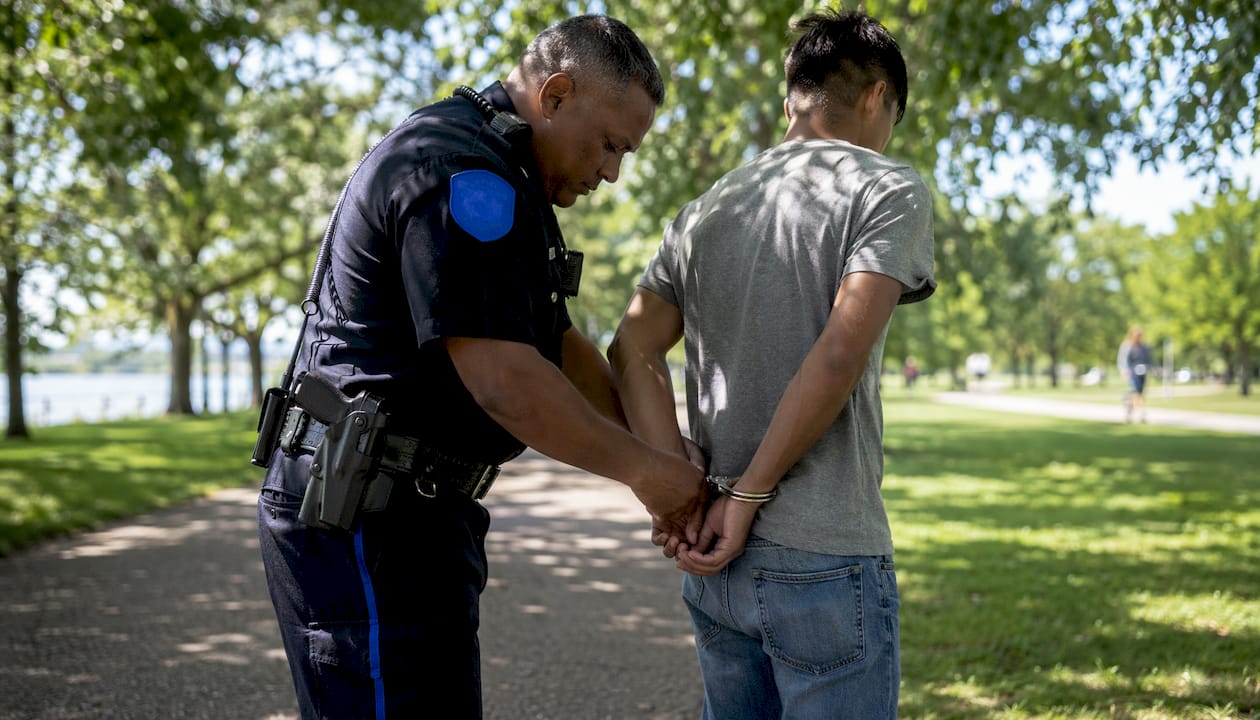
A criminal SOC on-view arrest is defined as a warrantless arrest made when an officer directly observes a crime or has immediate probable cause, followed by a Statement of Charges (SOC) that formally begins the prosecution process. The SOC is the initial charging document, distinct from a grand jury indictment, and it triggers a cascade of constitutional protections the moment the arrest occurs. Understanding this process matters because the Fourth Amendment, Miranda rights, and judicial probable cause review all activate at the point of arrest. The Madlanga Commission’s work on police conduct and institutional accountability offers a useful lens for examining how these same tensions play out in any justice system.
What is a criminal SOC on-view arrest?
An on-view arrest is the standard legal term for a warrantless arrest made when an officer personally witnesses a crime or has direct probable cause to act. No judge signs off beforehand. The officer makes a real-time judgment call, and the arrest happens immediately. That immediacy is both the legal justification and the central point of public concern.
The SOC, or Statement of Charges, is the document that formally records the accusation after an on-view arrest. It allows prosecutors to begin a case without first going to a grand jury. This matters because it means charges can be filed and a person can be held in custody before any independent judicial review of the evidence. The SOC is a prosecutorial instrument, not a finding of guilt.
Constitutional protections attach the moment the arrest occurs. The Fourth Amendment governs the legality of the arrest itself. Miranda rights govern what happens during questioning. The right to counsel activates upon arrest. These are not optional procedures. They are legal floors below which the process cannot go.
What happens immediately after an on-view arrest and SOC filing?
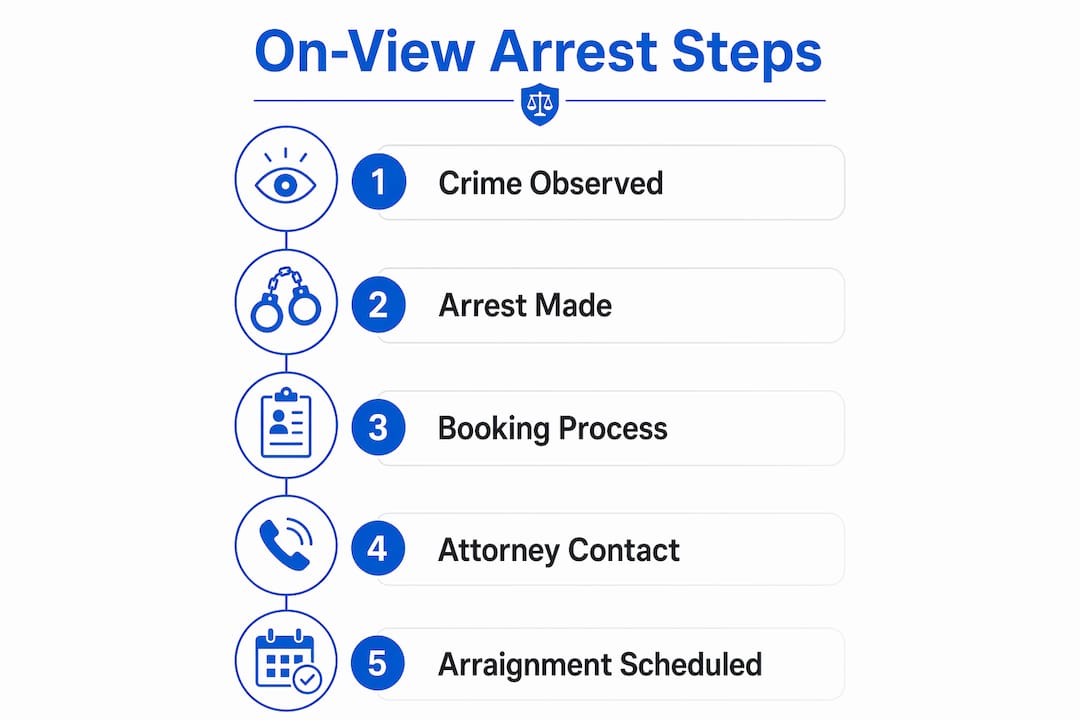
The first hours after an on-view arrest follow a defined sequence. Officers transport the arrested person to a booking facility, where staff record fingerprints, take photographs, and log the charges listed on the SOC. This creates the official custody record. The booking process also triggers the formal clock on how long authorities can hold someone without judicial review.

Probable cause hearings are constitutionally required within 48 hours of a warrantless arrest, though individual states set their own windows ranging from 24 to 72 hours. That window is not a courtesy. It is a constitutional requirement established by the U.S. Supreme Court in County of Riverside v. McLaughlin (1991). Missing that deadline can result in the person’s release.
Key procedural steps in the first 48–72 hours include:
- Booking: Fingerprinting, photographing, and recording the SOC charges
- Miranda warning: Officers must inform you of your right to remain silent and your right to an attorney
- Probable cause hearing: A judge independently reviews whether the arrest was legally justified
- Initial appearance: You appear before a judge, are informed of charges, and bail is addressed
- Right to counsel: You may request a public defender if you cannot afford private representation
Pro Tip: Request an attorney before answering any questions. Anything you say during booking or before counsel arrives can be used against you. Silence is not guilt. It is a constitutional right.
State variations matter here. California, for example, requires arraignment within 48 hours of arrest excluding weekends and holidays. Maryland’s process differs in timeline and SOC-specific procedures. Knowing your state’s rules is not a technicality. It determines how long you can be held and when your first court appearance occurs.
How do criminal charges from an on-view arrest relate to case outcomes?
A criminal charge is a formal accusation, not a conviction. This distinction is foundational and frequently misunderstood. Being charged means the state believes it has enough evidence to proceed. It does not mean guilt has been established.
The path from charge to resolution follows several possible routes:
- Dismissal before trial: A judge dismisses charges if evidence is insufficient or if constitutional violations occurred during the arrest
- Prosecutorial discretion: Prosecutors can drop charges at any stage if they determine the case lacks merit
- Plea negotiation: The defendant and prosecutor agree on a reduced charge or sentence, avoiding trial
- Arraignment and plea: The defendant enters a formal plea, with “not guilty” being the standard starting position
- Pretrial motions: Defense attorneys challenge evidence, arrest legality, or rights violations before trial begins
- Trial: If no resolution is reached, the case proceeds to a judge or jury
Long-term consequences of an arrest record extend beyond the courtroom. Even dismissed charges can appear on background checks. Many states allow expungement or record sealing after a set period, but eligibility varies. A criminal defense attorney can advise on whether your record qualifies for relief. The arrest itself, separate from any conviction, can affect employment, housing, and professional licensing.
What transparency and accountability issues surround on-view arrests?
On-view arrests concentrate enormous power in a single officer’s judgment. There is no warrant application, no judge reviewing probable cause beforehand, and no independent check at the moment of arrest. Accountability is deferred until a probable cause hearing that may occur days later. By then, the person has already been booked, held, and publicly charged.
The June 2026 Pima County case made this tension visible. Deputies were ordered to arrest individuals associated with the Nancy Guthrie YouTube channel for public nuisance, despite officers recording in their own notes that they did not believe a crime had been committed. The arrests proceeded anyway. That gap between officer belief and official action is exactly what transparency advocates point to when they argue the system is prone to abuse.
“When officers document that they see no crime but make arrests on orders anyway, the on-view arrest mechanism has been turned into a tool of retaliation rather than public safety. The legal framework assumes good-faith probable cause. It has no built-in defense against bad-faith orders.”
First Amendment attorneys have long flagged charges like “public nuisance” and “obstruction” as tools for suppressing protected activity. The informal term for this practice is “contempt of cop.” It describes arrests made not because a law was broken, but because someone challenged or embarrassed an officer. These charges are difficult to fight in the short term because the arrest has already occurred and the SOC has already been filed.
Key accountability concerns include:
- Subjective probable cause: Officers make real-time judgments with no prior judicial check
- Retaliatory arrest patterns: Vocal critics, journalists, and public figures face disproportionate on-view arrests
- Delayed judicial review: The 48-hour window means someone can be held before a judge ever evaluates the arrest
- Charge selection: Vague charges like “disorderly conduct” or “public nuisance” give officers wide discretion
- Documentation gaps: Officer body camera footage and written reports may not fully capture the basis for arrest
Oversight bodies and public accountability mechanisms exist to address these gaps, but their effectiveness depends on political will and institutional independence. The Madlanga Commission’s approach of making hearing records publicly navigable offers a model for how transparency can be built into institutional processes rather than bolted on afterward.
How can individuals effectively handle an on-view arrest?
The single most important step after an on-view arrest is to enter a not guilty plea at arraignment. Defense attorneys consistently advise this regardless of the circumstances. A not guilty plea preserves your right to discovery, allows time to review the evidence, and keeps all legal options open. A guilty plea at arraignment closes those doors immediately.
Pro Tip: Do not discuss your case with anyone except your attorney. Conversations with family, friends, or cellmates are not protected by privilege and can be used as evidence.
Practical steps to protect yourself after an on-view arrest:
- Request an attorney immediately. If you cannot afford one, ask for a public defender at your first appearance.
- Document everything you remember. Write down the sequence of events, officer names, badge numbers, and any witnesses as soon as possible.
- Understand your discovery rights. Your attorney can request all evidence the prosecution holds, including body camera footage and officer reports.
- Know your bail options. A judge sets bail at the initial appearance. Your attorney can argue for release on your own recognizance if your record and circumstances support it.
- Ask about expungement eligibility early. Even if charges are dismissed, the arrest record may persist. Knowing your options from the start helps you plan.
The Madlanga Commission hearings provide a documented record of how procedural rights play out in practice when institutions face scrutiny. Reviewing how witnesses describe their experiences with law enforcement procedures can give you a clearer picture of what accountability looks like when it functions properly.
What does the criminal SOC designation mean in court?
“SOC” carries two distinct meanings in American courts, and confusing them can lead to serious misreading of your case status.
| SOC Meaning | Context | Effect on Defendant |
|---|---|---|
| Statement of Charges | Warrantless arrest; initial prosecution document | Formal charges filed; case begins; no prior judicial review |
| Stipulated Order of Continuance | Pretrial agreement in some jurisdictions | Charges deferred; defendant avoids conviction if conditions met |
The Statement of Charges is the version most people encounter after an on-view arrest. It documents the specific offenses alleged, the arresting officer’s account, and the legal basis for the charges. It is the starting point of prosecution, not a finding of guilt.
The Stipulated Order of Continuance appears primarily in Washington State and a handful of other jurisdictions. Under this arrangement, a defendant agrees to meet certain conditions, and if those conditions are met, the charges are dismissed. The case does not go to trial, and no conviction is recorded. However, the arrest record still exists, and the SOC notation on court documents can confuse defendants who assume it means charges were dropped outright.
Jurisdiction matters enormously when reading court documents. A Maryland SOC and a Washington State SOC describe entirely different legal situations. Always confirm with your attorney which definition applies to your case before drawing conclusions about your legal status.
Key Takeaways
An on-view arrest triggers immediate constitutional protections, but accountability for the arresting officer is deferred until judicial review, which is the core tension driving public concern about police transparency.
| Point | Details |
|---|---|
| SOC has two meanings | “Statement of Charges” starts prosecution; “Stipulated Order of Continuance” resolves cases pretrial. Confirm which applies to your case. |
| 48-hour rule is constitutional | A judge must review probable cause within 48 hours of a warrantless arrest; missing this deadline can require release. |
| Charges are not convictions | A criminal charge is a formal accusation only; prosecutors can drop charges and judges can dismiss cases before trial. |
| Plead not guilty at arraignment | A not guilty plea preserves discovery rights and keeps all legal options open regardless of case strength. |
| Accountability gaps are real | On-view arrests rely entirely on officer judgment with no prior judicial check, creating documented risk of retaliatory use. |
The accountability gap no one wants to close
By Meriol Lainchyon
The Pima County case in june 2026 did not surprise me. What surprised me was how clearly the officers documented their own doubts. They wrote down that they did not believe a crime had occurred. Then they made the arrests anyway. That is not a failure of individual judgment. That is a system working exactly as designed, and that design has a serious flaw.
On-view arrests were built for speed and necessity. An officer sees a crime, acts immediately, and the courts sort it out later. The problem is that “later” can mean 48 hours in custody, a public arrest record, and a job lost before a single judge has reviewed the evidence. The legal framework assumes good faith. It has almost no structural defense against bad faith.
The Madlanga Commission’s approach of making hearing records publicly navigable is the kind of structural transparency that on-view arrest systems desperately need. Not just body cameras. Not just internal review boards. Public, searchable, accountable records that citizens can examine without waiting for a journalist to file a FOIA request.
Policymakers who are serious about reform should look at two specific changes. First, shorten the probable cause window to 24 hours with no exceptions. Second, require independent review of any arrest where the arresting officer’s own documentation expresses doubt about probable cause. Neither change eliminates police discretion. Both changes make that discretion answerable to something other than itself.
— Meriol Lainchyon
Madlanga Commission and the case for public oversight
Transparency in criminal justice does not happen by accident. The Madlanga Commission of Inquiry, chaired by Justice Mbuyiseli Madlanga, was established precisely because institutional accountability requires structure, not just intention.
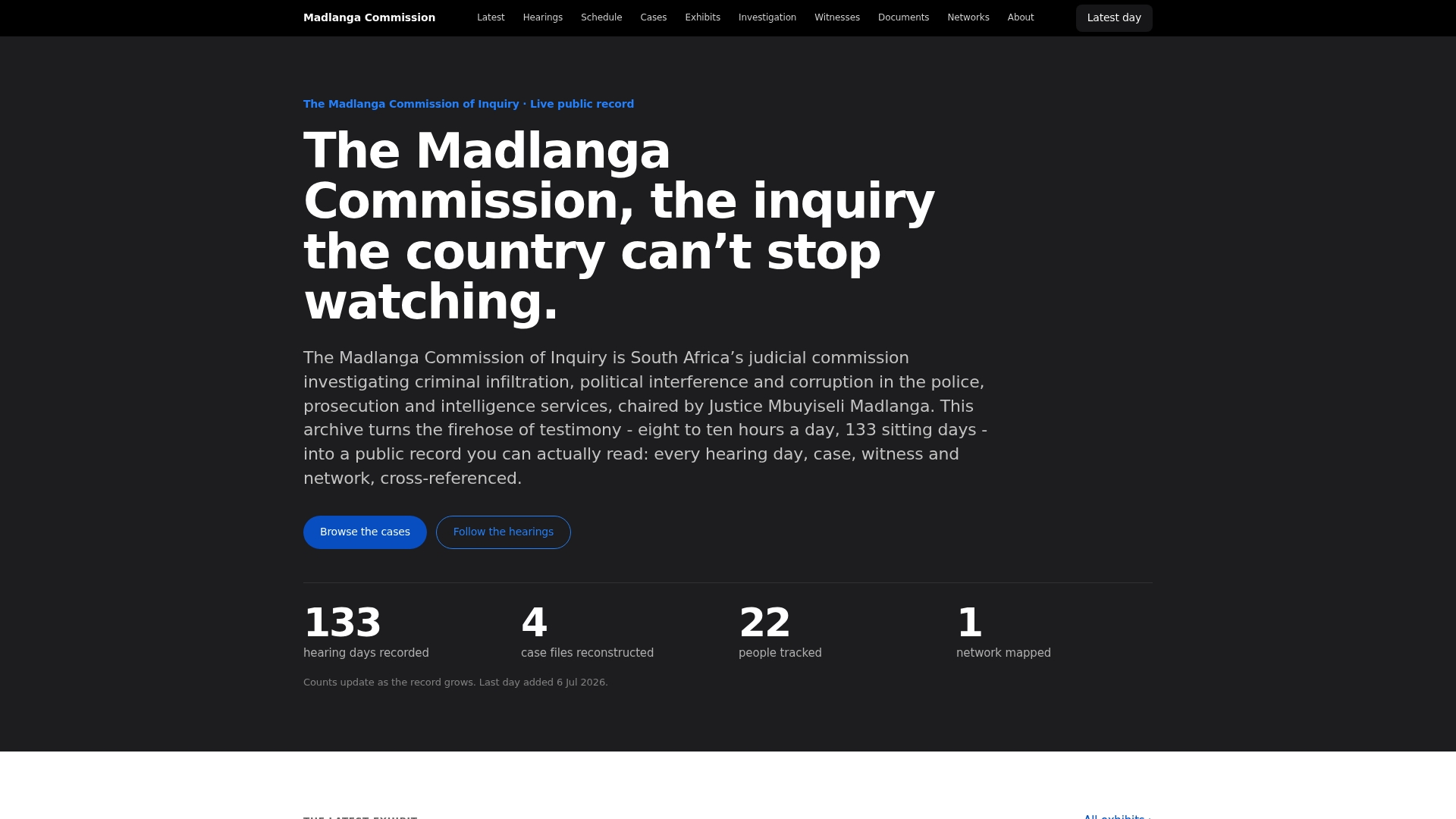
The Evidence Leaders team at Madlanga Commission leads the presentation of testimony and case files from South Africa’s police, prosecution, and intelligence sectors. Their work turns complex proceedings into navigable public records. For readers concerned with police transparency and the procedural realities of criminal arrests, the Commission’s documented hearings offer a detailed, real-world record of what accountability looks like when it is taken seriously. Explore the Commission’s witness testimony and hearing archives to understand how oversight functions at the institutional level.
FAQ
What is an on-view arrest?
An on-view arrest is a warrantless arrest made when an officer directly observes a crime or has immediate probable cause to act. No judicial pre-approval is required, and the arrest is documented through a Statement of Charges.
What does SOC mean on a criminal charge?
SOC most commonly stands for Statement of Charges, the initial document that formally begins prosecution after a warrantless arrest. In some jurisdictions like Washington State, SOC can also mean Stipulated Order of Continuance, a pretrial resolution that avoids conviction.
How long can police hold you after an on-view arrest?
A judge must review probable cause within 48 hours of a warrantless arrest under constitutional standards, though state laws set windows ranging from 24 to 72 hours. Failure to meet this deadline can require the person’s release.
Does a criminal charge mean you are guilty?
A criminal charge is a formal accusation only, not a finding of guilt. Prosecutors can drop charges and judges can dismiss cases before trial if evidence is insufficient or constitutional rights were violated.
What should you do first after an on-view arrest?
Request an attorney immediately and enter a not guilty plea at arraignment. A not guilty plea preserves your right to discovery and keeps all legal options open while your attorney reviews the evidence.