Evidence chain of custody: a guide for South Africa
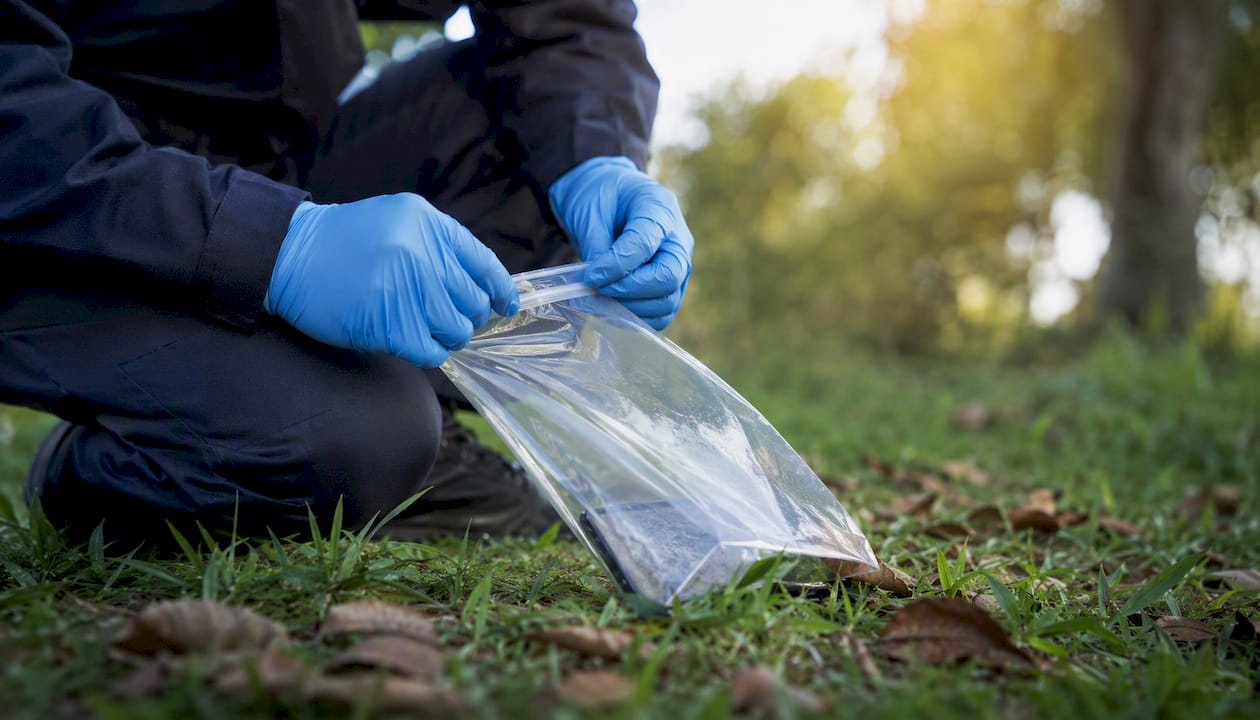
The evidence chain of custody is the documented, unbroken record of who collected, handled, transferred, and stored a piece of evidence from the moment it was seized until it is presented in court. If you have or encounter evidence right now, do three things immediately:
- Preserve the item. Do not move, touch, or alter it beyond what safety requires.
- Document the first contact. Record your name, role, the exact date and time, the item’s condition, and where it was found.
- Secure and seal it. Place it in an approved evidence sealing bag or container, label it with a unique identifier, and notify the relevant SAPS member or Forensic Science Laboratory (FSL) as soon as possible.
South African admissibility and probative weight are governed by the Criminal Procedure Act, the Criminal Law (Forensic Procedures) Amendment Act (which establishes the National Forensic DNA Database), and SAPS/FSL Standard Operating Procedures. The sections below unpack each layer in detail.
Key takeaways
A complete, signed chain-of-custody record from scene to court is the single most reliable protection against evidence being excluded or its probative value reduced in South African proceedings.
| Point | Details |
|---|---|
| Document every link | Record handler name, role, date/time, condition, and seal number at every handover without exception. |
| Use approved kits and seals | SAPS-approved evidence sealing bags and collection kits are required for biological samples under the 2020 regulations. |
| Submit to FSL promptly | The NFDD loading target under the Criminal Law (Forensic Procedures) Amendment Act 37 of 2013 sets the administrative standard for DNA samples. |
| A broken chain reduces weight, not always admissibility | Courts weigh corroborating metadata and witness credibility; remediate gaps with affidavits and secondary evidence. |
| Label the item, not just the lid | SANAS TG 01-03 warns that labelling lids alone is insufficient; label the container or item itself and seal for long-term storage. |
Table of Contents
- What does the evidence chain of custody actually mean?
- Why chain of custody matters in South African courts
- How does the custody process work from scene to court?
- What should a chain-of-custody form record?
- Special handling rules for different types of evidence
- Storage, transport, and timetable controls in South Africa
- Common chain-of-custody failures and how courts respond
- Essential South African laws and standards for proving custody
- Lessons from the Madlanga Commission archive
- Why custody records are a matter of public trust
- Sources
- FAQ
What does the evidence chain of custody actually mean?
The chain of custody is a continuous, verifiable sequence of possession. Every person who touches, moves, or examines an exhibit is a custodian, and every handover from one custodian to the next is a link in the chain. A single undocumented link can become the crack through which a defence attorney drives at trial.
The core components of any chain-of-custody record are:
- Unique evidence ID (case number plus sequential item number or barcode)
- Date and time of each interaction
- Handler identity and role (name, rank, unit)
- Condition notes at each transfer (sealed, intact, damaged, wet)
- Packaging type and seal/barcode numbers
- Transfer method (hand-delivery, courier, SAPS vehicle)
- Destination (police station exhibit room, FSL, court)
Without all of these, the record is incomplete. An incomplete record is not automatically fatal to a case, but it hands the defence a legitimate argument about integrity.
Why chain of custody matters in South African courts
South African courts do not apply a rigid automatic-exclusion rule when custody is imperfect. Academic analysis confirms that a broken chain typically reduces the probative value of evidence rather than triggering outright exclusion. Judges weigh the totality of circumstances: corroborating metadata, witness credibility, and whether the discrepancy is explained or inexplicable.
That said, the State carries the burden of proving a continuous chain when the defence contests it. The Civil Proceedings Evidence Act 25 of 1965 provides that when custody is undisputed, documentary or certificate evidence may be admitted without calling every handler as a witness. When it is disputed, the State must account for each link clearly.
Section 212 of the Criminal Procedure Act offers a practical shortcut: affidavit evidence can prove chain content in many circumstances, reducing the need for viva voce testimony from every officer who touched the exhibit. Legal commentary in De Rebus explains how s212(4) specifically allows proof of a document’s content by affidavit, which can significantly shorten trial proceedings when the chain itself is not genuinely in dispute.
The practical consequence: a prosecutor who can produce a complete, signed chain-of-custody form for every exhibit walks into court with far less exposure than one who cannot explain a three-day gap between seizure and FSL submission.
How does the custody process work from scene to court?
Follow this sequence. Each step lists the minimum fields to log at that point.
-
Scene seizure. Photograph the item in situ before touching it. Record: handler name and rank, date/time, GPS location or address, item description, visible condition, case number. Assign a unique evidence ID on the spot.
-
Packaging at the scene. Place the item in an approved SAPS evidence sealing bag. Write the unique ID, case number, date/time, and your signature on the bag’s label. Note the seal or barcode number on your custody form.
-
Transport to the exhibit room. Record: transporting officer’s name, vehicle registration, departure and arrival times, seal integrity on arrival. A second officer should verify the seal is unbroken on receipt.
-
Station exhibit room receipt. The exhibit officer logs the item into the station register: unique ID, case number, description, condition, storage location (shelf/locker reference), date/time received, and their signature.
-
Submission to the FSL. Complete the FSL submission form and a covering letter. Log: submitting officer, courier or transport method, date dispatched, FSL receipt date and reference number. Regulations require approved evidence collection kits and sealing bags for biological samples, with separate packaging for buccal samples.
-
FSL analysis. The laboratory logs receipt, assigns an internal reference, records the analyst’s name and the analysis date. Any sub-sampling or repackaging must be documented on the custody record.
-
Return or court submission. When the item is returned to the exhibit room or sent directly to court, log: date/time, recipient’s name, condition on return, seal status, and the court case reference.
Pro Tip: Minimise the number of people who handle an exhibit. Single-flow handovers, where one officer takes the item from scene to exhibit room without intermediate stops, reduce the number of links that can be challenged. When double-bagging is needed (wet or fragile items), note both bag numbers on the form.
What should a chain-of-custody form record?
A well-designed form is your primary defence against a custody challenge. Every field below has a specific legal or forensic purpose.
| Field | Why it matters |
|---|---|
| Unique evidence ID / barcode | Links the physical item to every document in the case file |
| Case number | Ties the exhibit to the docket and prevents cross-contamination between cases |
| Item description | Establishes what was seized; discrepancies between this and later descriptions raise integrity questions |
| Collector name, rank, unit | Identifies the first custodian; required for s212 affidavit or viva voce testimony |
| Date and time of collection | Establishes the custody timeline; gaps must be explained |
| Location found | Corroborates scene photographs and witness statements |
| Condition at collection | Baseline for any later damage or contamination claims |
| Packaging type and seal/barcode numbers | Confirms tamper-evident packaging was used and which specific seal was applied |
| Subsequent handler entries (name, date/time, reason) | Documents every link; each entry should carry a signature |
| Transfer method | Courier, SAPS vehicle, hand-delivery — each carries different verification requirements |
| Destination (exhibit room, FSL, court) | Confirms the item went where the record says it went |
| Storage location reference | Allows physical verification at any point |
| Signature of releasing and receiving officer | Dual-signature at each handover is the single strongest integrity control |
SANAS technical guidance TG 01-03 flags that labelling lids alone is poor practice because lids can be swapped. Label the item itself or its proximal container, and seal containers for long-term storage. This applies equally to exhibit bags at the station level.
Where the chain is uncontested, s212 affidavits can substitute for calling every handler. Where it is contested, each signed entry on this form becomes a witness who can be called to verify their own signature.
Special handling rules for different types of evidence
Not all evidence is handled the same way. The type of exhibit determines packaging, storage conditions, and what the custody log must capture.
DNA and biological samples
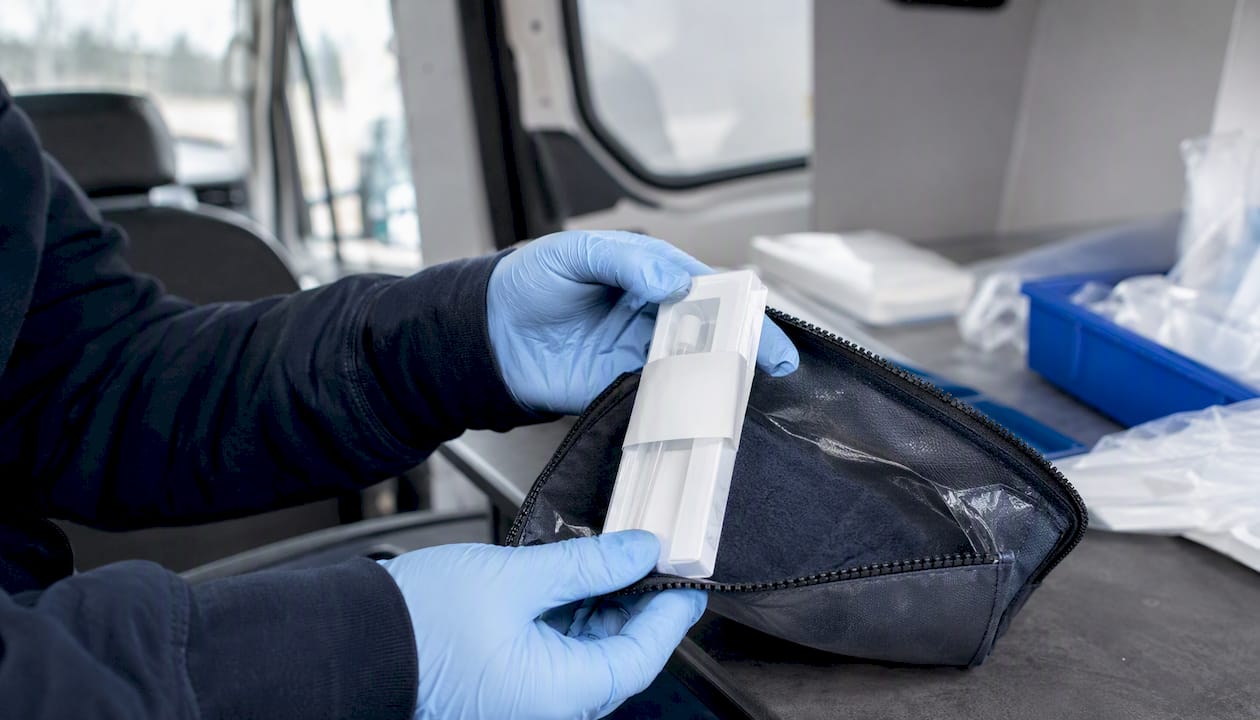
Use only SAPS-approved evidence collection kits and evidence sealing bags. Buccal samples require separate packaging from crime-scene biological material to prevent cross-contamination. Keep samples dry: moisture degrades DNA rapidly and can make a sample unanalysable. Log the kit batch number on the custody form. The regulations set station-level storage limits and require prompt submission to the FSL, with a covering letter identifying the submitting officer and the case reference.
Digital and electronic evidence
SAPS SOPs for the Cybercrimes Act require limiting interaction with cyber articles to the absolute minimum. Record the device’s power state (on/off/sleep) at the moment of seizure. Use write-blockers when creating forensic images, and generate cryptographic hash values (SHA-256 or MD5) at acquisition. Log those hash values on the custody form. Any change in the device’s condition or custody must be timed, recorded, and, where appropriate, sworn in an affidavit.
Pro Tip: Record the hash value twice: once at acquisition and once when the image is submitted to the analyst. A matching hash is the digital equivalent of an unbroken seal.
Firearms
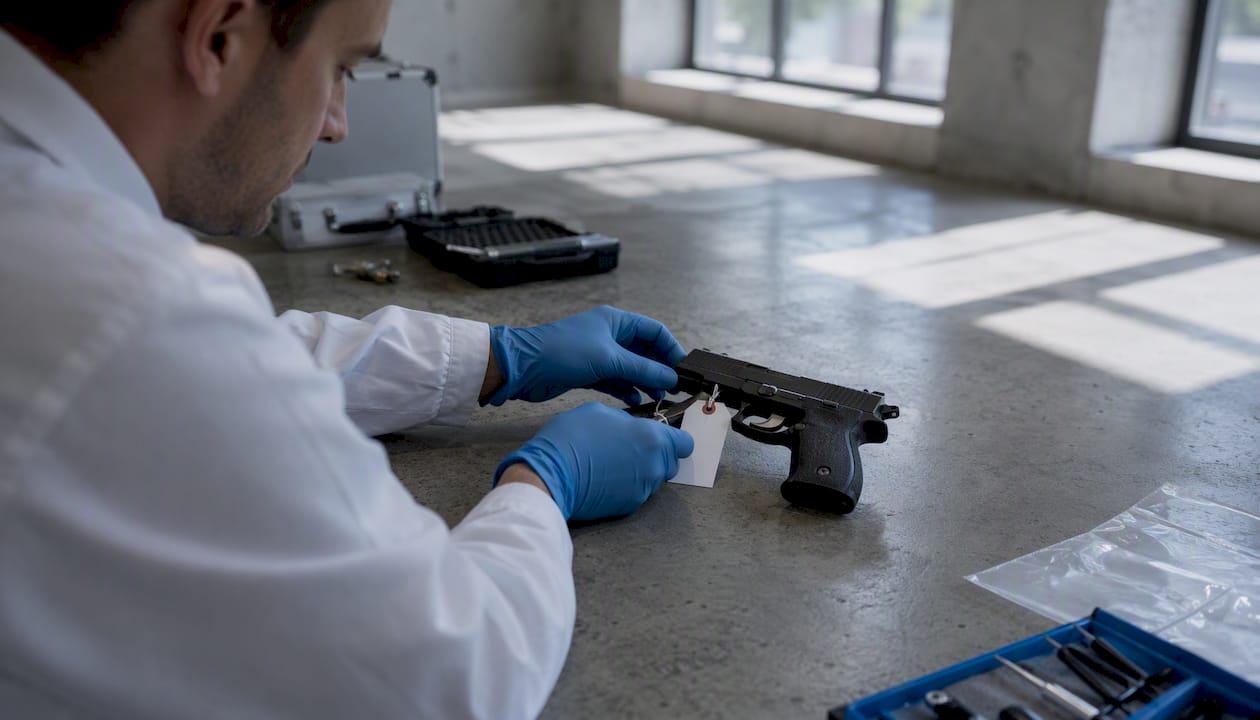
Photograph the firearm in situ before handling. Render it safe following SAPS firearms protocols, then tag it with a unique evidence label attached to the trigger guard. Do not place it in a bag that obscures the serial number. Log the serial number, make, model, and calibre on the custody form at the point of seizure.
Trace evidence (fibres, glass, soil, paint)
Handle once, minimise. Use paper packaging rather than plastic for dry trace material, since plastic traps moisture and can degrade or contaminate samples. Each trace item should be packaged separately to prevent cross-contamination, and the packaging sequence should be logged.
Storage, transport, and timetable controls in South Africa
Timing is not just administrative. The Criminal Law (Forensic Procedures) Amendment Act 37 of 2013 sets a target of loading DNA samples onto the National Forensic DNA Database (NFDD) within 30 days of analysis where possible. Station-level regulations set storage limits for bodily samples before they must be submitted to the FSL.
For storage condition verification, log the following at each check:
- Temperature and humidity of the storage area
- Seal integrity (visual inspection of tamper-evident seals)
- Courier chain documentation (waybill numbers, driver identity, handover signatures)
- Date and time of each check
SANAS TG 01-03 draws a practical distinction: for overnight work-in-progress, an examiner need not reseal a container after every interaction, but containers must be sealed and access restricted for long-term storage, with records reflecting that distinction. Forensic labs accredited under SANAS/ISO standards are required to maintain these protocols as a condition of accreditation. A lab’s accreditation status directly affects the credibility of its reports in court.
On transport: use a reliable courier with a documented chain, or a SAPS vehicle with a signed handover at both ends. Never transport exhibits in a personal vehicle without logging the trip and obtaining a receipt at the destination.
Common chain-of-custody failures and how courts respond
Red flags courts scrutinise
- Missing or inconsistent timestamps between the scene log and the exhibit register
- Unidentified handlers (entries signed with a rank but no name)
- Swapped or mismatched evidence bag serial numbers
- Unreadable or broken seals with no explanatory note
- Inconsistent descriptions of the item between the scene log, FSL submission form, and court exhibit list
- Unexplained gaps of days or weeks between documented custody events
The North Gauteng High Court found that mismatched evidence bag serial numbers and contradictory witness descriptions of what was handed in were sufficient to conclude the State had failed to prove a continuous chain of evidence. The conviction did not survive that finding.
How courts weigh discrepancies
Courts do not apply a mechanical exclusion rule. They ask whether the discrepancy is explained, whether corroborating evidence (serial numbers, hash values, photographs) supports the item’s identity, and whether the witnesses who handled it are credible. A single unexplained gap is less damaging than multiple inconsistencies pointing in the same direction.
Remediation when a break is identified
- Obtain sworn affidavits from every handler who can account for the gap period.
- Gather secondary corroborating evidence: photographs, CCTV, access logs, FSL receipt stamps.
- Re-document the current condition of the item and compare it to the baseline description.
- Where the chain is now complete but was previously undocumented, consider whether s212 affidavits can cure the evidentiary gap without requiring every officer to testify in person.
Procedural fairness in investigations more broadly, including documentation and chain-of-custody-like controls in administrative proceedings, follows similar principles: the record must be contemporaneous, complete, and attributable.
Essential South African laws and standards for proving custody
- Criminal Procedure Act 51 of 1977 — governs admissibility of real evidence, the State’s burden to prove custody when contested, and s212/s220 formal admission procedures that can streamline proof.
- Criminal Law (Forensic Procedures) Amendment Act 37 of 2013 — establishes the NFDD, sets DNA sample collection, storage, analysis and retention rules, and includes the 30-day loading target.
- Civil Proceedings Evidence Act 25 of 1965 — provides for admission of documentary evidence and certificates, relevant when custody is uncontested.
- SAPS/FSL Standard Operating Procedures — internal directives governing scene collection, packaging, submission, and laboratory handling; compliance with SOPs is the primary operational standard.
- SAPS Cybercrimes Act SOPs (2023) — specific procedures for digital evidence: minimal interaction, condition recording, affidavit requirements.
- Regulations regarding forensic evidence collection, packaging and submission (GN 396 of 2020) — prescribe approved kits, sealing bags, buccal sample packaging, covering-letter requirements, and station storage limits.
- SANAS TG 01-03 — technical guidance for forensic laboratory storage and handling; sets minimum accreditation expectations for labelling, sealing, and access controls.
- ISO/IEC 17025 — the international standard for testing and calibration laboratories, referenced by SANAS accreditation; compliance underpins the admissibility weight of FSL reports.
Where s212 affidavits are used to prove chain content, the affidavit must identify the deponent, their role, the item, the dates of custody, and the condition at each relevant point. Section 220 formal admissions can remove the chain entirely from dispute when both parties agree.
Lessons from the Madlanga Commission archive
The Madlanga Commission of Inquiry archive contains case files, witness testimony, and exhibits documenting how evidence was handled, mishandled, and sometimes lost within South Africa’s police and prosecution structures. Two patterns emerge clearly from the public record.
Case type 1: The custody break and its consequences. In the R200 million Durban port cocaine case, evidence disappeared from police custody after seizure. The custody record could not account for the movement of the exhibits between the initial seizure point and the exhibit room. The practical lesson: a gap in the physical custody record, even for a high-value, high-profile seizure, can make prosecution impossible. No chain means no admissible exhibit.
Case type 2: Documentation that preserved probative value. The Aeroton cocaine bust materials in the archive illustrate how contemporaneous documentation, photographs, and signed handover records at each stage preserved the integrity of at least part of the evidence chain, even when other aspects of the investigation were contested. The lesson: partial good practice is not wasted. Courts can and do distinguish between the parts of a chain that are documented and those that are not.
The Commission’s evidence leaders work directly with these materials, and their approach to verifying exhibit provenance reflects the same principles this guide describes. Readers who want to trace how specific exhibits moved through the system can search the full case archive at the link above.
Why custody records are a matter of public trust
The chain of custody is not a bureaucratic formality. Every gap in a custody record is a gap in accountability, and in South Africa’s current environment, where the Madlanga Commission is documenting systemic failures in police, prosecution, and intelligence structures, that gap has consequences far beyond a single trial.
When evidence disappears from a police exhibit room, or when a bag number cannot be matched to a submission form, the damage is not only to the prosecution’s case. It erodes public confidence in the entire justice system. Citizens watching commission hearings, journalists tracking case files, and legal teams reviewing exhibits all depend on the same thing: a record they can trust.
The Commission’s archive exists precisely because that trust has been broken in too many cases. Custody records, properly maintained, are one of the few mechanisms that make accountability possible after the fact. A signed, timestamped, sealed record cannot be argued away. An absent one can.
Sources
- SANAS technical guidance (TG 01-03) — forensic laboratory storage and handling
- North Gauteng High Court judgment on chain of custody (ZAGPPHC/2021/244)
- (PDF) The chain of custody and formal admissions
Use official government PDFs and SAFLII judgments when citing these sources in affidavits or court papers. Online summaries are useful for orientation; the primary text is what courts and opposing counsel will scrutinise.
This article provides general information about evidence chain-of-custody procedures in South Africa. It is not legal advice. Consult a qualified legal practitioner or the relevant primary sources for guidance specific to your case.
This article is general information, not a substitute for advice from a qualified lawyer. Consult a qualified legal professional about your own circumstances before acting on anything here.
FAQ
What is the evidence chain of custody?
The evidence chain of custody is the documented, unbroken record of every person who collected, handled, transferred, or stored an exhibit from seizure to court. It establishes that the item presented as evidence is the same item that was originally collected.
Does a broken chain of custody make evidence inadmissible in South Africa?
Not automatically. South African courts generally treat a broken chain as reducing the probative weight of evidence rather than triggering automatic exclusion, provided the State can offer some explanation and corroborating context.
Which action best protects the chain of custody at the scene?
Photograph the item in situ, assign a unique evidence ID immediately, place it in a SAPS-approved tamper-evident sealing bag, and record the collector’s name, role, date, time, and the item’s condition before moving it.
What laws govern chain of custody in South Africa?
The Criminal Procedure Act 51 of 1977, the Criminal Law (Forensic Procedures) Amendment Act 37 of 2013, and the 2020 forensic evidence collection regulations are the primary instruments, supported by SAPS/FSL SOPs and SANAS accreditation standards.
How can a custody gap be remediated before trial?
Obtain sworn affidavits from every handler who can account for the gap, gather secondary corroborating evidence such as photographs and access logs, and consider whether s212 of the Criminal Procedure Act allows the gap to be addressed by affidavit rather than live testimony.