Organs of State: What They Are and Why They Matter

TL;DR:
- Organs of state are institutions through which governments exercise authority and ensure accountability. Citizens can evaluate these bodies by analyzing their legal mandates, oversight mechanisms, and public records such as inquiry reports. The Madlanga Commission in South Africa exemplifies how structured investigations promote transparency and hold state institutions accountable.
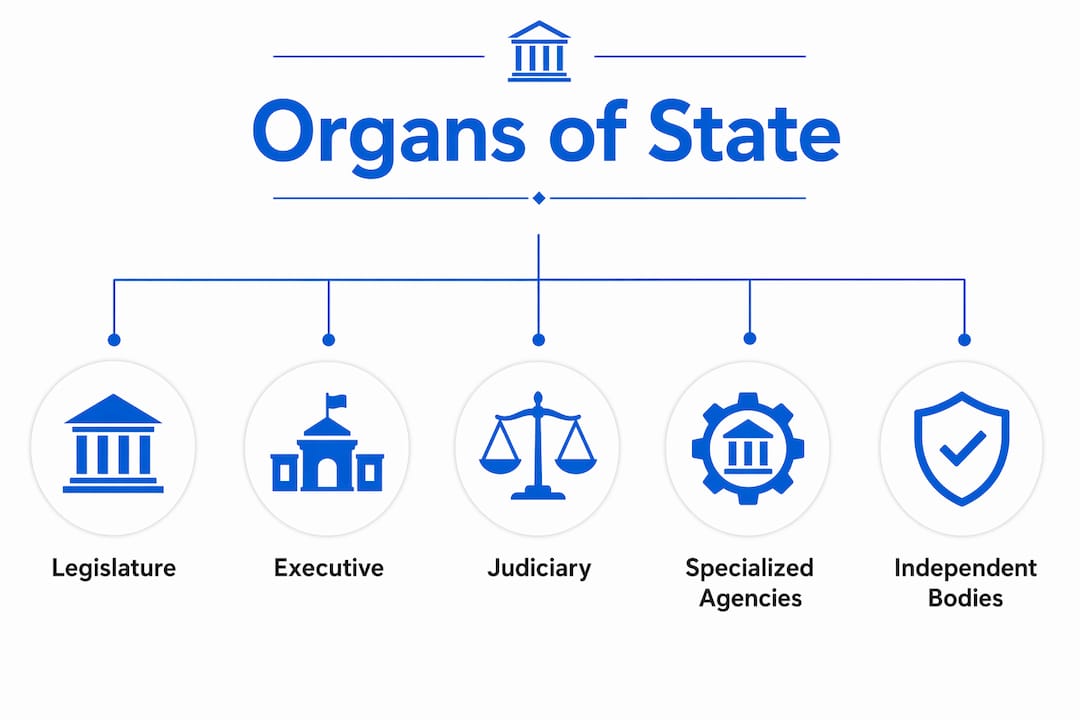
Organs of state are the primary institutions through which a government exercises its authority, distributes power, and upholds accountability to its citizens. The term covers the legislature, executive, and judiciary as the three core branches, but it also extends to specialized agencies, commissions, and independent bodies that carry out specific public functions. Understanding how these institutions work, how they check each other, and how citizens can engage with them is the foundation of any serious effort to hold government accountable. The Madlanga Commission of Inquiry in South Africa demonstrates exactly why that understanding matters in practice.
What are organs of state and how are they defined?
Organs of state are defined as the formal institutions through which a sovereign government exercises legislative, executive, and judicial power. Democratic governance typically divides state power into three primary organs: legislature, executive, and judiciary, designed to provide checks and balances against power concentration. That design is not accidental. It reflects centuries of political thought aimed at preventing any single person or group from controlling all levers of government.

The term “organs of state” is the recognized legal and constitutional phrase used in South African law, international law, and comparative political science. In international law, whether an entity qualifies as a state organ depends on its exercise of governmental authority and its functional link to the state, not simply its name or location. That distinction matters enormously for activists and researchers. A body can call itself a public authority without actually being one in the legal sense.
Institutions, as Britannica defines them, are both formal rules and informal norms that govern political interactions. That framing is critical. Transparency requires understanding not just the written structure of government but also the unwritten conventions that shape how power actually flows.
What are the three primary organs of state and their functions?
The three primary organs of state each carry a distinct constitutional role. Together they form the architecture of modern democratic government.
The legislature: making law
The legislature is the law-making body of the state. In the United States, the Constitution divides federal government into legislative, executive, and judicial branches, ensuring no single branch holds too much power. Congress, Parliament, and National Assemblies are all legislative organs. Their core function is to debate, draft, and pass laws that bind the entire population. They also control public spending through budget approval, which gives them direct influence over every other organ of state.
The executive: enforcing law
The executive implements and enforces the laws that the legislature passes. This organ includes presidents, prime ministers, governors, cabinets, and the vast network of government departments that deliver public services. The executive holds the most visible day-to-day power. It commands the military, manages foreign policy, and directs the civil service. That concentration of operational authority is precisely why constitutional checks from the legislature and judiciary are necessary.
The judiciary: interpreting law
The judiciary interprets laws and resolves disputes about their application. Courts at every level, from local magistrates to supreme constitutional courts, perform this function. The judiciary’s independence from the executive and legislature is the single most important safeguard against government overreach. When a court strikes down an executive order or declares a law unconstitutional, it exercises the power of judicial review, a mechanism that keeps the other two organs within their legal boundaries.
The three organs share several defining characteristics:
- Each derives its authority from a constitution or founding statute
- Each operates within defined jurisdictional limits
- Each is subject to oversight by the other two
- Each has a distinct method of accountability to the public
How do specialized state agencies and independent bodies fit in?
Modern government is too complex for three branches alone to manage. Specialized state agencies and independent bodies fill the gap between broad constitutional mandates and specific administrative functions.
Independent agencies within the executive branch have statutory autonomy to perform specialized functions without daily political interference. Maryland’s administrative structure, updated in 2026, illustrates this clearly. These agencies operate under enabling legislation that defines their powers, their reporting lines, and the limits of their independence. They are not fully autonomous. They remain accountable to the legislature through oversight hearings and to the executive through appointment powers.
California’s state transportation agency, CalSTA, oversees multiple departments and commissions to manage complex state functions. That model shows how a single policy area can require an entire ecosystem of sub-agencies, each with its own technical mandate. The parent agency coordinates them without micromanaging their daily decisions.
State agencies carry classification codes that define their oversight relationships and degree of autonomy. Knowing those codes is the starting point for any serious accountability analysis. An agency classified as fully independent operates under different rules than one that reports directly to a cabinet minister.
Pro Tip: When researching any government body, locate its enabling legislation first. That document defines its legal powers, its reporting obligations, and the limits of its authority. Without it, you cannot assess whether the agency is acting within its mandate.
The key categories of specialized bodies include:
- Regulatory agencies with rule-making authority (such as environmental or financial regulators)
- Independent commissions established by statute for specific investigations
- Public enterprises that deliver services on a commercial basis
- Advisory bodies that inform policy without binding authority
How do different governance models organize state power?
Not all governments organize their organs of state the same way. The model a country adopts shapes everything from how laws are made to how citizens can challenge government decisions.
Democratic separation of powers
Democratic systems treat the three primary organs as co-equal and independent. No branch derives its authority from another. Each has its own constitutional mandate, its own source of democratic legitimacy, and its own tools to check the others. The U.S. federal system is the most studied example, but parliamentary democracies in the United Kingdom, Canada, and South Africa follow similar logic, even when the executive is drawn from the legislature.
Communist division of labor
Marxist-Leninist governance uses a fundamentally different structure. A Supreme State Organ delegates powers to subordinate specialized organs in a vertical command chain. The Soviet Supreme Soviet of State Power held unified authority and assigned functions downward. China’s National People’s Congress operates on a similar principle today. Accountability in these systems runs through supervision by organs of power over subordinate organs at corresponding levels, enforced through constitutional provisions rather than through independent judicial review.
The table below compares the two models across four dimensions:
| Dimension | Democratic separation of powers | Communist division of labor |
|---|---|---|
| Source of authority | Constitution grants co-equal powers to each branch | Supreme organ holds unified power and delegates downward |
| Accountability mechanism | Mutual oversight between independent branches | Vertical supervision by higher organs over lower ones |
| Judicial independence | Courts can strike down executive and legislative acts | Courts operate within the party-state hierarchy |
| Citizen recourse | Courts, elections, and legislative petitions | Party channels and state supervision bodies |
Pro Tip: When evaluating a foreign government’s accountability claims, identify which model its constitution follows. A system built on division of labor rather than separation of powers requires different civic engagement strategies.
Kautilya’s Saptanga Theory offers a third lens entirely. It identifies seven interdependent elements of the state, including ruler, ministers, territory, treasury, army, and allies, emphasizing that institutional balance across all parts determines state effectiveness. That ancient framework anticipates modern debates about whether formal constitutional structures alone can guarantee good governance.
How can citizens engage with state organs to promote accountability?
Understanding the structure of government institutions is the precondition for holding them accountable. Citizens and researchers who treat state organs as a single undifferentiated “government” miss the specific pressure points where accountability is actually enforced.
The most effective approach follows a clear sequence:
- Identify the organ or agency responsible. Determine whether the body you are scrutinizing is a core constitutional organ, a statutory agency, or an advisory body. Each has different legal obligations and different accountability mechanisms.
- Locate the enabling legislation. Every state agency derives its authority from a specific law. That law defines what the agency can and cannot do. Deviations from it are the basis for legal challenges.
- Trace the reporting lines. Verify who the agency reports to, which legislative committee oversees it, and which minister or official has appointment power over its leadership.
- Use formal oversight mechanisms. Parliamentary or congressional hearings, public protector offices, and ombudsman institutions exist precisely to receive complaints about state organs. Filing a formal submission creates a public record.
- Engage with commissions of inquiry. Commissions like the Madlanga Commission produce public archives of hearings and testimonies that document how state organs have functioned or failed. Those records are primary sources for accountability research.
Pro Tip: Public records from commissions of inquiry are often more detailed than official government reports. They contain witness testimony, cross-examination, and documentary evidence that reveal how decisions were actually made inside state institutions.
The Madlanga Commission’s investigation into criminal infiltration and political interference within South Africa’s police, prosecution, and intelligence sectors shows what happens when the accountability function of state organs breaks down. Understanding what a commission of inquiry is and how it exercises its powers is practical knowledge for any citizen or activist working on governance issues.
Key Takeaways
Organs of state derive their legitimacy from constitutional mandates, and accountability depends on citizens understanding the specific powers, reporting lines, and oversight mechanisms that apply to each institution.
| Point | Details |
|---|---|
| Three primary organs | Legislature, executive, and judiciary each hold distinct constitutional authority and check each other’s power. |
| Specialized agencies extend reach | Statutory bodies like independent commissions fill gaps between broad mandates and specific administrative functions. |
| Governance models differ fundamentally | Democratic separation of powers and communist division of labor create entirely different accountability structures. |
| Legal status determines accountability | An entity’s enabling legislation, not its name, defines its actual powers and reporting obligations. |
| Commissions of inquiry are primary sources | Public archives from bodies like the Madlanga Commission document how state institutions function or fail in practice. |
The complexity no civics class prepares you for
By Meriol Lainchyon
The standard civics lesson presents organs of state as a clean triangle: legislature makes law, executive enforces it, judiciary interprets it. That picture is accurate as far as it goes. The problem is that it stops exactly where the real complexity begins.
What I have found, working through governance accountability questions over many years, is that the proliferation of specialized agencies is the single biggest blind spot in public understanding of state power. Citizens know who the president is. They do not know which regulatory agency approved the pipeline running through their community, what statute created it, or which legislative committee is supposed to oversee it. That gap in knowledge is not accidental. Complex administrative structures are genuinely hard to navigate, and governments rarely make them easier.
The comparison between democratic and communist models is more practically useful than it first appears. It trains you to ask the right question: where does authority actually originate in this system? In a separation-of-powers model, you look horizontally across co-equal branches. In a division-of-labor model, you look vertically up the chain of command. Getting that direction wrong means you are lobbying the wrong institution.
The Madlanga Commission represents something I think is undervalued in discussions about state accountability. A commission of inquiry is not just an investigation. It is a structured mechanism for making the internal workings of state organs visible to the public in real time. The testimony, the cross-examination, the documentary evidence: all of it becomes a public record that researchers and activists can use long after the commission concludes. That is a more durable accountability tool than a news cycle. Citizens who ignore these records are leaving the most detailed evidence of state conduct on the table.
— Meriol Lainchyon
The Madlanga Commission’s public record on state accountability
The Madlanga Commission of Inquiry is one of the most detailed public investigations into how South Africa’s organs of state have been compromised by criminal infiltration and political interference.
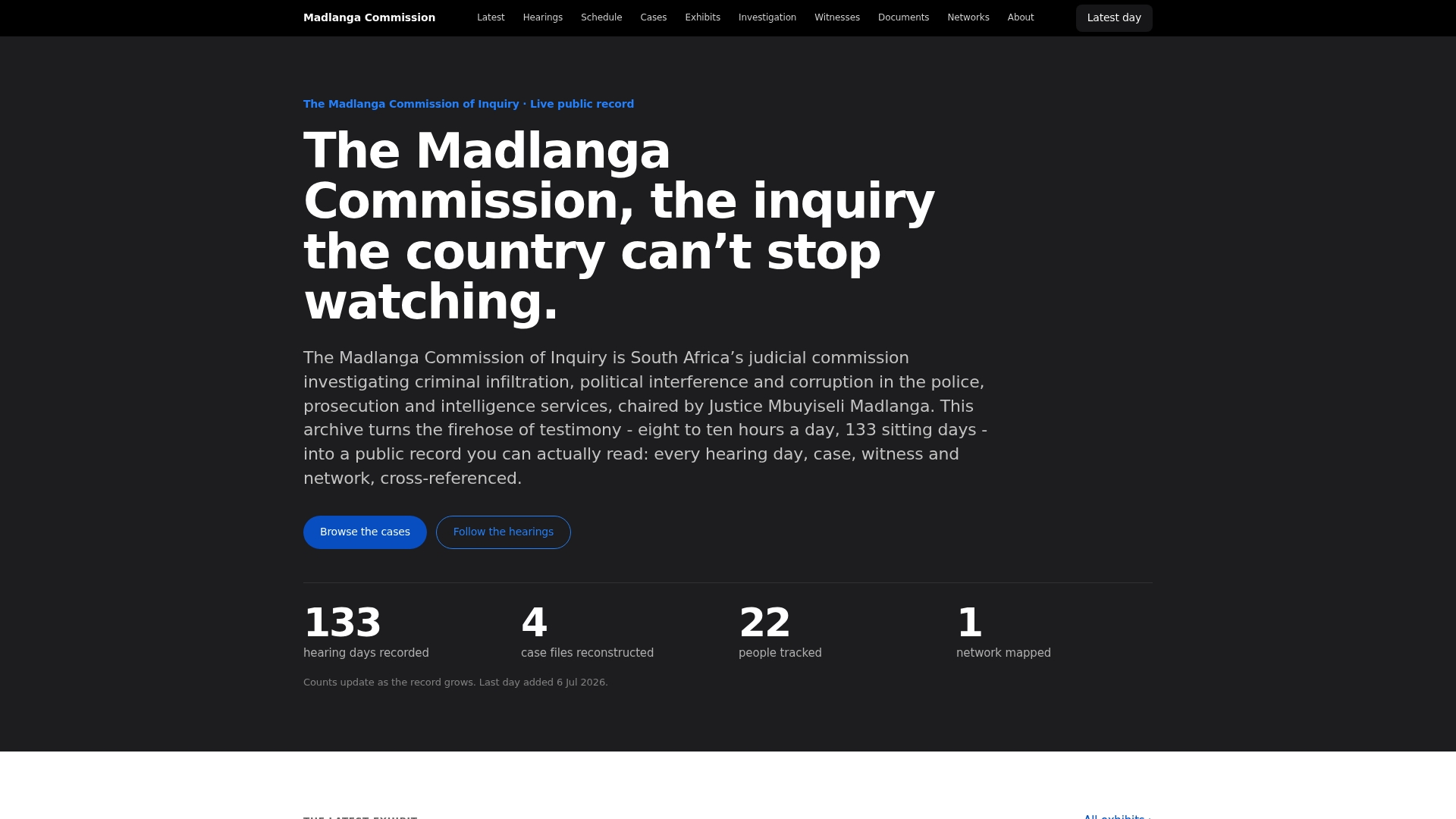
Chaired by Justice Mbuyiseli Madlanga, the Commission has produced an extensive archive of hearing transcripts, witness testimonies, and case files covering the police, prosecution, and intelligence services. These records are publicly accessible and organized for researchers, journalists, and citizens who need primary source material on state conduct. The Commission’s investigative methodology is also publicly documented, giving readers the context to evaluate the evidence they find. For anyone working on governance accountability in South Africa, this archive is the starting point.
FAQ
What are organs of state?
Organs of state are the formal institutions through which a government exercises legislative, executive, and judicial authority. The term covers the three primary branches of government and extends to specialized agencies and independent bodies established by statute.
How many organs of state are there?
Most democratic constitutions recognize three primary organs: the legislature, the executive, and the judiciary. Modern governments also include dozens of specialized agencies and independent commissions that carry out specific public functions under statutory authority.
What is the difference between organs of state and state agencies?
Organs of state refers to the core constitutional branches of government. State agencies are statutory bodies created by legislation to perform specific functions, typically within or alongside the executive branch, with varying degrees of independence.
How does a commission of inquiry relate to organs of state?
A commission of inquiry is an independent body established by the executive to investigate specific matters of public concern, often involving the conduct of other state organs. It exercises investigative powers defined by its founding statute and produces public records of its findings.
How can citizens hold organs of state accountable?
Citizens hold state organs accountable through formal mechanisms including legislative oversight hearings, ombudsman offices, public protector institutions, and commissions of inquiry. Accessing public records, including those produced by bodies like the Madlanga Commission, is one of the most direct ways to engage with evidence of state conduct.