Vlakplaas: Apartheid’s Secret Death Squad Farm
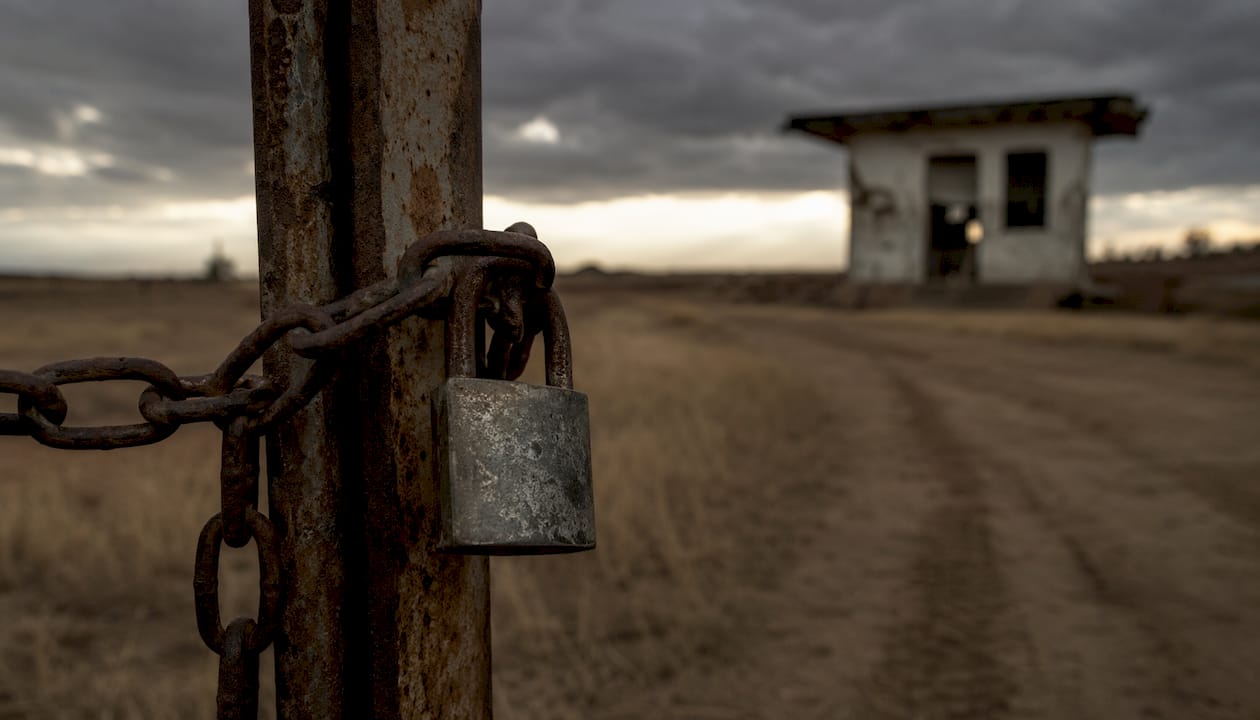
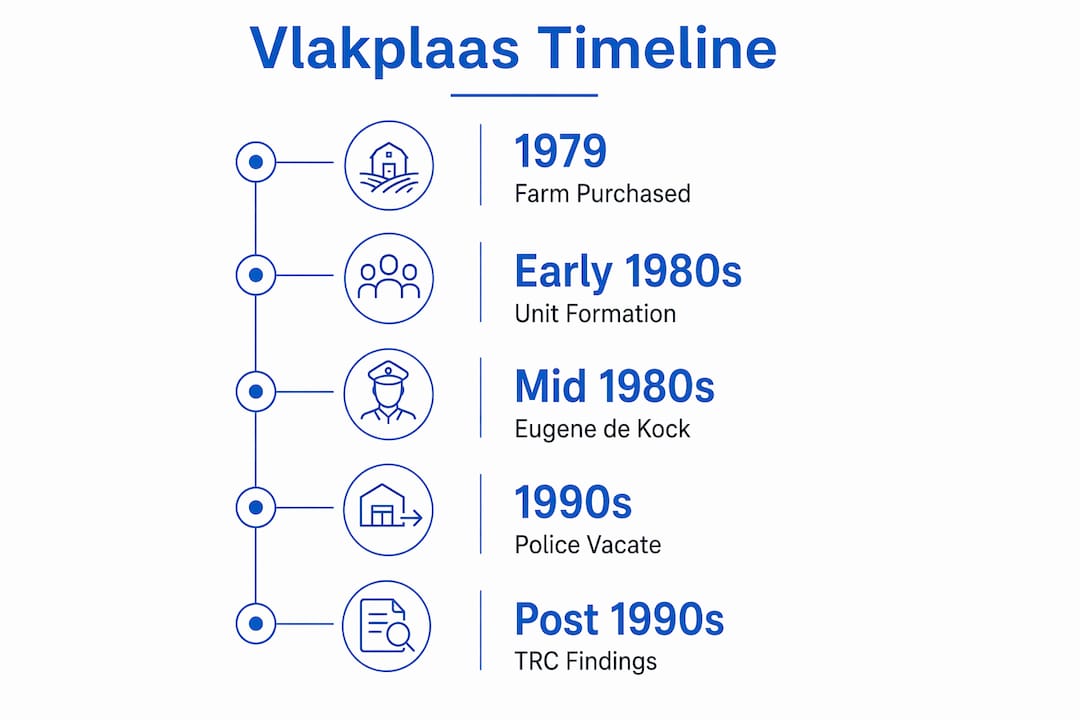
Vlakplaas was not a police station in any conventional sense. It was a 100-hectare farm located roughly 20 kilometers west of Pretoria that served as the operational headquarters for Section C1, later renamed C10, of the South African Police Security Branch. Established in 1979, the unit ran political assassinations, kidnappings, and counterinsurgency operations against anti-apartheid activists both inside South Africa and across its borders. By 1990, what began as a handful of officers had grown into nine squads. The farm’s existence was a state secret for over a decade, and its full scope only emerged through the Truth and Reconciliation Commission (TRC) hearings in the late 1990s.
Key facts about Vlakplaas at a glance:
- Location: 20 km west of Pretoria, Gauteng Province
- Established: 1979 by the South African Police Security Branch
- Unit designation: Section C1, later C10
- Core method: Recruiting “askaris” (turned activists) to infiltrate and eliminate liberation movements
- Estimated death toll: Approximately 1,000 murders and political assassinations
- Key commanders: Johannes Jacobus Viktor, Dirk Coetzee, Jan Carel Coetzee, Jack Cronje, Eugene de Kock
- Exposed by: TRC hearings and subsequent criminal prosecutions
What was the Vlakplaas farm, and where is it?
The land was purchased by the South African Police in 1979 and later transferred to the national Department of Public Works. Sitting on 100 hectares in Gauteng, the farm was deliberately remote enough to conceal paramilitary activity from public view. Its Afrikaans name translates simply as “flat farm,” an unremarkable label for one of apartheid’s most lethal sites.
| Feature | Detail |
|---|---|
| Province | Gauteng, South Africa |
| Area | 100 hectares |
| Distance from Pretoria | Approximately 20 km west |
| Year acquired | 1979 |
| Transferred to | Department of Public Works |
| Post-1994 status | Disputed; multiple failed repurposing attempts |
After the police vacated the farm in the mid-1990s, a caretaker named Louis Steyn took possession. The government announced plans in 2001 to transfer the site to the Department of Arts and Culture for use as a museum, but Steyn successfully challenged his eviction in the High Court. In August 2007, the Department of Science and Technology announced a plan to convert it into a healing center focused on traditional medicine research. That too stalled. Steyn eventually left in 2012, passing the property to friends, who handed it to a Christian ministry called Kuriaké, which ran an addiction rehabilitation center there until its eviction in June 2014. As of the most recent public records, the government still intends to transfer the site to the Department of Arts and Culture as a heritage site, but legal complications have prevented any stable transformation.
Pro Tip: If you are researching Vlakplaas for academic or legal purposes, the South African History Online archive and the TRC’s published transcripts at the Department of Justice website are the most reliable primary sources for documented incidents and testimony.
How Section C1/C10 operated at Vlakplaas
The unit evolved from a small contingent to multiple squads specializing in counterinsurgency and political assassinations. Its methods were calculated and brutal, drawing on psychological warfare techniques modeled on Rhodesian security forces.
The askari system
The defining tactic was the recruitment of askaris. Captured activists from the African National Congress (ANC) and other liberation movements were given a stark choice: cooperate or die. The askari system was modeled on Rhodesian psychological warfare, forcing detainees to betray comrades under brutal conditions or face execution. Those who agreed became double agents, using their insider knowledge to identify, locate, and help eliminate former colleagues. The psychological damage was compounding: askaris were trapped between the security forces who controlled them and the movements that would view them as traitors.
Operational tactics
- Infiltration: Askaris posed as active ANC members to penetrate cells and safe houses.
- Entrapment killings: Operatives lured targets into ambushes by exploiting personal trust.
- Cross-border operations: The unit conducted assassinations in neighboring countries, including Mozambique, Swaziland, and Lesotho.
- Extrajudicial executions: Captured activists were frequently killed without any legal process, their deaths disguised as armed confrontations.
- State fraud: Commanders routinely diverted government funds intended for informant payments to personal use, a pattern of corruption that ran parallel to the violence.
The 1986 Guguletu Seven
The most documented single operation is the Guguletu Seven ambush. Seven young ANC members were lured into a trap by Vlakplaas askaris in the Cape Town township of Guguletu in march 1986. Police killed all seven and then staged the scene to suggest the men had initiated an armed attack. The TRC hearings decades later exposed the full orchestration of the ambush, including the role of askaris in setting it up.
Who commanded Vlakplaas, and what happened to them?
The unit had five commanders across its operational life from 1979 to 1993. Each left a distinct mark on the unit’s methods and notoriety.
| Commander | Tenure | Key Role / Outcome |
|---|---|---|
| Johannes Jacobus Viktor | 1979 | Founded the unit; established its covert structure |
| Dirk Coetzee | — | First public whistleblower; fled to ANC in exile |
| Jan Carel Coetzee | — | Brief tenure; less publicly documented |
| Jack Cronje | 1985 | Expanded operations; later applied for TRC amnesty |
| Eugene de Kock | 1985–1993 | Most prolific commander; convicted of murder |
The leadership timeline runs from Viktor through de Kock, with each commander inheriting and often expanding the unit’s reach.
Dirk Coetzee is the figure who cracked the secrecy open. After leaving the unit, he eventually made contact with the ANC in exile and gave explosive interviews to the press in the early 1990s, naming names and describing specific murders. His testimony before the TRC confirmed operations that the government had denied for years. He was granted amnesty by the TRC.
Eugene de Kock ran Vlakplaas for the longest stretch, from 1985 to 1993, and became the face of the unit’s worst atrocities. South African courts convicted him of six counts of murder and sentenced him to 212 years in prison. He was paroled in 2015 after serving over 20 years. His nickname among colleagues was “Prime Evil.” De Kock also applied for TRC amnesty for some offenses, and his testimony provided some of the most detailed accounts of how the unit operated.
Notable operatives beyond the commanders included askaris who were themselves victims of the system before becoming perpetrators. Their dual status as both coerced participants and active killers complicated how the TRC and courts handled their cases.
What did the TRC find, and what is Vlakplaas’s legacy?
The TRC’s findings on Vlakplaas were among the most damning in its entire body of work. TRC reports describe the Security Branch’s clandestine arm as having used turned askaris to infiltrate and eliminate anti-apartheid activists inside and outside South Africa. The commission documented specific murders, cross-border raids, and the systematic use of torture as a recruitment tool for the askari program.
Historical assessments conservatively estimate that Vlakplaas activities contributed to approximately 1,000 murders and political assassinations over the unit’s operational life. Many cases remain unresolved. Families of victims who disappeared during the apartheid era have never received full accounting of what happened, and the TRC’s amnesty process meant that some perpetrators avoided criminal prosecution entirely in exchange for disclosure.
Key legacy points:
- The TRC granted amnesty to several Vlakplaas operatives who made full disclosure, a decision that remains controversial among victims’ families.
- Unresolved disappearances continue to fuel calls for further investigation and exhumation of remains.
- The farm itself has not been converted into a memorial, leaving a physical gap in South Africa’s reckoning with this history.
- De Kock’s parole in 2015 reopened public debate about whether justice was adequately served.
- Democratic reform in Africa has been shaped in part by how South Africa handled, and failed to fully handle, accountability for units like Vlakplaas.
Pro Tip: The South African History Online article on Vlakplaas compiles TRC testimony excerpts alongside historical analysis, making it one of the most accessible starting points for researchers who want primary source material without navigating the full TRC archive.
How the Madlanga Commission investigates police and intelligence corruption
The Madlanga Commission of Inquiry, chaired by Justice Mbuyiseli Madlanga, investigates criminal infiltration and corruption within South Africa’s police, prosecution, and intelligence sectors. Its mandate directly connects to the institutional failures that allowed Vlakplaas to operate for over a decade without accountability.
| Commission Feature | Detail |
|---|---|
| Chair | Justice Mbuyiseli Madlanga |
| Scope | Police, prosecution, and intelligence sectors |
| Public access | Full hearing records, case files, witness profiles |
| Relevance to Vlakplaas | Examines systemic corruption rooted in apartheid-era policing |
| Archive format | Searchable online database of proceedings |
The Commission’s work adds new layers of transparency to previously hidden abuses. Witnesses appearing before it include senior law enforcement figures whose testimonies connect present-day corruption to patterns established during the apartheid era. The key figures archive profiles experts and witnesses whose testimony bears directly on how apartheid-era structures shaped the institutions that followed.
What sets the Madlanga Commission apart from the TRC is its focus on institutional continuity. Where the TRC documented what happened, the Madlanga Commission examines how the culture of corruption and impunity that Vlakplaas embodied persisted into the democratic era. Its public hearings are fully documented and accessible online, allowing researchers, journalists, and citizens to track developments without attending proceedings in person.
Victim profiles and testimonies from Vlakplaas operations
The human cost of Vlakplaas is most visible in the individual cases that TRC hearings brought to light. Griffiths Mxenge, a prominent human rights lawyer, was murdered in 1981. His killing was later confirmed as a Vlakplaas operation, with Dirk Coetzee naming the operatives involved. The “Chesterville Four” were killed in 1986 in another operation the unit carried out in KwaZulu-Natal.
The Guguletu Seven case produced the most detailed victim testimony. Mothers and siblings of the seven young men killed in the 1986 ambush testified before the TRC, describing how they were initially told their sons and brothers had died in a legitimate police confrontation. The TRC’s exposure of the ambush’s staged nature gave families a factual account, though not full legal redress. Many victims’ families across all Vlakplaas operations never received even that much. Disappearances where no body was recovered left families in permanent uncertainty, a condition that human rights organizations like the Khulumani Support Group have documented and continue to advocate around.
Legal proceedings against Vlakplaas personnel after apartheid
Eugene de Kock’s trial in the mid-1990s was the most significant criminal prosecution of any Vlakplaas figure. Convicted on six counts of murder and numerous other charges, he received a sentence of 212 years. The trial produced extensive testimony about the unit’s methods, and de Kock’s own detailed confessions filled gaps that the TRC process had left open.
Jack Cronje and several other Vlakplaas operatives applied for TRC amnesty and received it after making full disclosure of their roles. Dirk Coetzee was also granted amnesty. The amnesty provisions of the TRC Act meant that full criminal prosecution was not pursued for many perpetrators who cooperated with the commission. Critics argued this prioritized political reconciliation over justice for victims. Supporters countered that without amnesty incentives, far less would have been disclosed. That tension has never been fully resolved in South African public life, and it shapes how institutions like the Madlanga Commission approach accountability today. Researchers tracking current proceedings can access the Commission’s case files for documented evidence of how apartheid-era corruption patterns have continued.
How did the international community respond to Vlakplaas?
International awareness of Vlakplaas developed slowly. During the apartheid era, South Africa’s government successfully concealed the unit’s existence from most foreign governments, and the Cold War context meant that Western governments were often reluctant to press too hard on South African internal security practices. The ANC’s exile networks had some knowledge of Vlakplaas operations, particularly after Dirk Coetzee’s defection, but this information circulated mainly within activist and solidarity circles rather than reaching mainstream diplomatic channels.
After the TRC hearings, international human rights organizations including Amnesty International incorporated Vlakplaas findings into their documentation of apartheid-era abuses. The unit’s cross-border operations in Mozambique, Lesotho, and Swaziland raised questions about South Africa’s violations of those countries’ sovereignty, though formal international legal proceedings never materialized. The broader international response was absorbed into the global reckoning with apartheid as a crime against humanity, a designation that shaped South Africa’s post-1994 diplomatic rehabilitation and its obligations under international human rights law.
Key Takeaways
Vlakplaas operated as apartheid’s most lethal covert unit, responsible for an estimated 1,000 murders, and its legacy of institutional corruption continues to shape South African accountability efforts through bodies like the Madlanga Commission.
| Point | Details |
|---|---|
| Farm location and scale | A 100-hectare farm 20 km west of Pretoria served as the unit’s operational base from 1979 to the mid-1990s. |
| Askari recruitment | Captured activists were coerced into becoming informants and killers, a tactic modeled on Rhodesian psychological warfare. |
| Estimated death toll | Historical assessments conservatively estimate that Vlakplaas’ actions led to approximately 1,000 murders and political assassinations. |
| TRC accountability | The TRC granted amnesty to operatives who made full disclosure, leaving many victims without criminal justice. |
| Ongoing investigation | The Madlanga Commission examines how apartheid-era corruption patterns persist in South Africa’s current police and intelligence structures. |
FAQ
What does “Vlakplaas” mean in English?
Vlakplaas is an Afrikaans term meaning “flat farm.” The name refers to the physical character of the 100-hectare property located approximately 20 kilometers west of Pretoria.
Who was the most notorious commander of Vlakplaas?
Eugene de Kock, who commanded the unit from 1985 to 1993, is widely regarded as the most notorious figure. South African courts convicted him of six counts of murder, and he served over 20 years in prison before being paroled in 2015.
What were askaris in the context of Vlakplaas?
Askaris were former anti-apartheid activists who were captured and coerced into working for the Security Branch. They used their insider knowledge of liberation movements to help Vlakplaas operatives identify and eliminate former comrades.
What did the Truth and Reconciliation Commission find about Vlakplaas?
The TRC documented that Vlakplaas operatives carried out political assassinations, cross-border raids, and systematic torture, and it granted amnesty to several perpetrators who made full disclosure of their roles.
Is Vlakplaas farm open to the public today?
No. The farm has been subject to repeated legal disputes and failed repurposing attempts since the mid-1990s. As of the most recent public records, it has not been converted into a museum or heritage site, despite longstanding government intentions to do so.
Recommended
- Case Files of the Madlanga Commission of Inquiry - The Madlanga Commission Archive
- Exhibits of the Madlanga Commission - the objects in the record - The Madlanga Commission Archive
- The R360 million SAPS Medicare24 tender - and Cat Matlala’s guilty plea - Madlanga Commission
- The R286 million Aeroton cocaine bust - and the R55m that went missing - Madlanga Commission