Whistleblower protections South Africa: a researcher’s guide

South Africa’s Protected Disclosures Act (PDA, Act 26 of 2000) gives qualifying employees statutory protection against occupational detriment, but the protection is procedural and limited. To qualify, a disclosure must be made in good faith with a reasonable belief that the information is substantially true, and it must follow a recognised route: the employer, a legal adviser, or an authorised public body such as the Public Protector. Researchers tracking misconduct in South Africa’s justice and security sectors can access primary hearing records directly through the Madlanga Commission archive, including daily transcripts, exhibits, and case files. For formal record requests not publicly available, the Promotion of Access to Information Act (PAIA) is the standard legal route.
Key limits to know upfront:
- Remedies run through labour law; compensation is capped at 24 months for automatically unfair dismissal, 12 months for other unfair labour practices
- The burden of proof rests on the discloser
- No automatic witness protection, state-funded legal aid, or immunity from retaliatory civil suits
- Fully anonymous disclosures are not permitted under the PDA
- Civil defamation suits remain a real risk even after a protected disclosure
Analysis by Just Share and PPLAAF confirms these gaps persist in practice.
Table of Contents
- What remedies and enforcement routes does the PDA actually offer?
- What did the 2017 amendments require employers to do?
- How does the Madlanga Commission publish and archive its records?
- Who qualifies as a whistleblower under South African law?
- Are whistleblowers protected from civil suits and criminal charges?
- How do the PDA and PAIA work together?
- How can whistleblowers protect their identity during and after disclosure?
- The Madlanga Commission archive: your starting point for primary records
- Key Takeaways
- FAQ
What remedies and enforcement routes does the PDA actually offer?
The PDA channels relief through labour law. An employee subjected to occupational detriment can approach the Labour Court or relevant tribunal for reinstatement, compensation, or an interdict. Compensation is limited by labour law caps for automatically unfair dismissal and other unfair labour practices. There are no effective penalties for employers or third parties who fail to protect a whistleblower, which means the financial and litigation burden falls almost entirely on the discloser. A proposed Protected Disclosures Bill released for public comment in 2026 proposes stricter timelines and potential penalties for unlawful identity disclosure, but those reforms are not yet law.
What did the 2017 amendments require employers to do?
The 2017 amendment (Act 5 of 2017) introduced Section 6, requiring employers to implement internal reporting procedures and make employees aware of them. This was a structural improvement: a formal internal channel reduces the evidentiary burden on a discloser who follows it. The limitation is enforcement. If an employer never implements or publicises those procedures, the discloser falls back on Section 9 general protected disclosure provisions, which carry higher evidentiary requirements. Researchers should collect internal policy documents and communications contemporaneously, precisely because this gap is common.
How does the Madlanga Commission publish and archive its records?
The Madlanga Commission publishes daily hearing records, witness profiles, exhibits, rulings, and case files through its public archive. Each hearing day gets its own page, such as Day 115, Day 118, and Day 113, containing transcripts and linked exhibits. The cases index organises material by subject matter, and the key figures directory cross-references witness profiles with their testimony. The methodology page explains sourcing, verification, and correction practices, which is the right starting point before making evidentiary claims from archive content.
Who qualifies as a whistleblower under South African law?
The PDA covers employees and workers in both the private and public sectors. The 2017 amendments broadened the definition of “worker” to include independent contractors and labour-broker workers, not just permanent employees. The disclosure itself must concern an “impropriety”: unlawful conduct, a health or safety risk, environmental damage, unfair discrimination, or a miscarriage of justice, among other categories. Disclosures about personal grievances unrelated to these categories do not qualify.
Are whistleblowers protected from civil suits and criminal charges?
Section 9A of the PDA provides that a court may find a whistleblower not liable to civil, criminal, or disciplinary proceedings for a protected disclosure, even where confidentiality obligations or other laws would otherwise apply. The word “may” matters: this is not automatic immunity. PPLAAF’s guidebook notes that civil defamation suits and criminal charges remain a real risk, particularly where the disclosure route was not strictly followed or the good-faith test is disputed. Retaliatory civil litigation is one of the most common practical threats facing whistleblowers in South Africa.
How do the PDA and PAIA work together?
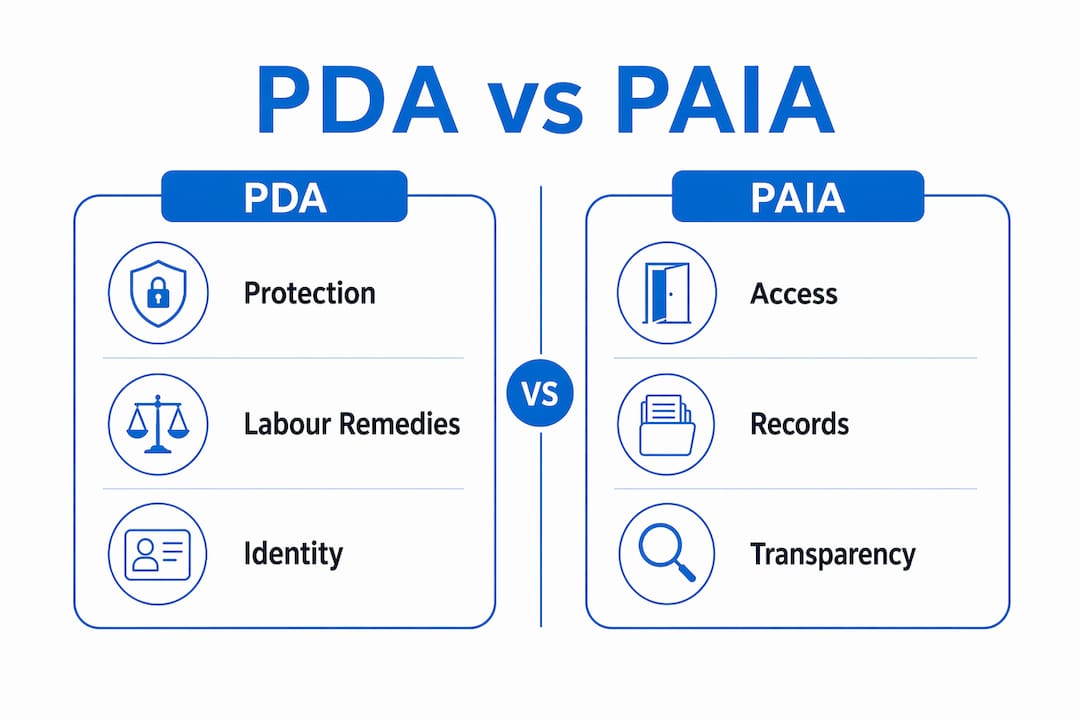
The PDA governs protection from retaliation; PAIA governs access to records held by public bodies. For researchers and journalists, the two laws operate in sequence: the PDA protects the source who disclosed information, while PAIA is the mechanism to formally request documents from a public institution that has not published them voluntarily. A PAIA request must identify the records sought with reasonable precision, state the requester’s identity, and include the prescribed fee where applicable. Public bodies have 30 days to respond, with a possible 30-day extension. Redactions are common for personal data and national-security material; requesters can ask for written reasons and appeal.
How can whistleblowers protect their identity during and after disclosure?
The PDA does not permit fully anonymous disclosures, so identity protection depends on procedural choices. Disclosing to a legal adviser under Section 5 carries the strongest confidentiality protection, since legal professional privilege applies. Disclosures to authorised public bodies under Section 8 carry a statutory duty of confidentiality on the recipient. Practically, PPLAAF recommends using secure communication channels, limiting disclosure of identity to the minimum necessary, and documenting every step in writing. For journalists handling testimony from the Madlanga Commission archive, anonymising source details in working notes and verifying exhibits against published transcripts before publication reduces both legal and safety exposure.

The Madlanga Commission archive: your starting point for primary records
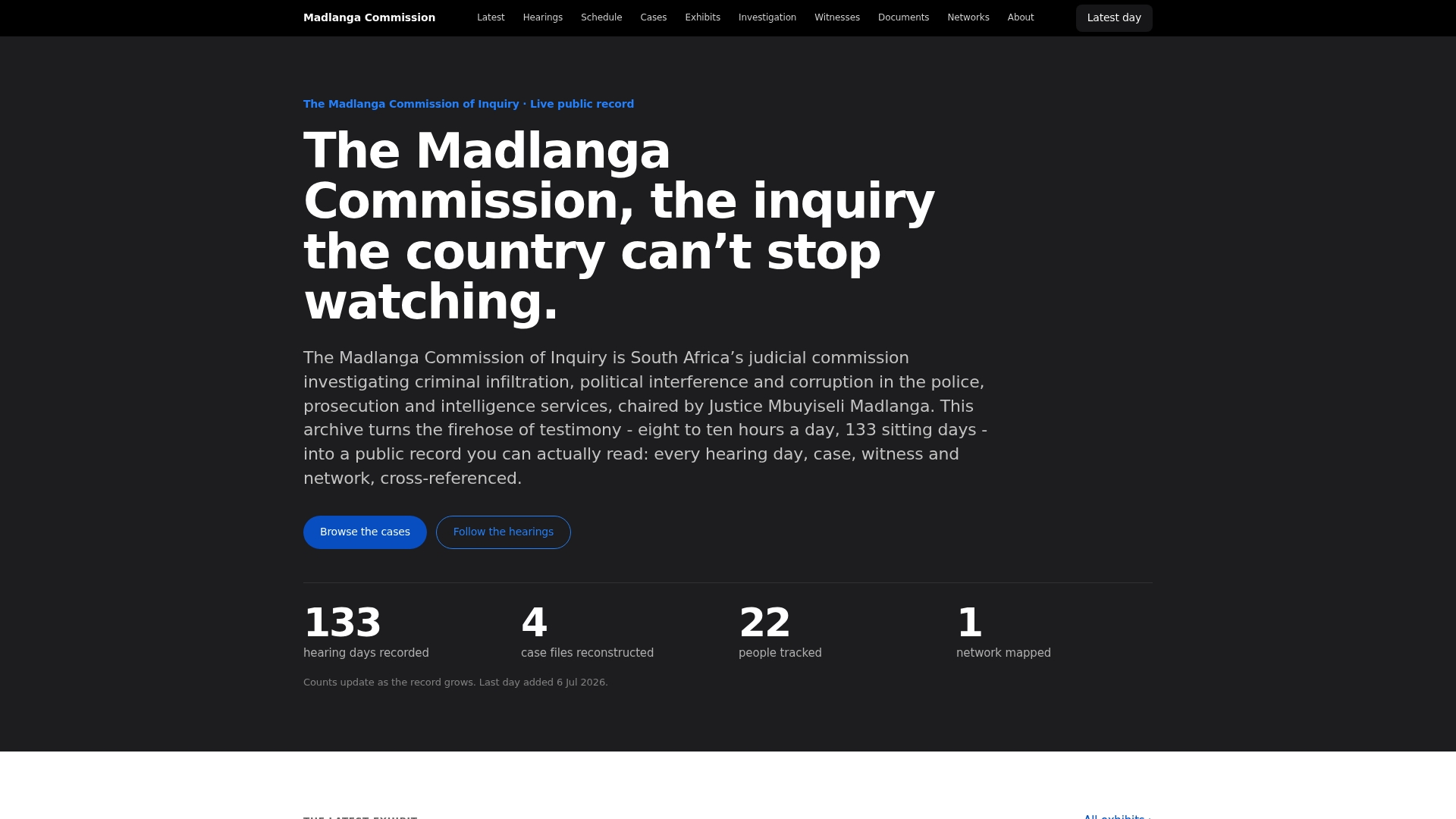
The Madlanga Commission archive is the most direct route to primary documentation on corruption and political interference in South Africa’s police, prosecution, and intelligence sectors. Hearing transcripts, exhibits, witness profiles, and case files are publicly accessible without a formal request.
For records not yet published or where redactions apply, a PAIA request to the Commission is the correct route: include a precise list of documents, your contact details, and a request for written reasons for any redactions so you can appeal effectively. The methodology and sourcing page explains how records are verified and corrected, which matters when you are building an evidentiary case.
Pro Tip: Before citing any exhibit or transcript in a publication, cross-reference it against the published hearing-day page and check the methodology page for any corrections. If testimony involves a named individual, seek legal advice on anonymisation obligations before publication.
Start with Day 124 or browse the latest hearings for the most recent records. For formal requests, contact the Commission directly through its published contact details.
This article is general information, not legal advice. Confirm current rules with the relevant primary sources or a qualified South African legal professional for your specific situation.
Key Takeaways
South Africa’s PDA protects qualifying disclosures but channels all remedies through labour law, leaving significant gaps that researchers and whistleblowers must plan around.
| Point | Details |
|---|---|
| Legal test | Disclosures must be in good faith with a reasonable belief the information is substantially true. |
| Compensation caps | Up to 24 months for automatically unfair dismissal; 12 months for other unfair labour practices. |
| No automatic immunity | Section 9A protection from civil or criminal liability is discretionary, not guaranteed. |
| 2017 employer duty | Employers must implement internal reporting procedures, but enforcement gaps remain common. |
| Madlanga Commission archive | Daily hearing pages, case files, and exhibits are publicly searchable; use PAIA for unpublished records. |
FAQ
What does the Protected Disclosures Act protect against?
The PDA protects employees and workers from occupational detriment, such as dismissal, demotion, or harassment, for making a qualifying protected disclosure about workplace impropriety.
Can a whistleblower in South Africa remain anonymous?
No. The PDA does not permit fully anonymous disclosures; however, disclosures to a legal adviser carry legal professional privilege, and authorised public bodies have a statutory duty of confidentiality.
How do I access Madlanga Commission hearing records?
Hearing transcripts, exhibits, and case files are publicly available on the Madlanga Commission archive; for unpublished or redacted material, submit a PAIA request with a precise list of documents sought.
What is the strongest disclosure route under the PDA?
Disclosure to a legal adviser under Section 5 carries the strongest confidentiality protection; disclosure through an employer’s Section 6 internal procedure is the most common route and reduces evidentiary burdens.
Are PDA reforms planned?
A proposed Protected Disclosures Bill was released for public comment in 2026, proposing stricter timelines, a central database, and penalties for unlawful identity disclosure, but it is not yet law.