Madlanga Commission hearing record
Day 141 of the Madlanga Commission
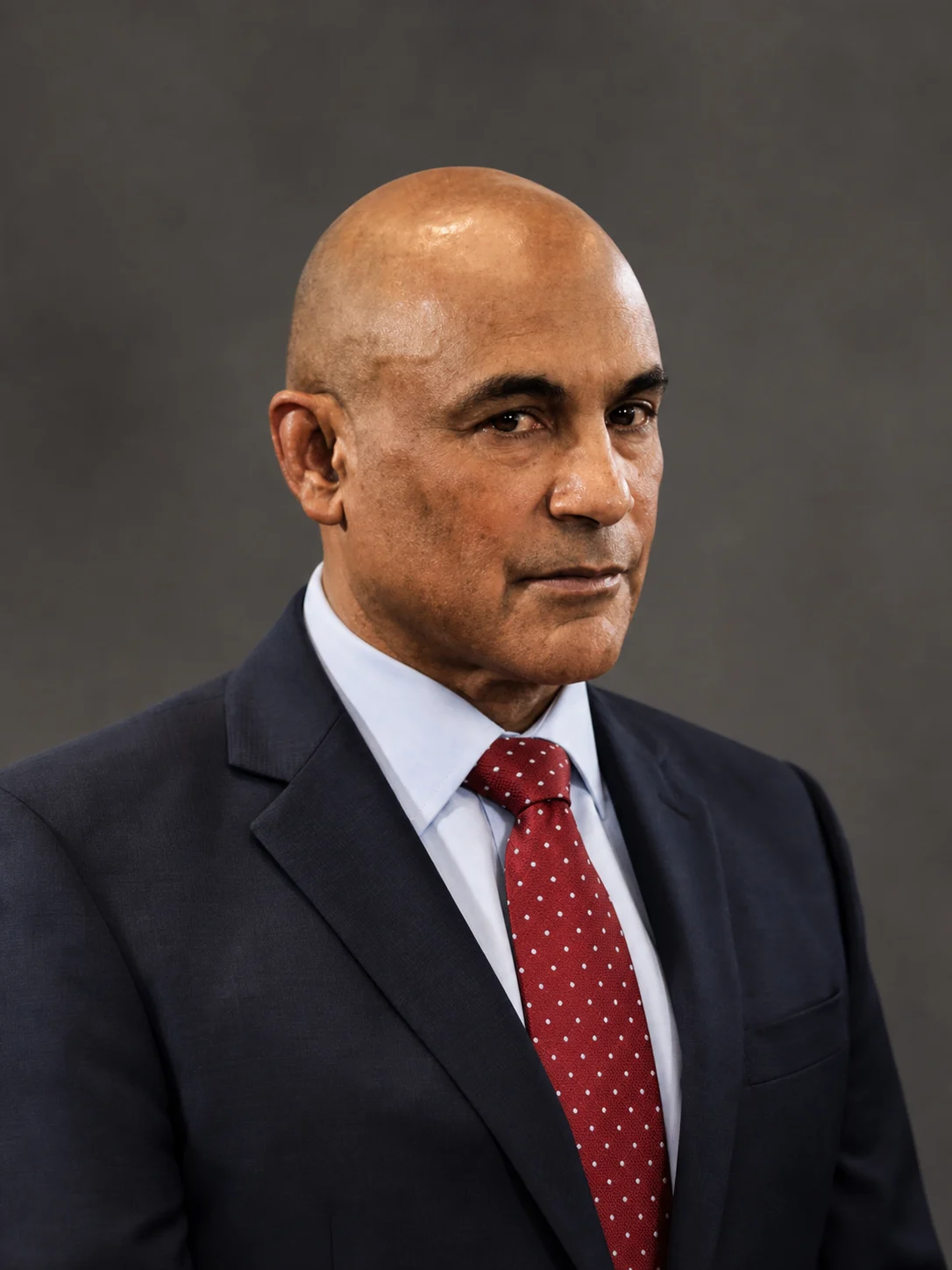
Witness: Colonel Brian Padayachee
Evidence led by Advocate Mahlape Sello SC
A third day of cross-examination leaves IDAC's fraud case against Crime Intelligence boss Dumisani Khumalo looking less like a crime and more like an HR dispute - the commission questions the mandate, the mechatronics, and why General Khan's name is in the affidavit.
The day in brief
What you need to know
- The chairperson called IDAC's core theory - that appointing a civilian specialist points to criminality - 'a quantum leap in logic'.
- The commission repeatedly framed the matter as a human-resources dispute IDAC had no mandate to criminalise: 'this sounds like meddling in an HR matter'.
- Brigadier Mokwele was, in effect, charged over conduct investigators believed she MIGHT commit in future - they could not say when.
- The charge dates the alleged offence to October 2024, but Mokwele only signed her contract that December; her appointment took effect on 1 November 2024.
- IDAC's own investigator, a career policeman, had no way to judge whether a mechatronics candidate's technical test was marked correctly - yet declared she failed.
- The commission pressed hard on why the arrest-warrant affidavit singled out General Feroz Khan's absence from the interview panel; Madlanga: 'I don't accept that mentioning him here meant nothing.'
- The Mail & Guardian reported the commission heard IDAC had charged Khumalo 'on sparse facts'.
Full coverage
The day, in depth
What was on the table
Colonel Brian Padayachee, the lead Investigating Directorate Against Corruption (IDAC) investigator, returned for a third day to defend the directorate's fraud and corruption case against suspended Crime Intelligence head Lieutenant-General Dumisani Khumalo and co-accused. At its centre is the appointment of Brigadier Dineo Mokwele - a former BMW employee with a mechatronics-engineering diploma and an industrial-engineering degree - to a brigadier-level post running Crime Intelligence's Technical Support Services (TSS) unit, the covert section that installs listening devices, cameras and specialist equipment for operations. IDAC's theory is that the appointment was an 'attempt to capture Crime Intelligence'. By the end of the day the panel had picked that theory apart from four directions: the directorate's mandate, the quality of the founding complaint, the logic of the arrest, and the pointed mention of a specific general.
'A quantum leap in logic'
The sharpest blow came from the chairperson. When Padayachee argued that Mokwele's lack of policing experience pointed to something sinister, Justice Madlanga rejected the leap outright: SAPS routinely appoints civilians for specialist expertise, he noted, and inexperience in policing is not evidence of a crime. A lawyer with a law degree can be appointed to a specialist post; a mechatronics engineer to a technical one. Treating the appointment of a qualified outsider as proof of corruption, the chairperson said, was 'a quantum leap in logic'.
Is this even IDAC's business? The HR-matter problem
The commissioners returned again and again to jurisdiction. SAPS publishes an advert, sets the requirements and the core functions, runs interviews and makes an appointment. On what statutory authority, they asked, does IDAC - a creature of statute with no inherent powers - get to declare that advert 'abnormal', or that the post should not have been open to outsiders, or that particular people should have sat on the panel? Commissioner Baloyi SC put it bluntly to Padayachee: the more he explained, the more it sounded like meddling in the internal human-resources affairs of another institution over which IDAC has no statutory authority. Padayachee could not point to the provision in IDAC's governing statute that authorised the directorate to second-guess a SAPS appointment.
Charged for a crime not yet committed
The most striking exchange concerned timing. Padayachee accepted that investigators could not say when the alleged offence would actually occur - the theory being that the appointment could, in future, enable the manipulation of tenders or the compromise of sensitive information. Commissioner Baloyi SC pressed the obvious problem: a charge was formulated, a warrant of arrest obtained, people arrested and brought before court - yet months later the investigator was still saying he did not know whether or when the feared conduct would ever happen. Compounding it, the charge sheet dated the alleged offence to October 2024, although Mokwele only signed her employment contract that December and her appointment took effect on 1 November 2024.
The mechatronics the investigator could not mark
IDAC's case leaned on the claim that Mokwele's competency test had been improperly marked and that two long-serving internal candidates - who scored roughly 40% and 49% - were unfairly beaten by an outsider. But the post's core functions, read into the record from the advert, are squarely technical: managing electrical, mechanical and radio-communication workshop services for a covert technical unit. The commission pressed the point that Padayachee, a career police officer with no engineering background, had no capacity to judge whether a mechatronics assessment had been marked correctly, yet had concluded in the docket that it was 'manipulated'. Mechatronics is a demanding qualification; nothing in the record established that the better-qualified candidate's higher score was itself proof of a rigged process.
Why is General Khan's name in the affidavit?
The day's most loaded thread was the appearance of suspended Crime Intelligence deputy head Major-General Feroz Khan in Padayachee's arrest-warrant affidavit. The affidavit noted that Khan, among other senior generals, was available but not placed on the interview panel that Khumalo constituted. The commission pressed why Khan specifically was singled out when any of nine provincial heads or three head-office generals could equally have been named - and noted Khan had sat on an earlier, unsuccessful panel for the same post. Padayachee's answer, that Khan's name now 'stands out' but meant nothing when he wrote it, did not satisfy the bench. Chairperson Madlanga said he did not accept that the mention was as innocent as Padayachee wanted the commission to believe. This is the commission scrutinising how IDAC built its case; it is not a finding against Khan, who is presumed innocent.
A case built on 'sparse facts'
Underneath the day's exchanges lay a documentary trail the evidence leaders had walked in detail: how MP Fadiel Adams's complaint travelled from a set of police dockets in late October 2024 to IDAC's desk within weeks, even as an internal SAPS legal opinion concluded no case had been made out. Padayachee accepted the complainant's foundational A1 statement was 'rather sparse on fact'. The Mail & Guardian summed up the day's impression in a single phrase: IDAC had charged Khumalo 'on sparse facts'. The full chronology is set out on the case file below.
In their words
Key moments from the record
“Many people get appointed in SAPS, they cannot even salute, but they are appointed because of their expertise.”
“You formulated a charge, obtained a warrant of arrest, had people arrested and brought before the court, yet many months later you are saying, 'We don't know. Maybe she was going to do it in the future.'”
“The more you explain yourself, Colonel, the more all of this sounds like meddling in an HR matter.”
“I don't accept that mentioning him here meant nothing. It is curious that it is him specifically that you mention.”
Our analysis
The bottom line
Strip away the drama and three days of evidence leave IDAC's case looking legally thin. The directorate took an appointment - the kind of civilian-specialist hiring SAPS does routinely - and recast it as a criminal conspiracy to 'capture' Crime Intelligence. But an HR irregularity, even a real one, is not a crime; and on the record aired this week IDAC could not point to the statute that lets it police another institution's advert.
The timeline is the tell. A complaint that a career-long SAPS insider like Brigadier Mokwele would be manipulated in future became a warrant, an arrest and a prosecution - for conduct nobody could say had happened, or when it would. A charge sheet that dates the 'offence' to before she had even signed her contract is not a strong foundation; it is a working theory dressed as a case.
The most uncomfortable thread is General Khan. Of all the officers who could have been named for not sitting on an interview panel, IDAC's affidavit reached for the one man whose name now colours everything around it. Madlanga's refusal to accept that the mention 'meant nothing' is the sharpest signal the commission sent: it is asking whether this prosecution was built to reach a target, not to answer a complaint.
None of this means Khumalo or Mokwele are innocent, or that IDAC acted in bad faith - those are questions for a trial and for the commission's report, not for us. But a public that has watched IDAC move at record speed here while the R2 billion Tembisa looting sits largely unprosecuted is entitled to ask why. On the evidence so far, the honest answer is that the case looks less like a corruption bust and more like a fight inside the police, fought with a charge sheet.
Analysis is the archive’s own comment on the public proceedings, grounded in the record above. It weighs the evidence and the process; questions of individual guilt are for the courts and the commission to decide. Everyone named is presumed innocent.
Follow the threads
Who Colonel Brian Padayachee connects to
Major-General Feroz Khan
Padayachee rejected MK MP Vusi Shongwe's claim of a 'Khan-IDAC cabal' said to include Khan, saying he was not part of any such group while confirming he knew Khan from prior Crime Intelligence work. Untested allegation; both presumed relevant only as named, not as a finding.
View profile →Lead investigator on the case against himLieutenant-General Dumisani Khumalo
Padayachee ran IDAC's fraud and corruption case against the Crime Intelligence head and defended it across Days 139-141 as evidence-led, while the commission questioned its foundation. The NPA withdrew the charges on 27 July 2026. Untested; both presumed innocent.
View profile →IDAC colleague on the same docketAdvocate Drushantha Ramsamy
Padayachee investigated and Ramsamy prosecuted the Crime Intelligence matter. On Day 151 she gave evidence about how the suspects were selected; he was suspended by the NDPP the same day pending a disciplinary process. Untested; both presumed innocent.
View profile →His director; both now out of the directorateAdvocate Andrea Johnson
Padayachee ran the case Johnson authorised. She resigned on 26 July 2026 and he was suspended on 30 July. Neither step is a finding; both are presumed innocent.
View profile →IDAC colleague who intends to lay charges against himMantsha Robert Raphesu
Raphesu told the commission on Day 152 that he intends to open a criminal case against Padayachee and chief investigator Dylan Perumal, alleging they targeted him after he objected to how the Crime Intelligence investigation was run. Padayachee has not answered the allegation; untested, both presumed innocent.
View profile →The prosecutor who found him at an unprepared bail hearingAdvocate Peter Serunye
Serunye testified on Day 153 that at a June 2025 court appearance he found a junior state advocate handling the bail hearing alone with only Padayachee present, the J15 form incomplete and no bail affidavit in existence. Untested; both presumed innocent.
View profile →Investigated on his complaint without the signed affidavitFadiel Adams
Padayachee conceded on Day 141 that he did not have Adams's original signed section 27 affidavit when the investigation commenced, relying on an oral briefing and receiving the sworn statement later - which chairperson Mbuyiseli Madlanga called 'highly improbable'. Untested; both presumed innocent.
View profile →In the room & on the record
Counsel, the panel and sources
Evidence led by
On the panel
Sources
- News24 - 'What was IDAC's motive?' Padayachee grilled over appointment case (15 Jul 2026) ↗
- Mail & Guardian - IDAC charged Khumalo on sparse facts (16 Jul 2026) ↗
- SABC News - Commission questions grounds for investigating Brigadier Mokwele ↗
- IOL - Commission questions IDAC probe into Khumalo, Mokwele and others (16 Jul 2026) ↗
- Official hearing record - criminaljusticecommission.org.za ↗