Madlanga Commission hearing record
Day 165 of the Madlanga Commission
Witness: Vusimuzi 'Cat' Matlala
Evidence led by Advocate Adila Hassim, Advocate Mahlape Sello SC
A sitting day spent arguing about whether the sitting could happen. Matlala's lead counsel was ill, his junior asked for a day, the chairperson said no, and then the witness said he did not know what his own lawyers had been instructed to do.
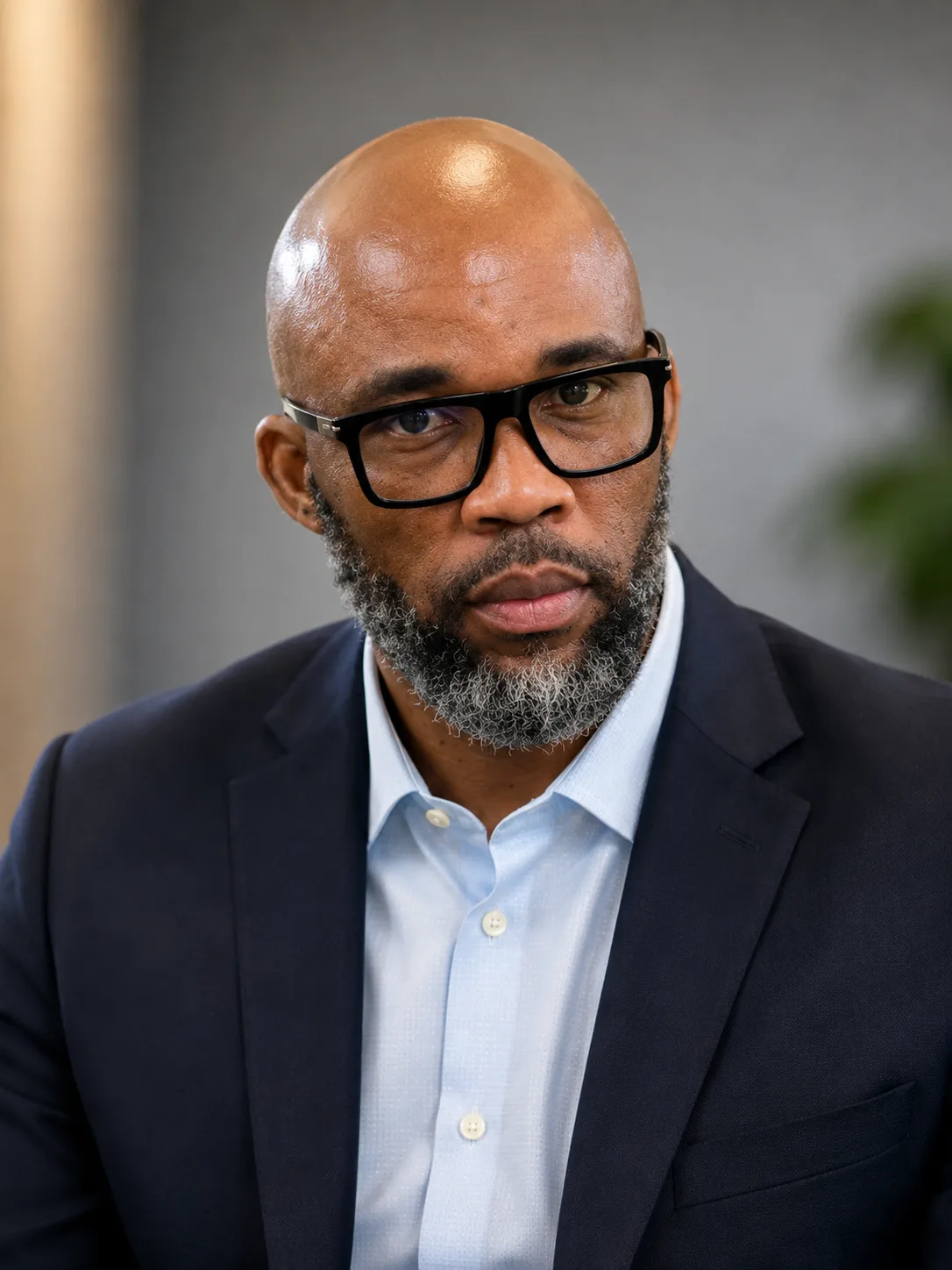
The day in brief
What you need to know
- Vusimuzi 'Cat' Matlala returned under subpoena to account for what his first statement to the commission left out, including the names of senior police officials he had not disclosed.
- The omissions the commission wants explained include suspended deputy national police commissioner Lieutenant-General Shadrack Sibiya, former KwaZulu-Natal Hawks head Major-General Lesetja Senona and former organised crime head Major-General Richard Shibiri. None of the underlying allegations has been tested.
- Almost the entire day went to a procedural fight. Matlala's lead counsel, Advocate Annelene van den Heever, was too ill to attend, and her junior, Advocate Fatima Missi, asked for the evidence to stand down to Tuesday 25 August.
- Missi told the commission the defence had been overwhelmed by material delivered at short notice, putting the volume at far more than two thousand pages, and that consulting Matlala at Kgosi Mampuru II had been difficult.
- Evidence leader Advocate Adila Hassim opposed the request: the time available to Matlala's team ran to months, not days, and Missi could carry the argument in her leader's absence.
- Chairperson Justice Mbuyiseli Madlanga refused the stand-down and ordered that the argument on Matlala's claim to the privilege against self-incrimination be heard at midday.
- Missi then raised the stakes, telling the commission that if it would not give her the afternoon her instructions were to bring an application interdicting the proceedings.
- After the lunch adjournment the threat collapsed. Asked directly from the witness box, Matlala said he had not made up his mind whether his lawyers should withdraw and that he was 'actually in the dark'.
- Commissioner Sesi Baloyi told Missi the gap between what counsel said her instructions were and what her client said from the stand was deeply problematic.
- The self-incrimination application was withdrawn for the day and Matlala's evidence went on. The privilege point, which is what stands between the commission and its questions about the R360 million Medicare24 tender, is still unresolved.
Full coverage
The day, in depth
What the day was supposed to be
Matlala first took the stand on 17 August 2026 (Day 160), brought forward from 1 September under subpoena. That day he read a set of denials into the record and then, on almost every question that touched his pending criminal trial, invoked the constitutional privilege against self-incrimination. The sitting rose with his team required to file a supplementary affidavit, and 24 August was set down for him to account for what the first statement had left out. Per SABC News and eNCA, the omissions the commission wanted explained included the names of senior police officials: suspended deputy national police commissioner Lieutenant-General Shadrack Sibiya, former KwaZulu-Natal Hawks head Major-General Lesetja Senona, and Major-General Richard Shibiri, the former head of the SAPS organised crime component who was dismissed in June 2026. Every allegation touching those three remains untested, and each of them is presumed innocent.
The lead counsel does not arrive
Advocate Annelene van den Heever, who has led Matlala's team through the commission and through his criminal proceedings, was ill and did not attend. Her junior, Advocate Fatima Missi, appeared alone and asked the commission to stand the evidence down until Tuesday 25 August. The reasons she gave were cumulative rather than single: the team needed to file a replying affidavit and heads of argument on the self-incrimination point; the volume of material served on the defence at short notice ran, on her account, to far more than two thousand pages; and consulting Matlala, who is in custody at Kgosi Mampuru II, had been obstructed. Without van den Heever, she argued, it was not fair to make her client argue the constitutional point that governs everything else he will be asked.
The commission's answer: months, not days
Evidence leader Advocate Adila Hassim opposed the application squarely. Per The Citizen, she told the commission the application 'could have been brought much sooner' and that all of the time available to Matlala's legal team 'extends over months, not over days'. She also made the point that Missi is counsel of record in her own right, that the team had notice of van den Heever's unavailability, and that a junior who has been in the matter can argue it. On the prison-access complaint the commission had the Department of Correctional Services' own answer: a message from the area commissioner, Khoza, read into the record, which said the team had consulted for three days and that the department was prepared to make concessions at any time because it understood the importance of the commission.
The chairperson refuses, and sets a time
After a brief adjournment the commissioners refused the stand-down. Per the Mail & Guardian, Madlanga dealt with the heads-of-argument point directly: 'Written submissions, yes, they do assist legal representatives but in the main ... are prepared for the assistance of the decision-maker.' The reasoning is worth stating plainly, because it is the substance of the ruling: heads of argument exist to help the panel, and a panel content to hear oral argument without them cannot be held hostage by their absence. He ordered that the argument on the privilege against self-incrimination be heard at midday, which is what the commission announced publicly as the next step.
The interdict threat
Missi did not accept the ruling quietly. She asked the commission to weigh what the defence had been navigating, telling the panel: 'We beg this commission, humbly so, to consider all the elements that we have to consistently have to deal with.' She then put the alternative on the record. Per the Mail & Guardian, she said that if the commission would not at least give her the afternoon to put the documents before it, 'the alternative is that he has no option but to instruct us to bring an application interdicting the proceedings'. A commission of inquiry being threatened with an urgent interdict by the witness in its own chair is not an everyday event, and it is the second time in a month that this commission has been told a witness may go to court rather than answer it.
The witness contradicts his own counsel
The threat did not survive the lunch adjournment. When the panel put the position to Matlala himself, he did not confirm it. Per SABC News, he said he had not made up his mind whether his lawyers should withdraw, explaining: 'So I'm actually in the dark now because while I was having lunch, I didn't have enough time to conclude what we've been discussing.' Commissioner Sesi Baloyi went straight at the gap. She told Missi: 'Ms Missi, what's happening now is deeply problematic. I asked you directly, is it your instructions from Mr Matlala? You said yes. That's deeply problematic.' The exchange matters because instructions are the whole architecture of legal representation: counsel speaks for the client, and when the client says from the stand that he has not decided the thing counsel has just told the panel he decided, the representation itself is in question.
The argument that was heard: may the commission read a collapsed plea deal
The privilege argument the chairperson ordered for midday did take place, and it was narrower than the constitutional question. Evidence leader Advocate Mahlape Sello SC asked for the affidavits and statements Matlala filed in the plea-and-sentence agreement that collapsed in July 2026 - the agreement under which he would have pleaded guilty over the R228 million actually paid on the Medicare24 tender, taken an eight-year sentence instead of fifteen, and given evidence against senior police officers including Lieutenant-General Shadrack Sibiya. Advocate Fatima Missi argued the documents are privileged and cannot be disclosed, relying on the protection the Criminal Procedure Act gives admissions made in the course of a failed plea negotiation, and warned that a ruling the other way would 'create a precedent that while courts cannot use affidavits in collapsed plea agreements, commissions could access such affidavits'. Sello's answer was that the statutory protection is directed at criminal court proceedings and that a commission of inquiry is not a court. Per Business Day and the Sowetan, Madlanga declined to decide it there and then: 'I am loath to make such a ruling without full written arguments on the point.' Commissioner Sesi Baloyi had separately raised the practical difficulty that the commission is being asked to accept an attorney's assurance about the contents of a section 204 statement it has never seen.
How it ended, and what is still unresolved
Per EWN, Matlala's lawyers withdrew the planned self-incrimination application for the day and his evidence continued. That leaves the central question exactly where it was: the privilege point is what stands between the commission and everything it wants to ask him about the R360 million SAPS Medicare24 health-services contract, on which he faces money-laundering charges in the Specialised Commercial Crimes Court. On Day 160 he used that privilege on almost every question that touched the tender. Nothing decided on Day 165 changed whether he may do so again.
In their words
Key moments from the record
“This application could have been brought much sooner. All of the time that was available to Mr Matlala's legal team extends over months, not over days.”
“Written submissions, yes, they do assist legal representatives but in the main ... are prepared for the assistance of the decision-maker.”
“We beg this commission, humbly so, to consider all the elements that we have to consistently have to deal with.”
“If the commission is not willing to at least grant us this afternoon to ensure that we have those documents before you ... the alternative is that he has no option but to instruct us to bring an application interdicting the proceedings.”
“So I'm actually in the dark now because while I was having lunch, I didn't have enough time to conclude what we've been discussing.”
“Ms Missi, what's happening now is deeply problematic. I asked you directly, is it your instructions from Mr Matlala? You said yes. That's deeply problematic.”
“They consulted for three days, and we are prepared to make concessions anytime because we understand the importance of the commission.”
“I am loath to make such a ruling without full written arguments on the point.”
“Create a precedent that while courts cannot use affidavits in collapsed plea agreements, commissions could access such affidavits.”
Our analysis
The bottom line
The day is a reminder that the privilege against self-incrimination is the real fight in the Matlala stream, and that everything else is scheduling around it. Matlala is an accused person in a live criminal matter over the same contract the commission is investigating. Section 35 of the Constitution protects him from being made to build the state's case against himself, and the commission has no power to take that away. What it can do is test where the privilege genuinely reaches, question by question, and that is a slow, granular exercise the commission has not yet been able to start.
Refusing the stand-down was not a small ruling and the chairperson's reason for it is the interesting part. Heads of argument, he said, exist in the main for the decision-maker. That is correct as a matter of practice, and it removes the most common lever a party has for buying time: a panel willing to hear oral argument cannot be delayed by the absence of a document written for its own convenience. It also puts a limit on how far the illness of one advocate can stop a commission that has been sitting for 165 days.
The contradiction between Missi and her client is the moment that will outlast the day. Counsel told the panel, on the record and when asked directly, that she was instructed to withdraw. Her client, an hour later, said he had not decided. Only one of those can be right, and neither possibility is comfortable: either the instruction was overstated to the panel, or the client did not understand what he had instructed. Commissioner Baloyi's phrase, deeply problematic, was a description rather than a rebuke, and the commission will have to satisfy itself that Matlala is properly represented before it relies on anything he says.
There is a pattern forming around this witness that the commission is plainly alive to. His appearance was postponed on 15 July, brought forward to 17 August, adjourned that day for a supplementary affidavit, and on 24 August met with a stand-down application and an interdict threat. None of that is unlawful and some of it is ordinary litigation practice. But the cumulative effect is that a witness the commission called central has now taken up four scheduled appearances and answered comparatively little, and the commission is running out of runway to keep making room for him.
Nothing on Day 165 touched the merits. No allegation about Sibiya, Senona or Shibiri was tested, no evidence was led on the Medicare24 contract, and no finding was made about anyone. What the day produced was a procedural ruling and an unresolved question about who is speaking for the witness.
Analysis is the archive’s own comment on the public proceedings, grounded in the record above. It weighs the evidence and the process; questions of individual guilt are for the courts and the commission to decide. Everyone named is presumed innocent.
On the record
Who testified this day
Follow the threads
Who Vusimuzi 'Cat' Matlala connects to
Serge Cabonge
On the recording played at Sibiya's bail hearing on 13 October 2026, Cabonge says 'Me, Cat, and Sibiya never did anything. I've never collected money from Cat to give to Sibiya', and alleges the two dealt through suspended Sergeant Fannie Nkosi instead. A denial on a private recording, not evidence before this commission. Untested; both presumed innocent.
View profile →The sergeant he says collected cash, and who says the gifts came from himSergeant Fannie Nkosi
Per the Daily Maverick and Business Day, Matlala told the commission on Day 167 that suspended Sergeant Fannie Nkosi collected cash on Lieutenant-General Shadrack Sibiya's behalf, while refusing to name names because he did not want to incriminate himself with recordings under investigation. Nkosi's own March 2026 evidence ran in the other direction, describing gifts from Matlala to Sibiya including 20 live impala. Neither account has been tested and everyone named is presumed innocent.
View profile →Named him in evidence, and named with him in the police forensic reportBheki Cele
Matlala told the commission that Cele arranged his 15 April 2025 Umhlanga meeting with Mkhwanazi and told him to keep up his dealings with Brown Mogotsi, and told Parliament he paid Cele R500,000 in 2025. Per the Sunday Times of 3 October 2026 a SAPS forensic report recommends prosecuting both over the Medicare24 contract; nobody has been charged on it. Untested; both deny wrongdoing and are presumed innocent.
View profile →Head of the prisons service holding himMakgothi Samuel Thobakgale
Matlala is held at the Kgosi Mampuru II Correctional Centre in Pretoria, run by the Department of Correctional Services under National Commissioner Makgothi Thobakgale. The department rejected his legal team's August 2026 complaint that consultations had been obstructed. On 17 September 2026 Thobakgale gave the commission evidence on prison gangs and the grooming of officials; he did not give evidence about Matlala. Matlala has pleaded not guilty in his criminal trial and is presumed innocent.
View profile →Named in the taxi messages read into the record on Day 179Bafana 'King of the Sky' Sindane
Per Sowetan the WhatsApp evidence the commission led on 28 September 2026, in Sindane's absence, shows Sindane and Joe 'Ferrari' Sibanyoni sharing the personal details of people described as drug runners linked to Matlala and operating in Tshwane, shortly after Matlala's arrest for attempted murder; per The Citizen what the messages show is the pair tracking Matlala, whom it calls a rival tenderpreneur, and forwarding media reports about him to associates. The two outlets describe the same strand differently and both readings are recorded here. Matlala has not answered this material, none of it is tested, and he is presumed innocent.
View profile →The taxi boss he is charged with trying to killMadoda Johannes 'Joe Ferrari' Sibanyoni
Matlala and four co-accused have pleaded not guilty to 25 charges, including eleven counts of attempted murder, arising from the 10 August 2022 shooting of Joe 'Ferrari' Sibanyoni at the Centurion Golf and Country Club estate. The trial began on 21 July 2026 with Sibanyoni as the state's first witness. On Day 169 Sibanyoni told the commission that Matlala's association with the late Jotham Msibi was one reason he feared for his life. Untested; Matlala denies the charges and is presumed innocent.
View profile →Named alongside him in the Big Five evidenceKatiso 'KT' Molefe
Crime Intelligence head Lieutenant General Dumisani Khumalo named both men in September 2025 among the alleged leaders of the same Gauteng syndicate. Matlala has since testified under subpoena; Molefe has never appeared before the commission. Untested; both presumed innocent.
View profile →Alleged funderSuleiman Carrim
Evidence leaders described Carrim, with Hangwani Maumela, as one of the apparent funders behind Matlala's R360m Medicare24 tender; Carrim testified that Matlala and Brown Mogotsi 'played' him. Untested allegations.
View profile →Medicare24 / alleged cocaine dealMichael van Wyk
Matlala ran Medicare Tshwane District as a franchise of van Wyk's Medicare24 Holdings; their WhatsApp chats were led as an alleged 'get me a good price' cocaine deal. Untested; both presumed innocent (van Wyk on all counts).
View profile →Blue-lights arrangementJulius Mkhwanazi
Evidence tied Matlala's Cat VIP Protection to a draft EMPD memorandum and 'blue lights' arrangement alongside Mkhwanazi. Untested allegations.
View profile →Alleged co-conduitOupa 'Brown' Mogotsi
Carrim testified that Mogotsi and Matlala together 'played' him into the tender deal; money allegedly flowed to Mogotsi from the Medicare24 chain. On Day 160 Matlala said 'I actually hate him', described paying him up to R150,000, and said Bheki Cele told him to maintain the relationship. Mogotsi denies wrongdoing; untested.
View profile →Denied on the recordSenzo Mchunu
On Day 160 Matlala told the commission 'I have never met Minister Mchunu and have had no interactions with him', allowing only correspondence between their attorneys. A denial, not a finding.
View profile →Denied on the recordMajor-General Feroz Khan
Matlala denied ever meeting or interacting with the suspended Crime Intelligence deputy head on Day 160. A denial, not a finding.
View profile →Admitted meeting; agenda described on Day 167Lieutenant-General Nhlanhla Mkhwanazi
Matlala confirmed on Day 160 that he had met the KZN commissioner but claimed the privilege over what was discussed. On Day 167 he described it: Umhlanga, 15 April 2025, arranged by former police minister Bheki Cele, with Maj-Gen Lesetja Senona present; he wanted an introduction to the police human resources head over his company's non-performance, and he raised payments made to Lt-Gen Shadrack Sibiya by other people. Untested.
View profile →The friendship the commission spent Day 167 testingMajor General Lesetja Senona
Named among the affidavit omissions Matlala was recalled on Day 165 to explain, and the whole subject of Day 167. Matlala called him 'not friends but he's my older brother', said the general lent him R20,000 after the 6 December 2024 raid, confirmed WhatsApp advice of 13 May 2025 about challenging the Medicare24 cancellation, and refused to discuss a flat bought with Senona and his son Thato because his conduct with the general is under investigation. Untested; both presumed innocent.
View profile →LenderSteve Motsumi
Per SABC News and Business Day, Matlala confirmed a R5 million loan from Motsumi in 2024 under an acknowledgement of debt, repaid in 2025, and an unsuccessful approach for a further R20 million in 2025 to keep the Medicare24 contract alive. Untested; both presumed innocent.
View profile →Named among the omissions he was called back to explainMajor-General Richard Shibiri
Per SABC News and eNCA, the omissions Matlala was called back on Day 165 to explain included the name of the dismissed former head of the SAPS organised crime component. Nothing was tested on the day and Shibiri is presumed innocent.
View profile →Alleged gifts; refused to answerLieutenant-General Shadrack Sibiya
Asked about a recording said to discuss 20 live impala delivered to Sibiya's farm in March 2024, Matlala said on Day 160 'I do not want to incriminate myself because I know that the recordings are under investigation'. Untested; Sibiya is presumed innocent.
View profile →Named him from the standJotham 'King Mswazi' Msibi
On Day 160 Matlala said he knew three Gauteng businessmen linked to alleged criminal syndicates and named the late taxi boss Jotham 'King Mswazi' Msibi among them. The next sitting day, with Matlala stood down to 24 August, the commission spent entirely on evidence extracted from Msibi's phone. Untested; both presumed innocent.
View profile →Joint venture he described on Day 166Hangwani 'Morgan' Maumela
On 25 August 2026, once the commission established he is not a suspect in the SIU's Tembisa Hospital matter and so could not claim the privilege on the subject, Matlala described a joint venture with Maumela dating to about 2015 or 2016: roughly R1 million each into a joint supplier account, Gauteng health department quotations answered through a shared company, ten percent each on the other's deals. He also said he introduced Maumela to Jotham Msibi over a Pagani Huayra. Untested; Maumela has not answered it and is presumed innocent.
View profile →In the room & on the record
Counsel, the panel and sources
Evidence led by
Sources
- Madlanga Commission of Inquiry, Day 165 livestream (24 August 2026) ↗
- EWN: Madlanga Commission refuses 'Cat' Matlala's postponement bid ↗
- Mail & Guardian: Matlala threatens court action to halt Madlanga testimony after lead counsel falls ill ↗
- The Citizen: Cat Matlala's legal team threatens to withdraw from Madlanga commission ↗
- SABC News: Matlala's legal team threatens to walk out of Madlanga Commission ↗
- SABC News: Matlala returns to Madlanga Commission to address affidavit omissions ↗
- SABC News: Matlala's application to be heard at midday ↗
- Business Day: Matlala fights to block commission from accessing plea deal affidavits (24 Aug 2026) ↗
- Sowetan: Matlala fights to block Madlanga from accessing plea deal affidavits (25 Aug 2026) ↗
- Daily Maverick: Questions mount over Matlala's reluctance to discuss relationship with Sibiya (24 Aug 2026) ↗
- eNCA: 'Cat' Matlala back in hot seat at Madlanga ↗
- TimesLIVE: 'Cat' Matlala continues testimony at Madlanga commission ↗