Madlanga Commission hearing record
Day 149 of the Madlanga Commission
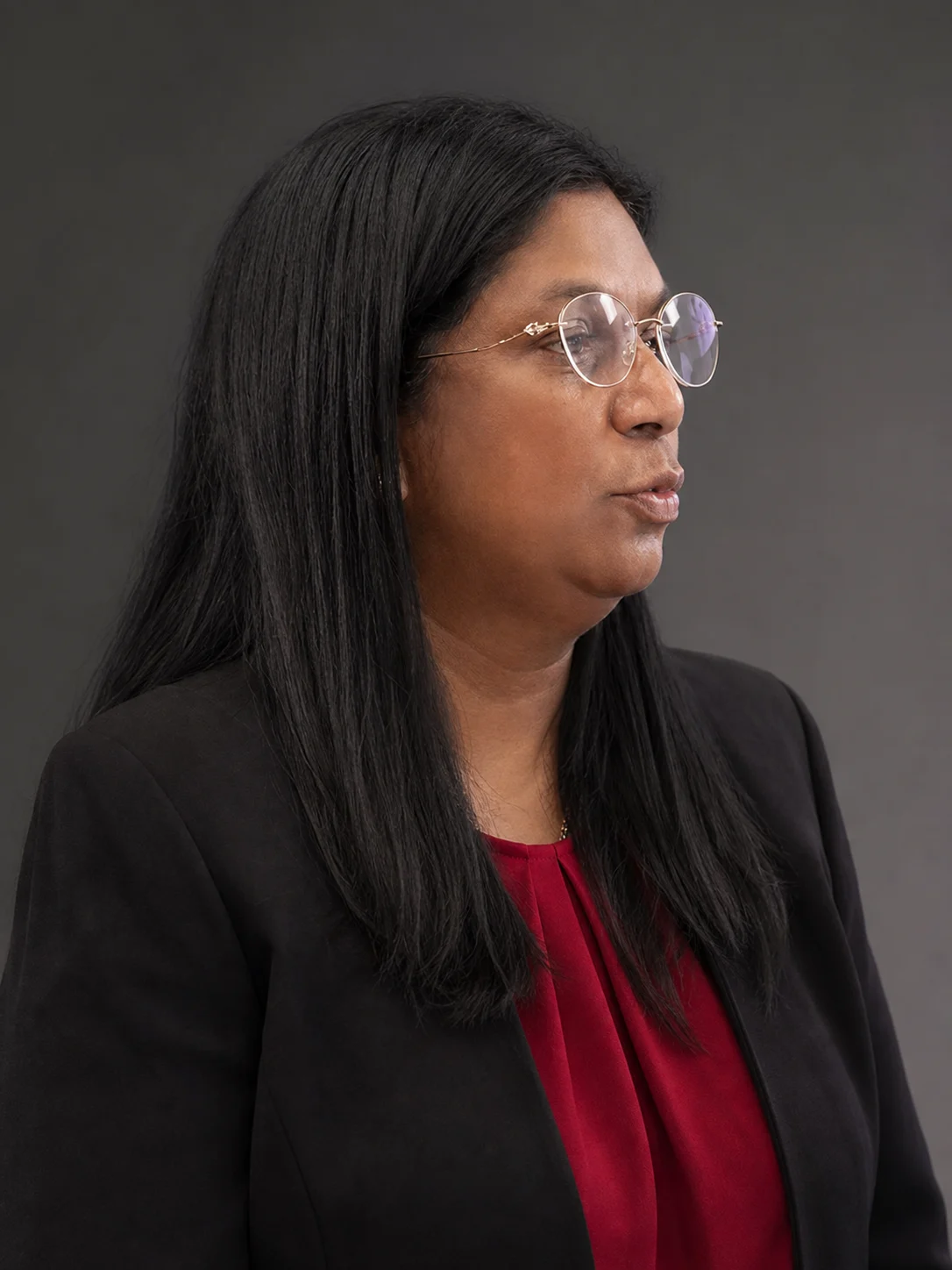
Witness: Advocate Andrea Johnson
Evidence led by Advocate Mahlape Sello SC
A fifth day for Andrea Johnson - her first as IDAC's former head - and the question changes from what IDAC got wrong to what IDAC chose not to touch: why allegations about Crime Intelligence money and a former police minister were never pursued.
The day in brief
What you need to know
- Johnson testified for a fifth day, the first since her resignation as head of the Investigating Directorate Against Corruption took effect on 27 July 2026.
- Commissioner Advocate Sesi Baloyi SC asked why IDAC never pursued allegations that Crime Intelligence funds were diverted to former police minister Bheki Cele - a matter she said fell squarely within the directorate's mandate.
- Johnson said she had received no briefing on those allegations; Baloyi replied that 'on the extreme end, it speaks to selective investigations and prosecutions if this was overlooked'.
- Johnson undertook to check whether her former team had ever pursued the Cele-related allegations.
- On the alleged fabrication of the 'A1' statement heard the previous day, Johnson said she had no knowledge of it and that no one had ever raised it with her, while accepting the chronology was implausible; she deferred the detail to the investigators for the commission to determine.
- She said she had no recall of instructing anyone to investigate the Political Killings Task Team and had only recently learned such an investigation existed - despite having signed a summons for PKTT records and an April 2025 prosecution memorandum authorising it, and despite having told Parliament's ad hoc committee that IDAC was not investigating the task team.
- The day also covered fraud and corruption charges over a Crime Intelligence forklift worth close to R1 million that was paid for but never delivered - which Johnson accepted looked more like a breach of contract than a crime.
- IDAC chief investigator Dylan Perumal and the two officials who disputed his statement are expected to testify later in the week.
Full coverage
The day, in depth
The mirror image of the week's evidence
For four days the commission had asked why the Investigating Directorate Against Corruption pursued the Crime Intelligence officers it did. On this day it inverted the question and asked what the directorate did not pursue. Commissioner Advocate Sesi Baloyi SC put to Johnson that allegations of Crime Intelligence funds being diverted to former police minister Bheki Cele were plainly within IDAC's mandate, and asked why nothing came of them. Johnson confirmed she would have expected to be briefed on such a matter and said she was not. Baloyi's response framed the risk in the starkest terms available to a commissioner: overlooked in this way, it starts to look like selective investigation and prosecution. Johnson agreed to establish whether her former team had ever taken the allegations forward.
The task-team memorandum she signed
Evidence leader Advocate Mahlape Sello SC turned to IDAC's investigation of the Political Killings Task Team - the KwaZulu-Natal unit whose disbandment triggered this entire inquiry. Johnson said she had no recall of instructing anyone to investigate the task team and had only recently learned that such an investigation existed. Against that stood the paper: she had signed a summons for PKTT records covering commander promotions and Khumalo's own appointment as Crime Intelligence head, and she had signed an April 2025 prosecution memorandum authorising a task-team investigation. Asked to explain the scope, she said it 'related to the promotions, and that was all it related to'. Sello questioned that account directly. It also sits awkwardly against her evidence to Parliament's ad hoc committee, where she said IDAC was not investigating the PKTT. It matters because the allegation running through the commission is that the anti-corruption machinery was turned on the very unit investigating political killings; a signed authorisation in the former director's own hand either supports or defuses that claim, depending on what it actually covers.
'No one raised it with me'
Returning to the previous day's evidence about the disputed 'A1' statement, Johnson said she had no knowledge of any allegation that a statement had been fabricated or a signature forged, and that nobody had ever brought it to her. She did not dispute that the chronology of the 6 January 2025 Cape Town trip was implausible; she simply said the detail was for the investigators to explain and for the commission to determine. The three IDAC officials at the centre of that dispute - the chief investigator who filed the statement and the two colleagues whose voice notes contradict him - are expected to testify later in the week, which is when the archive will have something firmer than competing accounts.
The forklift
The day's evidence also took in a much smaller matter with a much simpler shape: fraud and corruption charges arising from a Crime Intelligence forklift worth close to a million rand, where a supplier was paid and the machine was never delivered. Set beside the collapsed Mokwele prosecution, it served the commission's comparative point - which Crime Intelligence matters IDAC ran hard at, and which it left alone.
In their words
Key moments from the record
“On the extreme end, it speaks to selective investigations and prosecutions if this was overlooked.”
“Correct, and I didn't receive a briefing on this.”
Our analysis
The bottom line
Johnson's fifth day was her first without the office. She resigned on 26 July, the President accepted it on 27 July, and she came back to the stand on 28 July as a private citizen still answering for an institution she no longer runs. That is an unusual and, for the record, a useful position: nothing she says now can be softened by the need to defend a directorate she still leads.
The shift in questioning is the significant thing. Days 144 to 148 asked whether IDAC's Crime Intelligence case was properly founded, and by 27 July the National Prosecuting Authority had answered that by withdrawing it. Day 149 asks the harder and more damaging question: if the directorate had the appetite to charge six senior officers over an appointment, why did allegations touching a former police minister apparently never reach the director's desk? An answer of 'I was not briefed' does not settle it - it moves the question one rung down, to the people who decide what a director gets briefed on.
This day was still running when we wrote this entry, and we have kept it to what the record and same-day reporting support. Nothing here is a finding against Johnson, Cele or anyone else named; the commission has not concluded, and the presumption of innocence applies throughout.
Analysis is the archive’s own comment on the public proceedings, grounded in the record above. It weighs the evidence and the process; questions of individual guilt are for the courts and the commission to decide. Everyone named is presumed innocent.
Follow the threads
Who Advocate Andrea Johnson connects to
Lieutenant General Seswantsho Godfrey Lebeya
Evidence in July 2026 was that a misconduct complaint about Johnson reached the then Hawks national head, who raised it with then NDPP Advocate Shamila Batohi and asked for an independent prosecutor. On Day 168 Lebeya confirmed he discussed the allegations with Batohi. Untested; Johnson denies the surrounding allegations and is presumed innocent.
View profile →Alleged to have shielded himMajor-General Feroz Khan
A whistleblower alleged Johnson, as an NPA prosecutor in 2018, leaked an assault-case docket to Khan before he was charged. Testifying on Day 144, she said her 'memory needed jogging', called Khan 'very affable', and invoked her right against self-incrimination. Untested; both presumed innocent.
View profile →Her directorate charged himLieutenant-General Dumisani Khumalo
IDAC charged the Crime Intelligence head in June 2025 over the Mokwele appointment. Johnson conceded at the commission that she had erred on IDAC's mandate and had never verified Mokwele's qualifications; the NPA withdrew the case on 27 July 2026, the day her resignation was accepted. Untested; both presumed innocent.
View profile →Her prosecutor, now a witness against herAdvocate Drushantha Ramsamy
Ramsamy was a state advocate under Johnson at IDAC and worked the Crime Intelligence docket. On Day 151 she played a recording of a 26 July call in which Johnson allegedly told her to leave the country rather than testify, and testified that Johnson drove 'Project Diversion' against Masemola and Khumalo. Johnson has not answered it; untested, both presumed innocent.
View profile →Her lead investigator; both now out of IDACColonel Brian Padayachee
Padayachee ran the Crime Intelligence case Johnson authorised and defended it across Days 139-141. She resigned on 26 July 2026; he was suspended by the NDPP on 30 July pending a disciplinary process. Neither step is a finding; both are presumed innocent.
View profile →The prosecutor who warned her in writingAdvocate Peter Serunye
Serunye, a Deputy Director of Public Prosecutions at IDAC, emailed Johnson that there was at most a prima facie case of fraud and no case of corruption in the Crime Intelligence matter. He testified on Day 153 that at a 1 September 2025 meeting she asked why he would not accept the investigators' assurances and urged the prosecution to proceed. Johnson has not answered it from the stand; untested, both presumed innocent.
View profile →Her head of investigations, bypassed on the reporting lineMatthews Sesoko
Sesoko testified on Day 155 that after his return to duty in January 2026 the chief investigators reported directly to Johnson rather than to him, and that his own duties were reduced largely to administrative matters. Johnson has not answered it; untested, both presumed innocent.
View profile →The investigator her office disciplinedMantsha Robert Raphesu
Raphesu produced a 7 February 2025 disciplinary letter from Johnson's office accusing him of leaking confidential information, which he denies, and testified on Day 152 that she put a false version of the founding section 27 referral before Parliament's ad hoc committee. Johnson has not answered either; untested, both presumed innocent.
View profile →In the room & on the record
Counsel, the panel and sources
Evidence led by
- Advocate Mahlape Sello SC
On the panel
- Justice Mbuyiseli Madlanga (chairperson)
- Advocate Sesi Baloyi SC
Sources
- EWN - Madlanga Commission: Andrea Johnson questioned over alleged selective prosecution (28 Jul 2026) ↗
- BusinessDay - WATCH LIVE: Outgoing IDAC head Andrea Johnson returns to Madlanga inquiry (28 Jul 2026) ↗
- SABC News - LIVE: Madlanga Commission of Inquiry, Tuesday 28 July 2026 ↗
- EWN - Former IDAC head Johnson says she knows nothing about alleged fabricated witness statement (28 Jul 2026) ↗
- Mail & Guardian - Johnson says she was unaware that IDAC investigated Political Killings Task Team (28 Jul 2026) ↗