Madlanga Commission hearing record
Day 162 of the Madlanga Commission
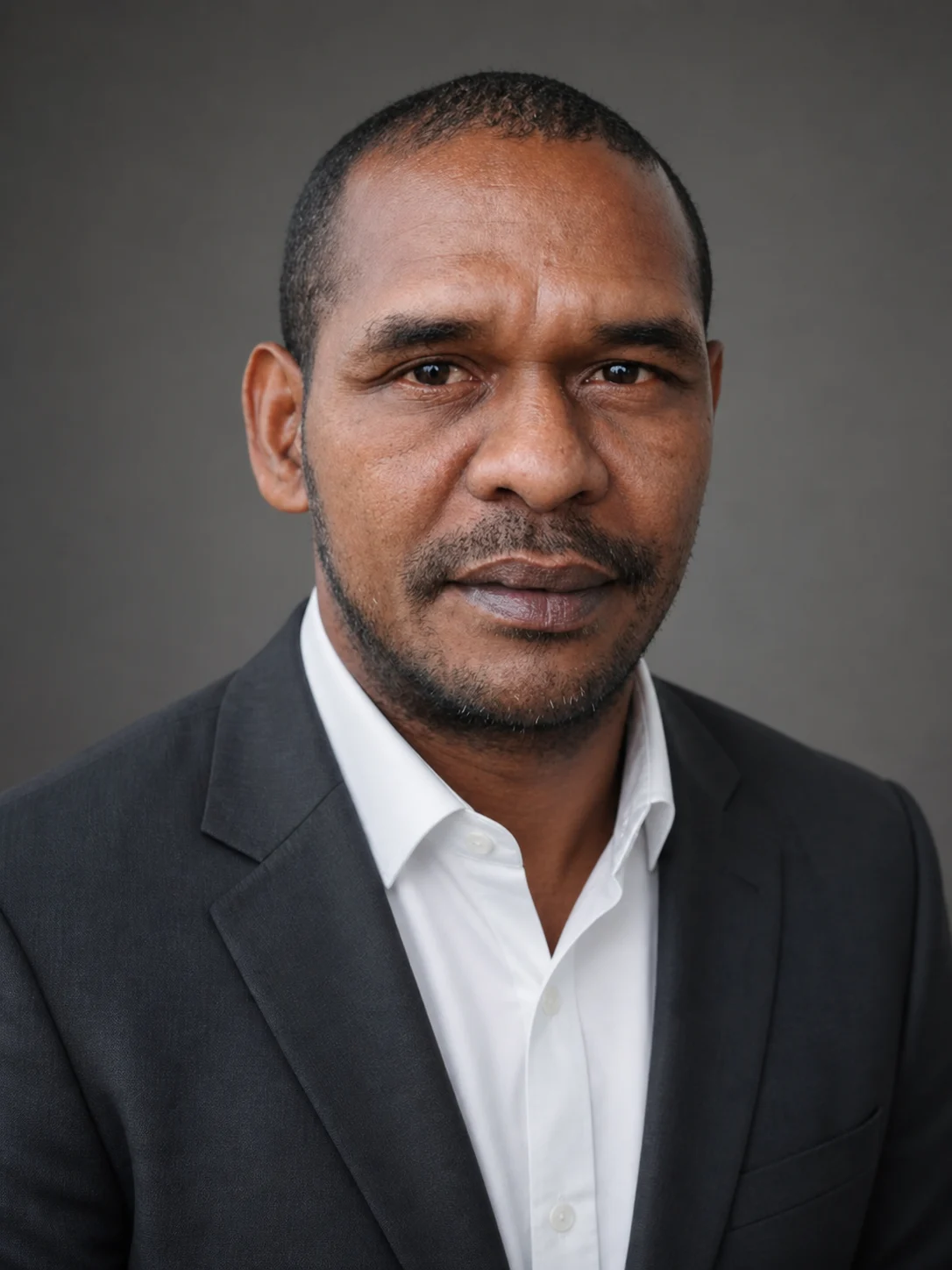
Witness: Fadiel Adams
Evidence led by Advocate Lee Segeels-Ncube
The complainant whose referral founded the entire Crime Intelligence prosecution finally gives evidence - and spends the morning conceding that what he told the commission about the correspondence was wrong. The chairperson does the questioning himself.
The day in brief
What you need to know
- Fadiel Adams, National Coloured Congress leader and MP, returned to the Madlanga Commission on 19 August 2026 after his 11 August appearance was postponed over a ten-month delay in filing his statement.
- He admitted his earlier evidence was wrong: he had told the commission he only saw its request about three months ago, when the record shows he answered it eleven days after it was sent.
- The Rule 3 notice was sent through the commission's attorney on 3 October 2025; Adams replied on 14 October 2025 and asked to testify. His statement was only filed on 10 August 2026.
- 'The information I submitted was wrong. I did forget about this email,' he told the commission, while resisting the suggestion that he set out to mislead it.
- Chairperson Justice Mbuyiseli Madlanga put the documents to him personally, noting that Parliament issues its members three devices, against Adams's account of a laptop that froze for some 18 months.
- Adams says he has sent a lawyer's letter disputing Parliament's statement that its ICT records show no such fault, and that its technicians can verify the problem.
- The commission played back media interviews in which Adams denied receiving any correspondence from the inquiry while claiming he had approached it himself.
- The underlying allegations, made by KZN commissioner Lieutenant-General Nhlanhla Mkhwanazi, are that Adams obtained Crime Intelligence information he was not entitled to and used it recklessly against members of the Political Killings Task Team. Untested; Adams is presumed innocent.
Full coverage
The day, in depth
Why this witness matters at all
Adams is not a police officer, a prosecutor or a businessman, and on the face of it he sits outside the cartel evidence entirely. He matters because of one document. His section 27 complaint to the Investigating Directorate Against Corruption, following six criminal cases he laid in 2024 against Crime Intelligence head Lieutenant-General Dumisani Khumalo and other senior officers, is the origin of the prosecution the commission has spent the past month taking apart - the case the National Prosecuting Authority provisionally withdrew on 27 July 2026 before plea, on the basis that the investigation was incomplete. Every IDAC witness from Colonel Brian Padayachee to Advocate Peter Serunye has been asked what the directorate did with that referral. Adams is the man who wrote it.
The Rule 3 notice, and the eleven days
The chairperson took the questioning himself. On 3 October 2025 the commission, through its attorney Mari Wilsnach, sent Adams a Rule 3 notice asking him to answer allegations Mkhwanazi had made against him during the KZN commissioner's September 2025 testimony. Adams had told the commission he only became aware of the request about three months before his appearance. The record put to him showed he had replied on 14 October 2025 - eleven days after it was sent - and had asked to testify. His statement itself was not filed until 10 August 2026, ten months later, on the eve of his first scheduled appearance.
'The information I submitted was wrong'
Adams conceded the point. 'The information I submitted was wrong,' he told the commission. 'I did forget about this email.' What he would not accept was that the error was deliberate: he framed it as confusion rather than dishonesty, told the commission 'I could have done better and should have done better', and said 'I take the Madlanga Commission seriously'. On the separate question of the emails he did open, he said: 'I observed an email asking three questions, however I expected more questions, therefore I did not respond to it,' adding that he had had numerous issues with his laptop.
The laptop, and Parliament
The frozen laptop has now outgrown its own explanation. Adams's account is that his Parliament-issued machine malfunctioned persistently for roughly 18 months, which is why the commission's correspondence went unanswered. On 11 August Justice Madlanga called that unbelievable; that same evening Parliament issued a statement saying its ICT service desk records reflect no reported incident of persistent malfunction, hardware failure, repeated freezing or repeated returns for repair, only routine user-access matters. On 19 August Madlanga added the practical point that members of Parliament are issued three devices. Adams told the commission he has sent a lawyer's letter challenging Parliament's version and that its own technicians can confirm the fault. Neither account has been tested.
His own media interviews, played back to him
The commission did not confine itself to the correspondence. Several media interviews Adams gave while defending the late submission were played at the inquiry, in which he denied receiving any correspondence from the commission while at the same time claiming that he was the one who had made contact with it. Placing a witness's public statements alongside the documentary record is the same method the commission used with Suleiman Carrim's outings and with the IDAC voice notes, and it produced the same result: the witness conceded the record and disputed the characterisation.
What is still coming
None of Wednesday's evidence went to the substance of the allegations - either the ones Adams made about the Political Killings Task Team's use of the secret services account, or Mkhwanazi's allegation that Adams had unauthorised access to Crime Intelligence material and used it recklessly. Khumalo has said Adams's objections amount to personal opinion rather than evidence. Adams has said publicly that he will 'drop big bombs', and has asked IDAC state advocate Drushantha Ramsamy to release a recording of him running to almost two hours. That evidence has not yet been given.
In their words
Key moments from the record
“The information I submitted was wrong. I did forget about this email.”
“I could have done better and should have done better.”
“I observed an email asking three questions, however I expected more questions, therefore I did not respond to it.”
“I take the Madlanga Commission seriously.”
Our analysis
The bottom line
The commission is not doing this to embarrass a politician. It is establishing whether the founding document of the Crime Intelligence prosecution came from a reliable source, because everything downstream of that referral - the arrests, the charges, the year of institutional damage, the provisional withdrawal on 27 July - stands or falls partly on it. A complainant who cannot keep his own account of the correspondence straight is a complainant whose account of the underlying allegations will be read with more caution. That is the work Wednesday morning did.
It is worth being precise about what Adams admitted. He admitted that a statement he made to the commission was factually wrong and that he had forgotten a piece of correspondence. He did not admit to fabricating anything, and the commission has made no finding that he did. The distinction matters: forgetting an email in October 2025 and inventing a referral are different orders of allegation, and only the first is on the record.
The laptop has become the smaller half of the story and the larger half of the problem. Parliament has publicly contradicted him, he has now answered with a lawyer's letter, and the dispute is capable of documentary resolution - ICT logs either show returns for repair or they do not. Where a witness's credibility is the live issue, an argument he has chosen to fight and can lose on paper is an expensive one to pick.
What has still not happened is the evidence everyone came for. Adams has promised 'bombs'. The commission has spent a month hearing IDAC officials dispute each other about what his referral said, whether the original signed affidavit existed, and who was allowed to see it. Until Adams gives that account under oath and is cross-examined on it, the single most consequential document in this phase of the inquiry remains a thing described by other people.
Analysis is the archive’s own comment on the public proceedings, grounded in the record above. It weighs the evidence and the process; questions of individual guilt are for the courts and the commission to decide. Everyone named is presumed innocent.
On the record
Who testified this day
Follow the threads
Who Fadiel Adams connects to
Stuart James Scharnick
On 20 August 2026, while Adams was giving evidence, Sowetan journalist Herman Moloi filmed Scharnick speaking with him during a tea break. The intimidation complaint Moloi laid over the confrontation that followed led to Scharnick's arrest outside the venue. Adams is not implicated in that complaint.
View profile →The source he named only after the general diedMajor-General Andre Lincoln
Adams told the commission on Day 163 that about 90 percent of his Crime Intelligence allegations came from Lincoln, that Lincoln told him his dockets had been intercepted, advised him to lay charges in another province, supplied the Orlando contact and the IDAC number, and advised him not to meet the inspectorate's investigator. Lincoln died on 30 May 2025 and can answer none of it. Untested.
View profile →His complaint founded the case against himLieutenant-General Dumisani Khumalo
Adams's section 27 referral to IDAC founded the investigation that led to charges against the Crime Intelligence head and six co-accused. The NPA provisionally withdrew those charges on 27 July 2026, before plea, on the basis that the investigation was incomplete. Untested; both presumed innocent.
View profile →The general he said hid his dockets in a safeLieutenant-General Peter Jacobs
Adams's allegation that his dockets were locked in Jacobs's safe in Pretoria was dismantled on Day 163: the dockets went to national office because Adams's own complaint to the minister triggered a service-complaint investigation by Jacobs's division. Adams accepted the correction. No finding has been made against Jacobs and he is presumed innocent.
View profile →Denies Mogotsi had any hand in the Orlando casesOupa 'Brown' Mogotsi
The commission put to Adams that almost every Soweto case within its terms of reference carries Mogotsi's fingerprints, and that the officer who admitted him to Orlando SAPS is the Crime Intelligence official described in evidence as Mogotsi's handler. Adams denied it, saying he spoke to Mogotsi once by phone, at Andre Lincoln's house, about Lincoln's unpaid pension. Untested; both presumed innocent.
View profile →The minister he emailed within 24 hours of laying chargesSenzo Mchunu
Adams told Mchunu on 1 November 2024 at 08:21 that Gauteng police had already interfered with dockets he had opened at 13:30 the previous day. The commission established that this was not so, and Adams conceded the wording. Mchunu's chief of staff escalated the complaint within 43 minutes. Untested; both presumed innocent.
View profile →The commissioner whose allegations he was called to answerLieutenant-General Nhlanhla Mkhwanazi
Mkhwanazi told the commission in September 2025 that Adams had obtained Crime Intelligence information he was not entitled to and used it recklessly against members of the Political Killings Task Team. The commission's Rule 3 notice of 3 October 2025, which dominated Adams's evidence on Day 162, asked him to respond to exactly those allegations. Untested; both presumed innocent.
View profile →Disputed the 'A1' statement attributed to him; he now says he will charge herAdvocate Drushantha Ramsamy
Ramsamy is one of the two IDAC officials whose recorded voice notes on Day 148 disputed the authenticity of the supplementary 'A1' statement attributed to Adams. Adams publicly called on her to release the almost two-hour recording she holds of their 6 January 2025 consultation; when the commission gave it to him in full and then played parts of it on Day 164, he asked that it not be played and said he would lay criminal charges against her and report her to the Legal Practice Council. Untested; both presumed innocent.
View profile →Investigated on his complaint without the signed affidavitColonel Brian Padayachee
Padayachee conceded on Day 141 that he did not have Adams's original signed affidavit when the investigation commenced, relying on an oral briefing and receiving the sworn statement later - which the chairperson called 'highly improbable'. On Day 164 Adams said the affidavit now before the commission has been altered. Untested; both presumed innocent.
View profile →The prosecutor who was never shown the document Adams says was alteredAdvocate Peter Serunye
Serunye testified on Day 153 that after taking over the Crime Intelligence prosecution he repeatedly asked for Adams's section 27 referral and was refused it, and that he believed he had been set up. On Day 164 Adams told the commission the version of that referral before the inquiry is not the one he signed. The two accounts converge on the same document from opposite ends. Untested; both presumed innocent.
View profile →The brigadier he could not nameBrigadier Dineo Mokwele
Mokwele's appointment was the transaction at the heart of the prosecution Adams's complaint founded. On Day 164 he told the commission he had not known her name when he laid the charges - he knew her as 'the BMW lady'. All charges against her were withdrawn unconditionally that same morning. Untested; both presumed innocent.
View profile →Two different sworn accounts of a call from his officeImtiaz Fazel
Adams told Parliament's ad hoc committee that the Inspector-General of Intelligence telephoned him personally about his Crime Intelligence complaint, and told this commission it was a member of Fazel's staff. On Day 164 Commissioner Sesi Baloyi put it to him that one of the two forums must hold him to have lied under oath. Adams said the parliamentary account was the mistaken one. Untested; both presumed innocent.
View profile →In the room & on the record
Counsel, the panel and sources
Evidence led by
On the panel
Sources
- Mail & Guardian - Adams admits he misled Madlanga Commission and had received summons (19 Aug 2026) ↗
- TimesLIVE - 'I was wrong': Fadiel Adams caught out on dates at Madlanga inquiry (19 Aug 2026) ↗
- IOL - WATCH: Fadiel Adams's laptop excuse under fire as MP returns to Madlanga Commission (19 Aug 2026) ↗
- SABC News - Adams provides reasons for unanswered Madlanga Inquiry's emails (19 Aug 2026) ↗
- The Witness - WATCH: Fadiel Adams returns to Madlanga Commission (19 Aug 2026) ↗
- SABC News - Madlanga Commission of Inquiry Day 162, Wednesday 19 August 2026 (livestream) ↗