Madlanga Commission hearing record
Day 163 of the Madlanga Commission
Witness: Fadiel Adams
Evidence led by Advocate Lee Segeels-Ncube
Adams names the man who told him his dockets had been stolen. It is the late Major-General Andre Lincoln, dead since May 2025, and the evidence leader has had enough: 'You cannot rely on a dead man every time.'
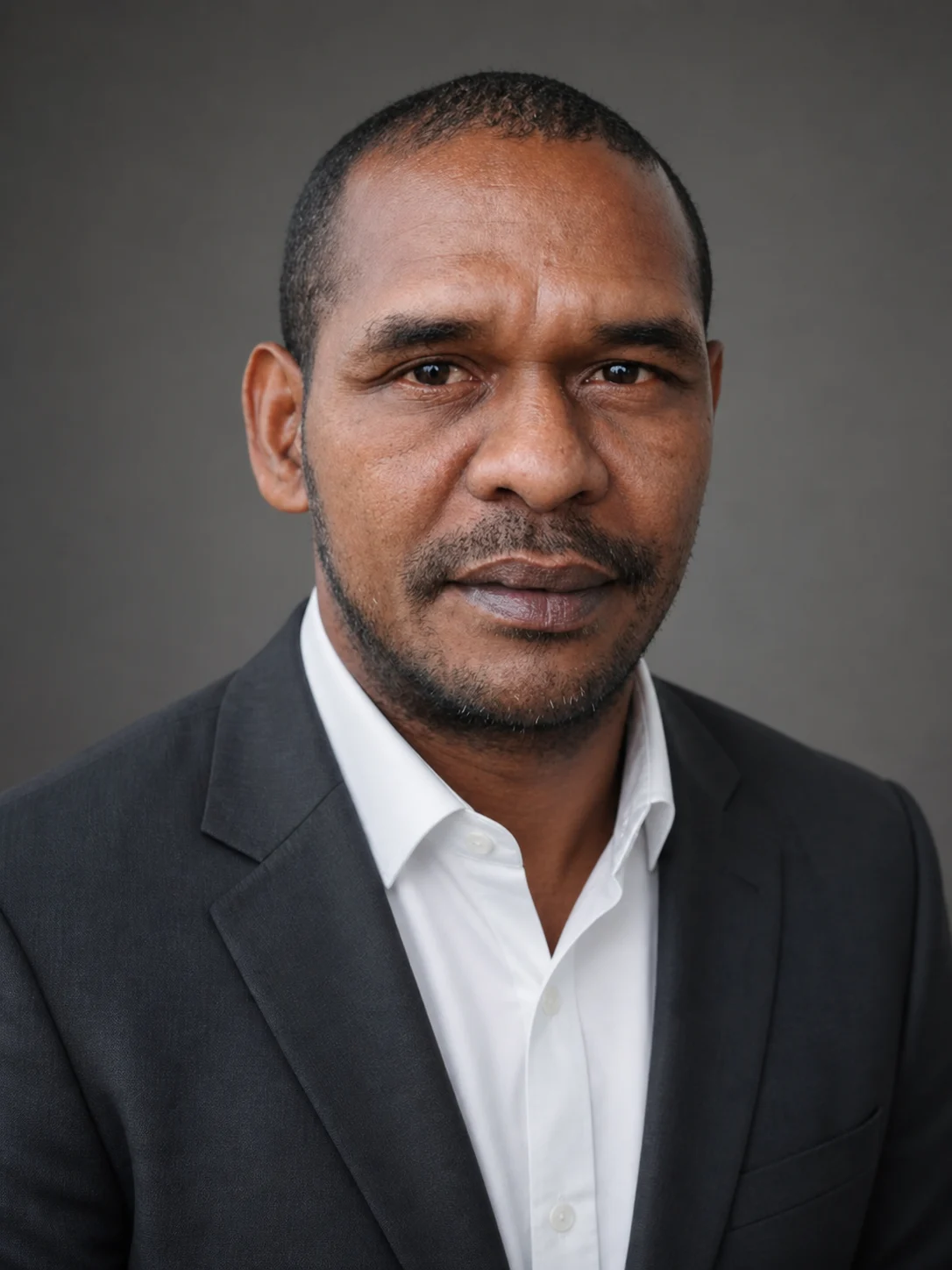
The day in brief
What you need to know
- Fadiel Adams told the commission that about 90 percent of what he alleged against Crime Intelligence came from one man: the late Major-General Andre Lincoln, former head of Nelson Mandela's Presidential Investigation Task Unit and of the Western Cape Anti-Gang Unit, who died on 30 May 2025.
- He had never named Lincoln to the police minister, to the Inspector-General of Intelligence or to IDAC, and only did so after Lincoln died. 'I wouldn't have mentioned him if he was alive.'
- Evidence leader Advocate Lee Segeels-Ncube: 'No, Mr Adams, you have the CAS numbers now. You cannot rely on a dead man every time. It is unacceptable.'
- The Orlando docket bears a 13:30 stamp on 31 October 2024. At 08:21 the next morning Adams told suspended Police Minister Senzo Mchunu that Gauteng police had already interfered with it. He conceded the wording was wrong.
- The minister's office moved in 43 minutes: the email reached chief of staff Cedrick Nkabinde at 08:25 and at 09:04 he instructed a major-general to report back by Monday 4 November 2024.
- Commissioner Sesi Baloyi told Adams the whole sequence 'stinks of machinations' and that 'there is just something wrong about this whole process'.
- Commissioner Sandile Khumalo dismantled the claim that the dockets were hidden in a safe in Pretoria: they went to national office because Adams's own complaint triggered an inspectorate investigation under Lieutenant-General Peter Jacobs. Adams accepted it.
- Adams admitted he gave the inspectorate's Colonel Phillips the runaround over four documented attempts to interview him, on Lincoln's advice: 'don't meet with this guy.'
- The commission identified the man Adams knew only as 'Elvis', who let him into Orlando SAPS, as Witness G - the Crime Intelligence colonel described in evidence as Brown Mogotsi's handler and a friend of Major-General Feroz Khan. Adams confirmed the identification but denied any relationship.
- Adams denied Mogotsi had any hand in the Orlando cases, saying he spoke to him once, by phone, at Lincoln's house, about Lincoln's unpaid pension.
- Adams also named MP Sakiena Frenchman, NCC councillor Nazmi Jacobs and an unnamed firearms-control captain as people with whom he discussed splitting the charges across stations so that 'if one takes the other, the others remain'.
- The day opened with a subpoenaed Johannesburg Metro Police officer stood down for failing to file a statement, and adjourned at 14:00 so Adams could listen to the full two-and-a-half-hour recording of his 6 January 2025 IDAC consultation before clips are played. He resumes at 09:30 on 21 August 2026.
Full coverage
The day, in depth
The source, finally named, and dead
For a month the commission has been working backwards from a single document - Fadiel Adams's section 27 referral to the Investigating Directorate Against Corruption - to find out where its allegations came from. On Thursday it got the answer. Asked where he had obtained the claims about Lieutenant-General Dumisani Khumalo's vetting and security clearance and about General Fannie Masemola's role in his appointment, Adams said: 'I would tell you on this issue 90 percent of what I got I got from General Andre Lincoln.' Lincoln was not a minor figure. He was an uMkhonto weSizwe intelligence officer, Nelson Mandela's bodyguard, the head of the Presidential Investigation Task Unit, and from 2018 the commander of the Western Cape Anti-Gang Unit. He had been out of the police for three years by late 2024, and he died on 30 May 2025. Adams described him as 'a walking encyclopaedia' on the SAPS and the underworld: 'That's why when he told me the dockets have been intercepted and it shouldn't have happened, I believed him without questioning him.'
Why the name only appeared after the funeral
Segeels-Ncube took Adams through every forum in which he could have named his source and did not: the Western Cape provincial commissioner, the Inspector-General of Intelligence, his 1 November 2024 complaint to the minister, his section 27 referral to IDAC, and his 6 January 2025 consultation with IDAC officials. In none of them did Lincoln's name appear. He gave it for the first time to Parliament's ad hoc committee, after Lincoln had died. Adams's explanation was that Lincoln was still fighting for an unpaid pension and that naming him would have hurt him: 'it wouldn't have helped him if the people that control the funds knew that he was fighting them'. Pressed on the timing, he did not soften it: 'I wouldn't have mentioned him if he was alive.'
Thirty-nine minutes, and a paragraph that was not true
The hardest passage of the day was arithmetical. Adams laid three charges at Orlando SAPS in Soweto on 31 October 2024; the commissioner's stamp on the docket reads 13:30. At 08:21 the following morning an email went to suspended Police Minister Senzo Mchunu, sent through the email address of fellow National Coloured Congress MP Sakiena Frenchman but typed, Adams confirmed, on his own laptop. Its paragraph 4 read that 'the Gauteng Police Department has followed the same modus operandi as the Western Cape' and 'is interfering in the investigative process'. Segeels-Ncube asked what had happened in the intervening hours to justify that. Adams's answer was a phone call from Lincoln: 'these buggers just won't stop. They're about to do it again.' The evidence leader's reply became the day's headline: 'No, Mr Adams, you have the CAS numbers now. You cannot rely on a dead man every time. It is unacceptable.' The chairperson then narrowed it to a single proposition - that Lincoln, on Adams's own version, had said they were about to take the dockets, not that they had - and Adams conceded: 'I will concede that I could have worded it better.'
The ministry's 43 minutes
What the paper trail then shows is a ministry that moved faster than the police station. The 08:21 email was forwarded at 08:25 to Cedrick Nkabinde, Mchunu's chief of staff, who Adams said had personally asked to be copied on his correspondence. At 09:04 Nkabinde forwarded it to a major-general with an instruction: 'in order for the ministry to respond accordingly, please furnish this office with a report responding to this complaint and the details of the investigating officer assigned', with the report due by 15:00 on Monday 4 November 2024. Within the same day the complaint had been routed to the divisional commissioner for the inspectorate and down to a colonel with an instruction to register it under National Instruction 6 of 2017 and 'engage the province directly'. Commissioner Baloyi's question to Adams was about proportion: 'what was so urgent about the cases of a forklift, the vetting of a general, the vetting of General Khumalo' that it had to move inside 24 hours. Adams's answer was the Cape Flats: 'in 24 hours we're likely to lose 10 children on the Cape Flats. That is my urgency.'
The safe in Pretoria was a filing cabinet
One of the most durable allegations in this phase of the inquiry has been that Adams's dockets were found locked in a safe in the office of Lieutenant-General Peter Jacobs, the SAPS Divisional Commissioner for the Inspectorate, and that this proved interception. Commissioner Sandile Khumalo took it apart with the documents. Colonel Phillips, the section commander for complaints collation in Jacobs's division, had been tasked with investigating the very service complaint Adams's 1 November email generated. To investigate it he had to call for the six dockets - three from Cape Town Central, three from Orlando and Langlaagte. That is why they were in Pretoria. Phillips's own report, dated 20 November 2024, recorded that the affidavits in the dockets 'did not have the elements of the alleged crimes' and were 'superficial and believed to be hearsay', and that he had therefore tried to interview Adams to get the evidence Adams said he held. Khumalo put it plainly: the dockets went to national office because of Adams's own escalation, not in spite of it. Adams accepted the point twice, the second time without qualification: 'I understand and I accept that I'm the one that muddied the water.'
Four calls, and a dead man's advice not to answer them
Phillips's schedule of contacts, put to Adams page by page, records outgoing calls on 2 and 3 November 2024, WhatsApp exchanges, an appointment set for 3 November at Kuilsriver SAPS, a cancellation, a promise to travel to Pretoria on 4 November, and a further call on 9 November. Adams did not dispute any of it. He said he had believed Phillips was from the Western Cape and part of a cover-up, and that he had been advised not to meet him. Asked who advised him, he said it was Lincoln: 'don't meet with this guy.' The exchange with the chairperson on this point was the sharpest of the day. Madlanga twice told Adams he was not being truthful about not connecting Phillips's call to his own complaint of the previous day, and pressed him to answer directly whether Phillips had explained the purpose of the call. Adams eventually conceded that he had: 'he said he was calling to investigate the docket complaint that I made.'
'Elvis' is Witness G
The most consequential new connection of the day came from a commissioner rather than the evidence leader. Adams had described flying to OR Tambo on the morning of 31 October 2024, receiving a WhatsApp contact from Lincoln at the airport for a man called 'Elvis', and being met and taken inside Orlando SAPS by him. He was then shown the statement of Witness G - the Crime Intelligence official who testified in camera in May 2026 and who is described in evidence as Brown Mogotsi's handler. In it, Witness G says he has known Adams since Adams's activist days, that Adams contacted him telephonically for help opening a case, and that he referred him to a detective. Adams's response was immediate: 'This is the man that I described as Elvis.' He disputed the sequence, denied knowing the man, denied any relationship with Major-General Feroz Khan, and said he had seen Witness G once and never again. A commissioner then put the shape of it to him: that the person who opened the door at Orlando was a Crime Intelligence officer, a friend of General Khan, and the handler of Brown Mogotsi, who in turn had an association with the minister to whom Adams complained the very next day. Adams: 'I am low-key surprised by some of it. I have no association with General Khan. I don't know where I fit into all of that.'
The Mogotsi question, asked directly
A commissioner told Adams why Orlando mattered: 'almost every case that is opened in Soweto relating to our terms of reference somehow has Mr Mogotsi's fingerprints. So listening to you, I suspected that you end up in Orlando because that was Mr Mogotsi's idea, and I could be completely wrong.' Adams denied it. He said Lincoln had been in contact with Mogotsi, who Lincoln told him was close to the minister - 'something that I now know to be a lie, not from General Lincoln's side' - and that he had spoken to Mogotsi once, on the phone, while sitting at Lincoln's house, and that the subject was Lincoln's unpaid pension, not the cases. He chose Orlando, he said, because it was one of the few Johannesburg police stations he could name. The chairperson pointed out that Kempton Park SAPS is next door to OR Tambo and that finding the nearest station would have been a matter of relative ease. Adams accepted that too.
How the day ended, and what is still owed
The sitting opened with a procedural casualty: a Johannesburg Metro Police officer subpoenaed for the day was stood down because the commission had received no statement from him, his evidence postponed to a date to be communicated and his statement directed to be filed by the following day. It ended early. Adams has not yet been able to listen to the two-and-a-half-hour recording that IDAC state advocate Drushantha Ramsamy made of their 6 January 2025 consultation, which the commission has made available to him in full so that he cannot say clips were cherry-picked. He objected to being questioned on extracts before hearing the whole thing, the evidence leader agreed, and the commission adjourned at 14:00 to resume at 09:30 on Friday 21 August. Segeels-Ncube told the chairperson she expects to finish Adams by tea, after which the next scheduled witness starts at 11:30. The commission also asked Adams for the details of the criminal case he has himself laid against IDAC and IDAC officials, so that it can deal with any objection he raises on that basis. He agreed to hand them over on arrival.
In their words
Key moments from the record
“No, Mr Adams, you have the CAS numbers now. You cannot rely on a dead man every time. It is unacceptable.”
“I wouldn't have mentioned him if he was alive.”
“I would tell you on this issue 90 percent of what I got I got from General Andre Lincoln.”
“There is just something wrong about this whole process. For lack of a better word, it stinks of machinations.”
“I will concede that I could have worded it better.”
“This is the man that I described as Elvis.”
“I understand and I accept that I'm the one that muddied the water.”
“In 24 hours we're likely to lose 10 children on the Cape Flats. That is my urgency.”
“In terms of SAPS he was a walking encyclopaedia. That's why when he told me the dockets have been intercepted, I believed him without questioning him.”
Our analysis
The bottom line
Day 163 is the day the Crime Intelligence prosecution acquired a single point of failure. Every institution downstream of Adams - the ministry, the inspectorate, IDAC, the National Prosecuting Authority - acted on a complaint whose central factual claim, that dockets had been intercepted, rested on the unrecorded say-so of one retired general who has been dead since May 2025 and who cannot be asked what he knew or how. That is not a finding that Lincoln misled anyone. It is a finding about evidentiary architecture: a chain of state action of this size should not narrow to a phone call that no one else heard.
The commission was careful to leave Lincoln three doors, and Adams took the least damaging one. Put to him that Lincoln was either mistaken, or misinforming him, or had never said it at all, Adams chose mistaken - 'I'm going to grudgingly accept that my friend may have been wrong' - while adding that he was not lying. That is the honest answer available to him, and it is also the one that does the most damage to the referral, because it concedes that the factual trigger for the whole escalation was wrong.
The Peter Jacobs passage deserves to be read as an exoneration and reported as one. The allegation that dockets were locked in a general's safe has circulated for the better part of a year with the implication of a cover-up attached. The documents show something duller and more defensible: a complaint to a minister, a 48-hour reporting deadline, an inspectorate that called for the dockets because it had to look at them, and a colonel who tried four times to interview the complainant and was brushed off. Adams accepted it. Where an archive records an allegation, it owes the same prominence to the record that answers it.
The Witness G identification is the most significant unresolved thread. Adams's account and Witness G's statement agree on the fact of the meeting and diverge on everything around it - who called whom, when, and whether they knew each other. Two things follow. First, the commission now has a documented point of contact between the complainant who founded the Crime Intelligence case and the Crime Intelligence officer who allegedly handled Brown Mogotsi. Second, nothing about that contact has been shown to be improper. A coincidence that looks bad is still a coincidence until it is tested, and Witness G's own evidence was heard in camera, which limits what can be put against it in public.
What the commission still has not heard, on its fourth scheduled day with this witness, is the substance. Adams has promised 'bombs'. The record so far is a credibility examination conducted almost entirely on correspondence, dockets and diaries. The section 27 referral itself, the allegation that Political Killings Task Team members misused the secret services account, and Lieutenant-General Nhlanhla Mkhwanazi's allegation that Adams held Crime Intelligence material he was not entitled to are all still unanswered on the record. Friday's session, which the evidence leader expects to finish by tea, is the last scheduled opportunity.
Analysis is the archive’s own comment on the public proceedings, grounded in the record above. It weighs the evidence and the process; questions of individual guilt are for the courts and the commission to decide. Everyone named is presumed innocent.
On the record
Who testified this day
Follow the threads
Who Fadiel Adams connects to
Stuart James Scharnick
On 20 August 2026, while Adams was giving evidence, Sowetan journalist Herman Moloi filmed Scharnick speaking with him during a tea break. The intimidation complaint Moloi laid over the confrontation that followed led to Scharnick's arrest outside the venue. Adams is not implicated in that complaint.
View profile →The source he named only after the general diedMajor-General Andre Lincoln
Adams told the commission on Day 163 that about 90 percent of his Crime Intelligence allegations came from Lincoln, that Lincoln told him his dockets had been intercepted, advised him to lay charges in another province, supplied the Orlando contact and the IDAC number, and advised him not to meet the inspectorate's investigator. Lincoln died on 30 May 2025 and can answer none of it. Untested.
View profile →His complaint founded the case against himLieutenant-General Dumisani Khumalo
Adams's section 27 referral to IDAC founded the investigation that led to charges against the Crime Intelligence head and six co-accused. The NPA provisionally withdrew those charges on 27 July 2026, before plea, on the basis that the investigation was incomplete. Untested; both presumed innocent.
View profile →The general he said hid his dockets in a safeLieutenant-General Peter Jacobs
Adams's allegation that his dockets were locked in Jacobs's safe in Pretoria was dismantled on Day 163: the dockets went to national office because Adams's own complaint to the minister triggered a service-complaint investigation by Jacobs's division. Adams accepted the correction. No finding has been made against Jacobs and he is presumed innocent.
View profile →Denies Mogotsi had any hand in the Orlando casesOupa 'Brown' Mogotsi
The commission put to Adams that almost every Soweto case within its terms of reference carries Mogotsi's fingerprints, and that the officer who admitted him to Orlando SAPS is the Crime Intelligence official described in evidence as Mogotsi's handler. Adams denied it, saying he spoke to Mogotsi once by phone, at Andre Lincoln's house, about Lincoln's unpaid pension. Untested; both presumed innocent.
View profile →The minister he emailed within 24 hours of laying chargesSenzo Mchunu
Adams told Mchunu on 1 November 2024 at 08:21 that Gauteng police had already interfered with dockets he had opened at 13:30 the previous day. The commission established that this was not so, and Adams conceded the wording. Mchunu's chief of staff escalated the complaint within 43 minutes. Untested; both presumed innocent.
View profile →The commissioner whose allegations he was called to answerLieutenant-General Nhlanhla Mkhwanazi
Mkhwanazi told the commission in September 2025 that Adams had obtained Crime Intelligence information he was not entitled to and used it recklessly against members of the Political Killings Task Team. The commission's Rule 3 notice of 3 October 2025, which dominated Adams's evidence on Day 162, asked him to respond to exactly those allegations. Untested; both presumed innocent.
View profile →Disputed the 'A1' statement attributed to him; he now says he will charge herAdvocate Drushantha Ramsamy
Ramsamy is one of the two IDAC officials whose recorded voice notes on Day 148 disputed the authenticity of the supplementary 'A1' statement attributed to Adams. Adams publicly called on her to release the almost two-hour recording she holds of their 6 January 2025 consultation; when the commission gave it to him in full and then played parts of it on Day 164, he asked that it not be played and said he would lay criminal charges against her and report her to the Legal Practice Council. Untested; both presumed innocent.
View profile →Investigated on his complaint without the signed affidavitColonel Brian Padayachee
Padayachee conceded on Day 141 that he did not have Adams's original signed affidavit when the investigation commenced, relying on an oral briefing and receiving the sworn statement later - which the chairperson called 'highly improbable'. On Day 164 Adams said the affidavit now before the commission has been altered. Untested; both presumed innocent.
View profile →The prosecutor who was never shown the document Adams says was alteredAdvocate Peter Serunye
Serunye testified on Day 153 that after taking over the Crime Intelligence prosecution he repeatedly asked for Adams's section 27 referral and was refused it, and that he believed he had been set up. On Day 164 Adams told the commission the version of that referral before the inquiry is not the one he signed. The two accounts converge on the same document from opposite ends. Untested; both presumed innocent.
View profile →The brigadier he could not nameBrigadier Dineo Mokwele
Mokwele's appointment was the transaction at the heart of the prosecution Adams's complaint founded. On Day 164 he told the commission he had not known her name when he laid the charges - he knew her as 'the BMW lady'. All charges against her were withdrawn unconditionally that same morning. Untested; both presumed innocent.
View profile →Two different sworn accounts of a call from his officeImtiaz Fazel
Adams told Parliament's ad hoc committee that the Inspector-General of Intelligence telephoned him personally about his Crime Intelligence complaint, and told this commission it was a member of Fazel's staff. On Day 164 Commissioner Sesi Baloyi put it to him that one of the two forums must hold him to have lied under oath. Adams said the parliamentary account was the mistaken one. Untested; both presumed innocent.
View profile →In the room & on the record
Counsel, the panel and sources
Evidence led by
On the panel
Sources
- SABC News - Madlanga Commission of Inquiry Day 163, Thursday 20 August 2026 (official livestream) ↗
- TimesLIVE - You cannot rely on a dead man, Madlanga inquiry evidence leader tells Fadiel Adams (20 Aug 2026) ↗
- SABC News - Adams denies abusing access to Mchunu over intelligence docket claims (20 Aug 2026) ↗
- EWN - Adams confirms speaking to Mogotsi when opening cases against Crime Intelligence officials (20 Aug 2026) ↗
- Business Day - 'I am not a hired gun for cartels': Fadiel Adams fights back against allegations (20 Aug 2026) ↗
- News24 - Ex-Mandela bodyguard and Anti-Gang Unit boss Andre Lincoln dies (30 May 2025) ↗
- Daily Maverick - Crime Intelligence witness forces closed hearing at Madlanga Commission (4 May 2026) ↗