Madlanga Commission hearing record
Day 9 of the Madlanga Commission
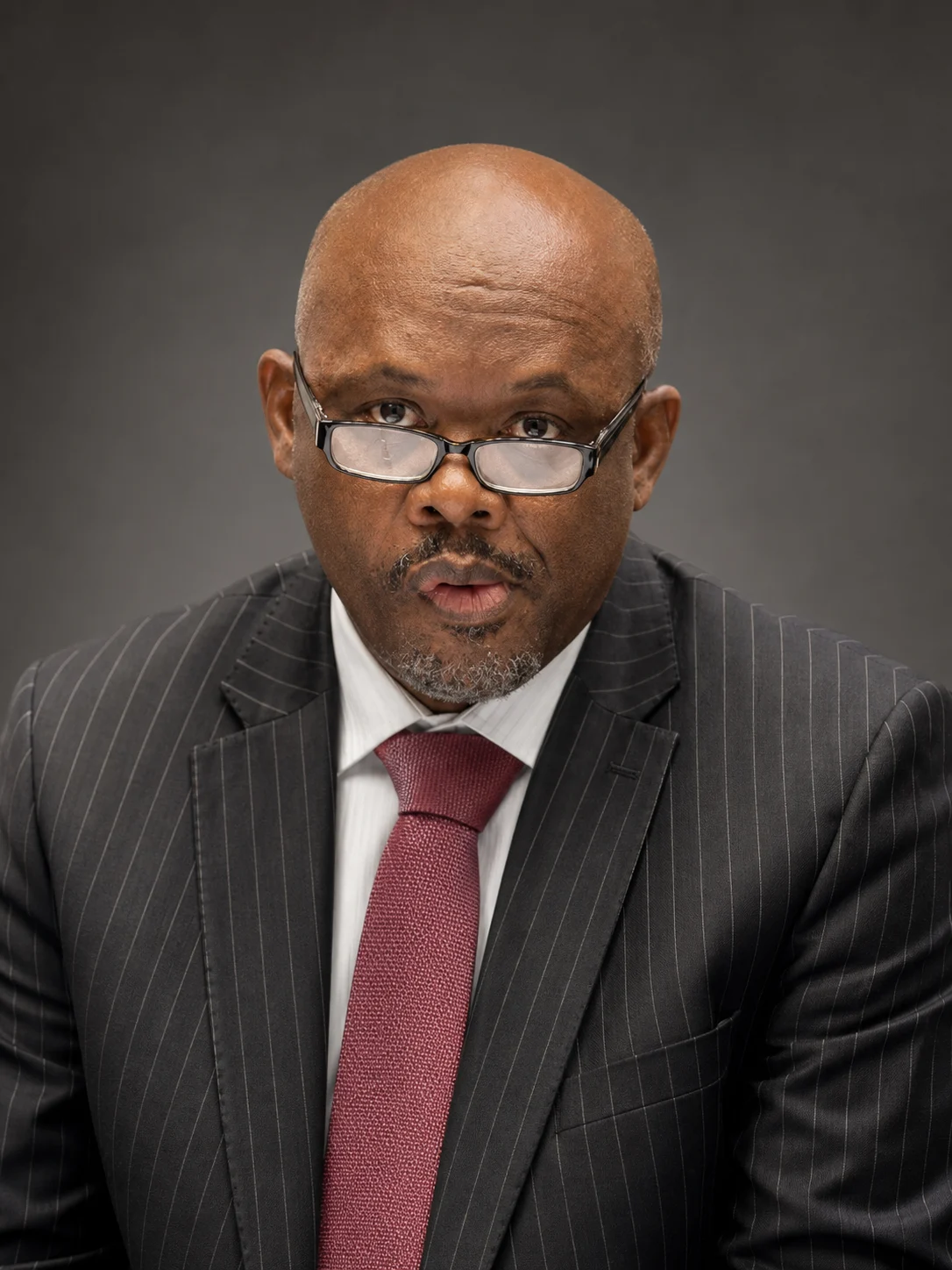
Witness: Lieutenant-General Dumisani Khumalo
Lieutenant General Dumisani Khumalo continued his evidence, expanding on the alleged 'Big Five' cartel and presenting communications he said tied criminal figures to senior police officials.
The day in brief
What you need to know
- Khumalo's crime-intelligence testimony carried into a second day as the commission probed the alleged Big Five cartel.
- He elaborated on a Gauteng-based syndicate he said was active in drug trafficking, hijackings, tender fraud and contract killings.
- He presented WhatsApp conversations he alleged connected businessman Vusimuzi 'Cat' Matlala to senior police officials.
- The testimony fed directly into the malfeasance allegations KZN Commissioner Nhlanhla Mkhwanazi first raised in July 2025.
- The evidence formed part of the commission's effort to map how organised crime allegedly reached into the state.
- Everyone named is presumed innocent; the material is untested allegation placed on the record.
Full coverage
The day, in depth
Cartel testimony continues
The commission's ninth day continued the crime-intelligence evidence, with the record framed around getting to the bottom of the malfeasance claims KZN Police Commissioner Nhlanhla Mkhwanazi made in July 2025. Khumalo's testimony detailed the alleged 'Big Five' syndicate, described as operating out of Gauteng and involved in serious organised crime. The account built on the names and structure he had set out the previous sitting.
Communications linking figures to police
According to IOL's coverage, Khumalo presented WhatsApp conversations he said linked criminal figures, including businessman Vusimuzi 'Cat' Matlala, with senior police officials. The messages were offered to substantiate his claim that organised crime had penetrated the criminal justice system. The commission treated the material as evidence to be tested rather than proven fact, and those named retain the presumption of innocence.
Our analysis
The bottom line
Day 9 shows the commission drilling deeper into the allegations that gave rise to it. By connecting Khumalo's detailed cartel testimony back to Mkhwanazi's original July claims, the inquiry began to test whether the explosive public accusations could be supported by specific evidence. The continuity from Day 8 signals how central this strand is to the commission's mandate.
The renewed emphasis on communications allegedly linking a named businessman to senior officers underscores the evidentiary strategy on display: build the case through documentary trails rather than assertion alone. As always, the strength of such material depends on its authenticity and context, which is for the commission to assess. Nothing at this stage constitutes a finding of wrongdoing against any person.
For readers following the archive, this pair of Khumalo days is a pivot in the wider story, connecting the police-leadership dispute to the organised-crime allegations at the core of the inquiry. The responsible framing remains constant: these are allegations advanced before a commission of inquiry, all named individuals are presumed innocent, and only a competent court can determine guilt.
Analysis is the archive’s own comment on the public proceedings, grounded in the record above. It weighs the evidence and the process; questions of individual guilt are for the courts and the commission to decide. Everyone named is presumed innocent.
On the record
Who testified this day
Follow the threads
Who Lieutenant-General Dumisani Khumalo connects to
Stuart James Scharnick
Khumalo's November 2025 evidence described Scharnick as Sibiya's personal protector while outside the police service and set out 34 recorded cases against his name. Scharnick denied it on 4 November 2025 and opened criminal cases against Khumalo on 12 November 2025, calling the allegations 'borderline idiotic'. Untested; both presumed innocent.
View profile →Named him as an alleged Big Five leaderKatiso 'KT' Molefe
Khumalo September 2025 evidence named Molefe among those he alleged led the Gauteng syndicate the record calls the Big Five. Molefe has never given evidence to the commission and has not answered it. Untested; both presumed innocent.
View profile →The retired Hawks head who says he was not toldLieutenant General Seswantsho Godfrey Lebeya
On Day 168 Lebeya testified that the operation to arrest Katiso Molefe on 6 December 2024 was never communicated to him and that the obligation to inform the national head sat with the provincial commissioner in consultation with Khumalo. Khumalo has not answered that account; untested, both presumed innocent.
View profile →Headed the directorate that charged himAdvocate Andrea Johnson
Johnson led IDAC when it charged Khumalo in June 2025. Testifying in July 2026 she conceded she had erred in finding the matter fell within IDAC's mandate and had never verified Mokwele's qualifications; the NPA withdrew the case on 27 July 2026. Untested; both presumed innocent.
View profile →Lead investigator on his caseColonel Brian Padayachee
Padayachee was IDAC's lead investigator on the Khumalo/Mokwele matter and was cross-examined across Days 139-141, defending the case as evidence-led while the commission questioned its foundation. Untested.
View profile →Cited his prosecution as police infightingLieutenant-General Nhlanhla Mkhwanazi
Returning on Day 138, Mkhwanazi told the commission IDAC was being used by senior police in internal fights and pointed to the criminal charge against Khumalo. Padayachee disputed his account. Competing accounts, not findings.
View profile →The prosecutor on the case against himAdvocate Drushantha Ramsamy
Ramsamy was the IDAC state advocate on the Crime Intelligence docket. On Day 151 she testified that the directorate's leadership settled the suspects before the evidence was made, describing an 'orchestrated attack' on Khumalo and national commissioner Fannie Masemola. The NPA provisionally withdrew the charges on 27 July 2026. Untested; all presumed innocent.
View profile →The prosecutor who inherited his case and called it prematureAdvocate Peter Serunye
Serunye took over the prosecution on 8 August 2025 and testified on Day 153 that Khumalo and six co-accused were arrested before the investigation was complete, and that the corruption charge had no identifiable quid pro quo. The NPA provisionally withdrew the charges on 27 July 2026. Untested; both presumed innocent.
View profile →IDAC's head of investigations, who did not intervene in his docketMatthews Sesoko
Sesoko told the commission on Day 155 why he did not 'impose himself' on the Crime Intelligence investigation, citing his experience at his previous employer, his November 2025 abduction and having been unlawfully charged himself. Untested; both presumed innocent.
View profile →His section 27 complaint founded the caseFadiel Adams
Adams's referral to IDAC founded the investigation that led to charges against Khumalo and six co-accused. The paperwork attributed to Adams has been disputed from several directions at the commission; the NPA provisionally withdrew the charges on 27 July 2026, before plea. Untested; both presumed innocent.
View profile →Named on Day 163 as the ultimate source of the allegations against himMajor-General Andre Lincoln
Adams told the commission that about 90 percent of what he alleged about Khumalo's vetting and appointment came from the late Major-General Andre Lincoln, who died on 30 May 2025 and has answered none of it. Untested; all presumed innocent.
View profile →The inspectorate that assessed the dockets opened against himLieutenant-General Peter Jacobs
The six dockets Adams opened against Khumalo and other senior Crime Intelligence officers were called to Pretoria by the SAPS Inspectorate under Lieutenant-General Peter Jacobs, whose Colonel Phillips reported on 20 November 2024 that the affidavits were superficial and believed to be hearsay. Untested; all presumed innocent.
View profile →The appointment that founded the case against himBrigadier Dineo Mokwele
The whole fraud and corruption case rested on Mokwele's appointment to head Crime Intelligence's Technical Support Services. They were arrested together on 26 June 2025 and cleared together on 21 August 2026. Untested; both presumed innocent.
View profile →The watchdog who recommended charges against himImtiaz Fazel
Before his own suspension, the Inspector-General of Intelligence recommended disciplinary and criminal charges against Khumalo and national commissioner Fannie Masemola over five properties bought by Crime Intelligence for more than R120 million. A recommendation, not a charge and not a finding; Khumalo is presumed innocent.
View profile →The acting head of the service who welcomed his clearingLieutenant-General Puleng Dimpane
After the fraud charges against Khumalo and his co-accused were withdrawn on 21 August 2026, Dimpane said the following day, per EWN, that he 'must now refocus on strengthening intelligence-led operations and dismantling organised criminal networks'. A withdrawal before plea is not an acquittal and not a finding either way.
View profile →In the room & on the record